



Quitting alcohol cold turkey means stopping all drinking at once, which is safe for a light drinker but risky for a person who drinks heavily every day, because sudden withdrawal can bring seizures and delirium tremens within 2 to 4 days.
The safest way to stop depends on how much and how often a person drinks, and on past withdrawal symptoms.
Key takeaways:
- Alcohol withdrawal seizures occur 6 to 48 hours after the last drink, according to StatPearls.
- Delirium tremens starts 48 to 96 hours after the last drink and is fatal without treatment, according to MedlinePlus.
- A history of withdrawal seizures or delirium tremens is the strongest warning sign against quitting cold turkey.
- No home remedy prevents withdrawal seizures; benzodiazepines given in medical detox lower the risk of seizures and delirium tremens.
What Does Quitting Alcohol Cold Turkey Mean?
Quitting alcohol cold turkey means stopping drinking completely from one day to the next, without cutting down first and without medication to manage withdrawal. The phrase describes the method, not the outcome: some people stop cold turkey with no symptoms, while others develop dangerous withdrawal.
The difference comes down to physical dependence. A body that has adapted to daily alcohol reacts to its sudden absence, and that reaction is alcohol withdrawal syndrome, one of the 11 DSM-5-TR criteria for alcohol use disorder.
Is It Safe to Quit Alcohol Cold Turkey?
Quitting alcohol cold turkey is safe for a person who drinks lightly and has never had withdrawal symptoms, but unsafe for a person who drinks heavily every day or has had withdrawal before. A medical assessment before stopping tells the two groups apart.
Signs that quitting cold turkey is lower risk:
- Drinking a few times a week rather than every day
- No shaking, sweating or anxiety after a night without alcohol
- No history of withdrawal seizures or delirium tremens
Who Should Never Quit Drinking Cold Turkey?
Clinicians use the Prediction of Alcohol Withdrawal Severity Scale (PAWSS), published by Maldonado and colleagues in 2014, to identify people at high risk of complicated withdrawal before they stop.
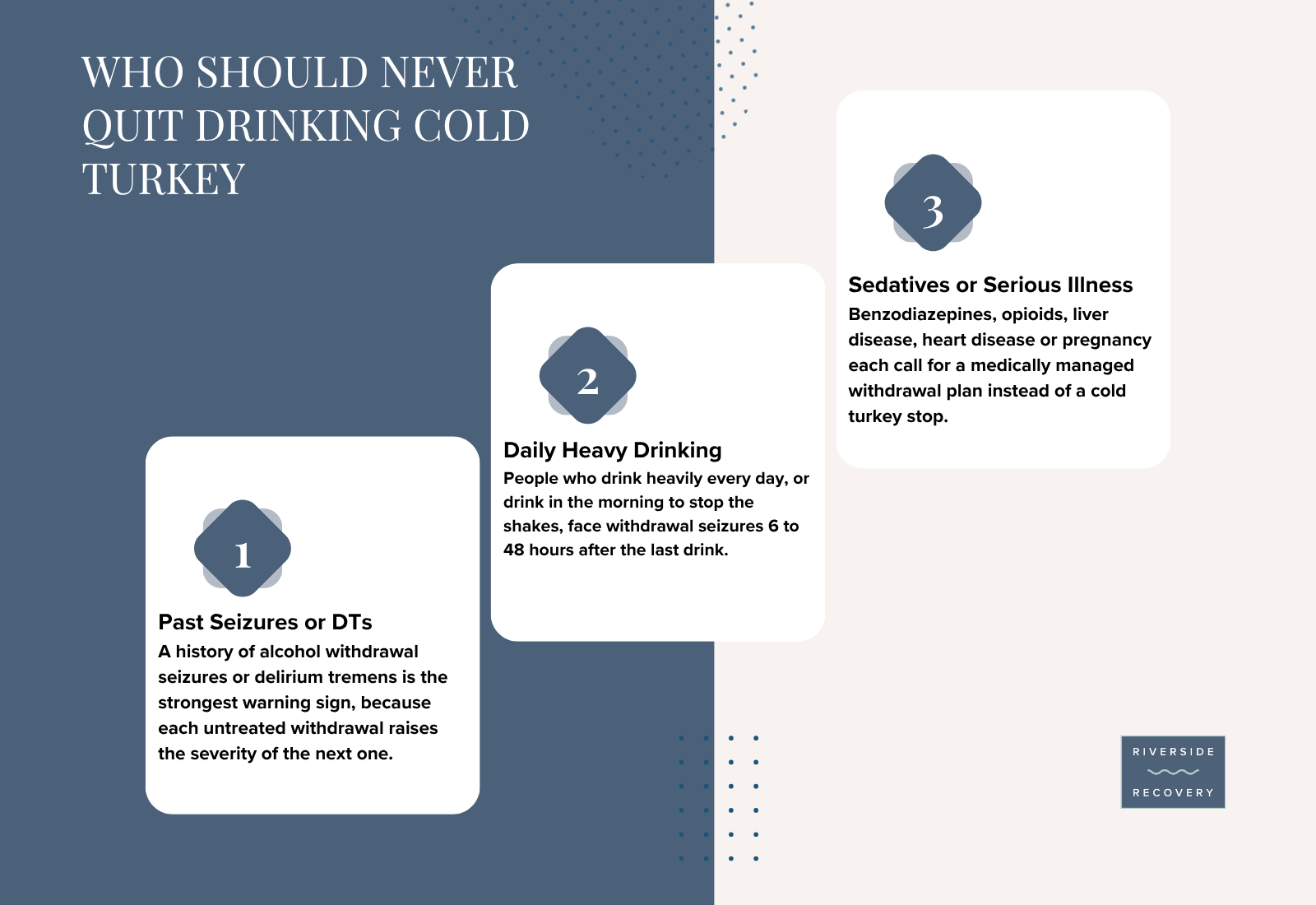
People who should not quit drinking cold turkey without medical care:
- Anyone with past alcohol withdrawal seizures or delirium tremens
- People who drink heavily every day or drink in the morning to stop the shakes
- People with multiple past detox or withdrawal episodes
- Anyone who also takes benzodiazepines, opioids or other sedatives
- People with liver disease, heart disease or another serious medical illness
- Pregnant women, who need a medically managed withdrawal plan
Each untreated withdrawal raises the severity of the next one, a pattern researcher Howard Becker described as kindling in 1998. A person who has detoxed alone before faces a higher seizure risk the next time.
What Happens When You Quit Alcohol Cold Turkey?
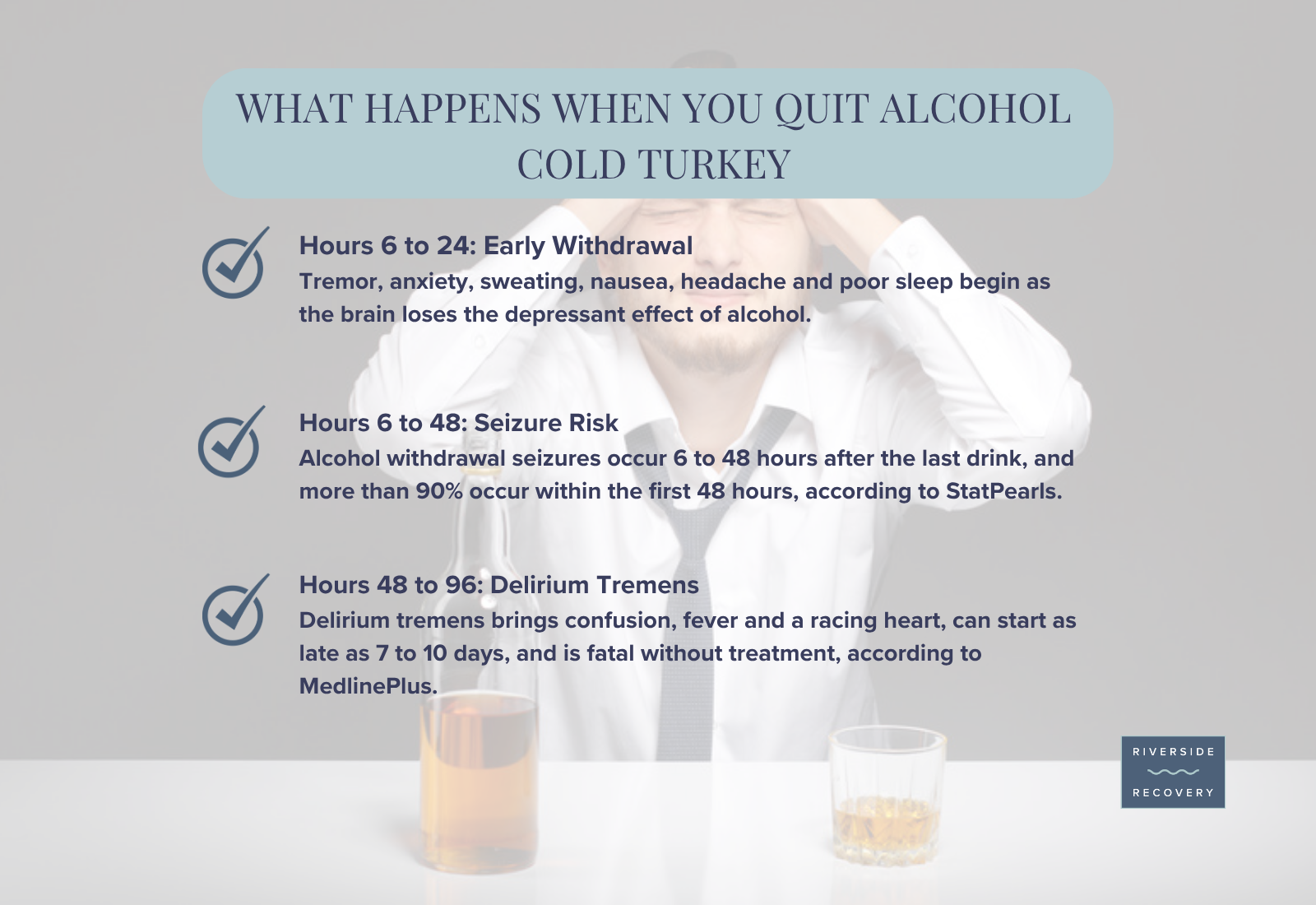
When a dependent drinker quits alcohol cold turkey, withdrawal starts 6 to 24 hours after the last drink, peaks between 24 and 72 hours, and carries a risk of seizures and delirium tremens in the first 4 days. The table below follows the alcohol withdrawal timeline.
| Time after the last drink | What happens after quitting cold turkey |
|---|---|
| 6 to 24 hours | Tremor, anxiety, sweating, nausea, headache and poor sleep |
| 6 to 48 hours | Highest risk window for alcohol withdrawal seizures |
| 12 to 48 hours | Withdrawal hallucinosis: seeing or hearing things while still alert |
| 24 to 72 hours | Symptoms reach their peak |
| 48 to 96 hours | Delirium tremens can begin, and can start as late as 7 to 10 days |
| 5 to 7 days | Acute symptoms ease in uncomplicated withdrawal |
| Weeks to months | Protracted withdrawal: poor sleep, anxiety, low mood and cravings |
Sources: StatPearls (Canver and Gomez, 2024) and MedlinePlus.
What Are the Dangers of Quitting Alcohol Cold Turkey?
The main dangers of quitting alcohol cold turkey are withdrawal seizures, delirium tremens and Wernicke encephalopathy, and each one is a medical emergency in a person with alcohol use disorder. StatPearls reports that 3% to 5% of people in alcohol withdrawal progress to delirium tremens.
- Withdrawal seizures: more than 90% occur within 48 hours of the last drink, and one seizure raises the chance of delirium tremens later in the same withdrawal.
- Delirium tremens: severe confusion, hallucinations, fever and a racing heart, lasting up to two weeks according to a 2017 review by Jesse and colleagues.
- Wernicke encephalopathy: a brain disorder caused by thiamine (vitamin B1) deficiency, with confusion, unsteady walking and abnormal eye movements, according to MedlinePlus.
- Heart strain: withdrawal raises blood pressure and heart rate, which adds risk for people with heart disease.
- Relapse: severe withdrawal headaches, insomnia and anxiety push people back to drinking to make the symptoms stop.
Can You Detox From Alcohol at Home Safely?
Alcohol detox at home is safe only for mild to moderate withdrawal in a person at low risk of complications, under a doctor’s plan with daily check-ins for up to 5 days, according to the American Society of Addiction Medicine (ASAM) guideline. People at risk of seizures or delirium tremens need a medical setting.
Ambulatory, or outpatient detox, is the medical version of home detox: the person sleeps at home and sees clinicians who prescribe medication and check symptoms.
Signs that home detox has become an emergency:
- A seizure or fainting
- Confusion, hallucinations or not knowing where they are
- Fever, heavy sweating and a racing heart
- Vomiting that stops a person from keeping fluids down
- Chest pain
Any of these signs means going to an emergency room at once.
Are There Home Remedies for Alcohol Withdrawal?
No home remedy prevents alcohol withdrawal seizures or delirium tremens. Fluids, regular meals and rest ease discomfort, and thiamine (vitamin B1) protects the brain against Wernicke encephalopathy, which is why the ASAM guideline recommends thiamine for people in alcohol withdrawal. Other sedatives, sleep aids or leftover prescriptions do not belong in home detox, because mixing them with withdrawal is dangerous.
Is Tapering Off Alcohol Safer Than Quitting Cold Turkey?
A medical taper is safer than quitting cold turkey for a dependent drinker, but a self-managed taper with alcohol is not a proven method, and no evidence-based home alcohol taper schedule exists. Medical tapers use medications such as benzodiazepines, not alcohol, to step down withdrawal safely.
Cutting down gradually works best for people who are not physically dependent and want to drink less, alongside strategies to stop drinking such as tracking drinks and avoiding triggers. For a person who already gets shaky without alcohol, a self-taper keeps alcohol in the body without the monitoring and medication that withdrawal needs.
How Is Medical Detox Different From Quitting Cold Turkey?
Medical detox replaces an unsupervised cold turkey stop with monitored withdrawal: nurses score symptoms on the CIWA-Ar scale and give benzodiazepines, thiamine and fluids to lower the risk of seizures and delirium tremens. The Clinical Institute Withdrawal Assessment for Alcohol, revised (CIWA-Ar), was developed by Sullivan and colleagues in 1989.
- Monitoring: CIWA-Ar scores guide when to give medication.
- Medication: benzodiazepines such as chlordiazepoxide, diazepam and lorazepam are first-line, per the 2020 ASAM guideline.
- Nutrition: thiamine and fluids correct the deficiencies heavy drinking causes.
- Next steps: detox treats withdrawal, while cognitive behavioral therapy (CBT) and the FDA-approved medications naltrexone and acamprosate treat the alcohol use disorder itself and reduce relapse.
Choosing medically supervised alcohol detox over a cold turkey stop matters most for people with any of the high-risk signs listed above.
How Does Riverside Recovery of Tampa Help People Stop Drinking Safely?
Riverside Recovery of Tampa offers inpatient and outpatient alcohol detox in Tampa, with registered nurses on every shift and no blood alcohol cutoff at admission. A person who is still intoxicated can be admitted if they can complete intake and walk to their room.
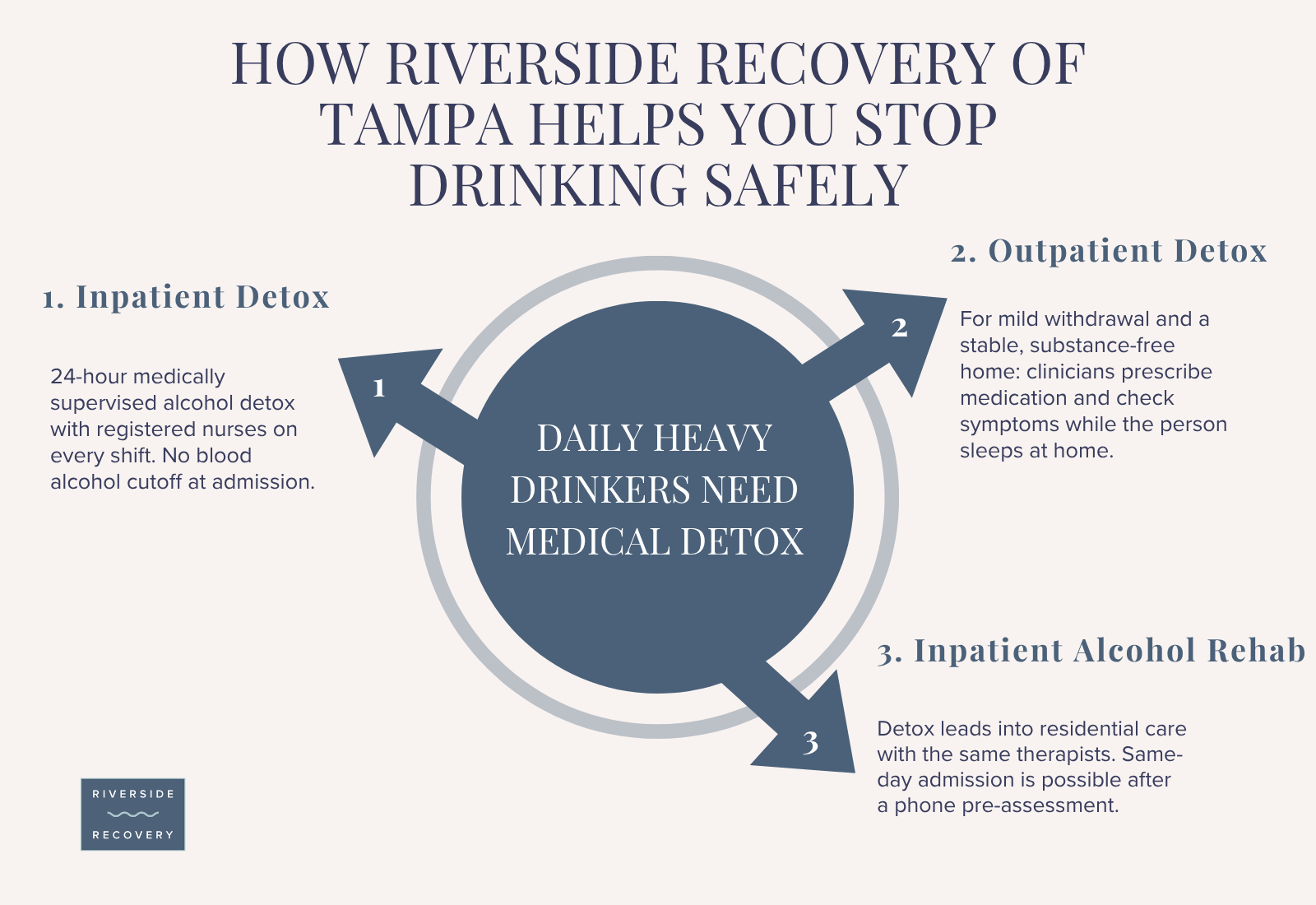
- Same-day admission: same-day admission is possible after a phone pre-assessment.
- Medically complex care: Riverside treats people with liver disease, including liver transplant referrals.
- One team: clients keep the same therapists when they move from detox into inpatient alcohol rehab.
Frequently Asked Questions About Quitting Alcohol Cold Turkey
Is cold turkey the best way to quit alcohol?
Cold turkey is a reasonable way to quit for a light drinker without withdrawal symptoms. For a person who drinks heavily every day, medically supervised detox is the safest way to quit, because it lowers the risk of withdrawal seizures and delirium tremens.
What happens when a daily drinker stops cold turkey?
A daily drinker who stops cold turkey develops alcohol withdrawal within 6 to 24 hours: shaking, sweating, anxiety and nausea. Seizures can follow within 48 hours, and delirium tremens can start at 48 to 96 hours.
How long do alcohol withdrawal symptoms last?
Uncomplicated alcohol withdrawal lasts 5 to 7 days, delirium tremens lasts up to two weeks, and protracted symptoms such as poor sleep and anxiety can continue for months, according to SAMHSA.
What should you eat and drink when detoxing from alcohol?
Water and drinks with electrolytes, plus regular meals with protein and complex carbohydrates, support the body during alcohol detox. Small, frequent meals are easier to keep down when withdrawal brings nausea.
What vitamins are best for alcohol detox?
Thiamine (vitamin B1) is the most important vitamin in alcohol detox, because thiamine deficiency causes Wernicke encephalopathy. Heavy drinking also lowers other nutrients, so a detox team checks blood levels during treatment.
What happens if you stop drinking alcohol for one week?
For a person without dependence, one week without alcohol brings better sleep and hydration. For a dependent drinker, the first week covers acute withdrawal, including the 6 to 96 hour window when seizures and delirium tremens occur.
Can I quit drinking alcohol cold turkey on my own?
A person who drinks lightly and has no withdrawal symptoms can quit on their own. A person who drinks heavily every day, or has had seizures or delirium tremens before, needs medical detox instead of quitting alone.
What is a safe alcohol taper schedule?
No home alcohol taper schedule is proven safe for a dependent drinker. A safe taper is a medical one, using benzodiazepines guided by CIWA-Ar scores instead of gradually smaller amounts of alcohol.
References
- Canver BR, Gomez AE. Alcohol Withdrawal Syndrome. StatPearls. Treasure Island (FL): StatPearls Publishing; updated 2024. National Library of Medicine
- MedlinePlus. Alcohol withdrawal. National Library of Medicine. medlineplus.gov
- MedlinePlus. Delirium tremens. National Library of Medicine. medlineplus.gov
- MedlinePlus. Wernicke-Korsakoff syndrome. National Library of Medicine.
- American Society of Addiction Medicine. The ASAM Clinical Practice Guideline on Alcohol Withdrawal Management. Journal of Addiction Medicine. 2020;14(3S Suppl 1):1-72.
- Sullivan JT, Sykora K, Schneiderman J, Naranjo CA, Sellers EM. Assessment of alcohol withdrawal: the revised Clinical Institute Withdrawal Assessment for Alcohol scale (CIWA-Ar). British Journal of Addiction. 1989;84(11):1353-1357.
- Maldonado JR, Sher Y, Ashouri JF, et al. The “Prediction of Alcohol Withdrawal Severity Scale” (PAWSS): systematic literature review and pilot study of a new scale for the prediction of complicated alcohol withdrawal syndrome. Alcohol. 2014;48(4):375-390.
- Becker HC. Kindling in alcohol withdrawal. Alcohol Health and Research World. 1998;22(1):25-33.
- Jesse S, Bråthen G, Ferrara M, et al. Alcohol withdrawal syndrome: mechanisms, manifestations, and management. Acta Neurologica Scandinavica. 2017;135(1):4-16.
- Substance Abuse and Mental Health Services Administration. Protracted Withdrawal. Substance Abuse Treatment Advisory, Volume 9, Issue 1. 2010.