



Seroquel and alcohol both depress the central nervous system, and the receptors quetiapine blocks are the same ones alcohol acts on, so combining them deepens sedation and drops blood pressure further than either does alone. Falls, rather than overdose, are the most frequent injury from this combination, and the receptor pharmacology explains why low doses taken for sleep are not exempt.
Key Takeaways
- Quetiapine blocks histamine H1 receptors, producing sedation, and alpha-1 adrenergic receptors, producing orthostatic hypotension. Alcohol amplifies both.
- The interaction is driven by alcohol content rather than beverage type, so beer carries the same mechanism as spirits at equivalent alcohol volume.
- Low doses used for sleep are exactly where H1 and alpha-1 blockade dominate, so 25 mg carries the mechanisms alcohol amplifies rather than escaping them.
- Quetiapine does not prevent alcohol withdrawal seizures and lowers the seizure threshold, so it is not a substitute for benzodiazepines during withdrawal.
- Riverside Recovery of Tampa continues psychiatric medication during detox and accepts stabilized schizophrenia, with psychiatric oversight from Dr. Ryan Wagoner, MD, Psychiatric Advisor.
What Is Seroquel?
Seroquel is the brand name for quetiapine, a second-generation atypical antipsychotic. The FDA approved it for schizophrenia, bipolar disorder and as an adjunct in major depressive disorder. Prescribers also use it off-label at low doses for insomnia.
Dose separates the uses sharply. StatPearls gives immediate-release schizophrenia dosing as 150 to 750 mg daily in two or three divided doses, starting at 25 mg twice daily. Sleep dosing runs 25 mg to 100 mg at bedtime, well below any therapeutic antipsychotic range.
That low-dose sleep use is the context most people are asking about, and it is where the receptor profile matters most.
Why Do Seroquel and Alcohol Interact?
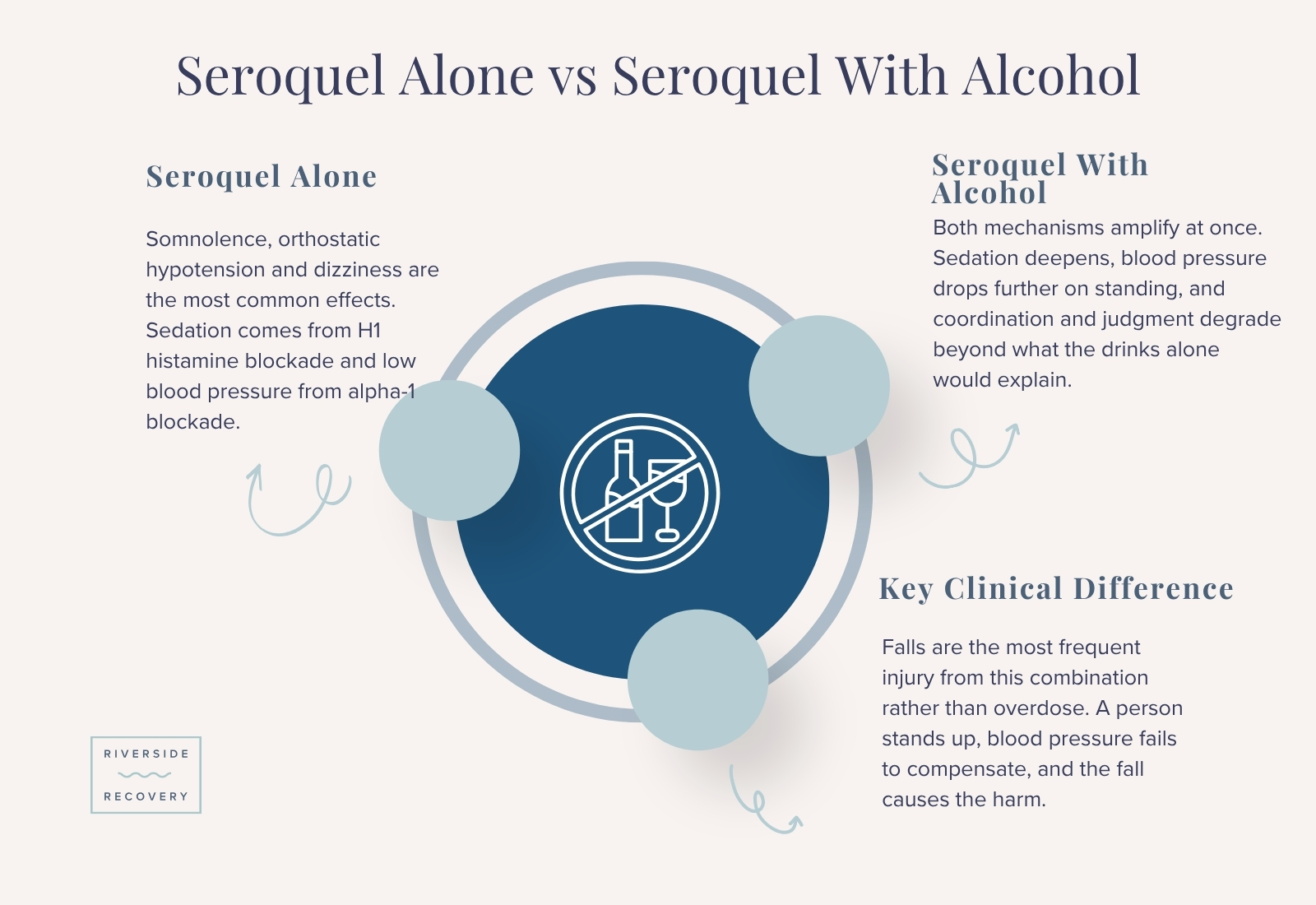
StatPearls reports somnolence, orthostatic hypotension and dizziness are quetiapine’s most common side effects, with somnolence and dizziness driven by H1 receptor antagonism and blood pressure effects by alpha-1 antagonism. Alcohol amplifies both mechanisms at once.
What happens when you drink alcohol on antipsychotics?
Sedation and dizziness intensify, blood pressure drops further on standing, and coordination and judgment degrade beyond what the drinks alone explain. Fall risk rises sharply. The combination also worsens the mood and psychotic symptoms quetiapine treats, so the medication works against the drinking rather than alongside it.
Is 25 mg of Seroquel with alcohol dangerous?
Risk is lower at 25 mg than at antipsychotic doses and it is not absent. H1 and alpha-1 blockade are precisely what produce effect at sleep doses, and those are the two mechanisms alcohol amplifies. Low dose reduces the magnitude rather than removing the interaction.
Is it safe to mix Seroquel with beer?
No. The interaction is driven by ethanol content rather than beverage type. A standard beer, a glass of wine and a shot of spirits contain roughly equivalent alcohol, and each produces the same mechanism at that volume.
Beyond the immediate sedation, quetiapine carries effects that alcohol makes harder to detect.
What Should You Not Mix With Seroquel?
Alcohol, benzodiazepines, opioids and other sedatives all deepen central nervous system depression alongside quetiapine. Medications prolonging the QT interval require caution, as does anything altering CYP3A4, the enzyme that metabolizes quetiapine.
Which effects require medical attention?
Fainting, a fall with injury, or chest pain and irregular heartbeat require prompt assessment. High fever with muscle rigidity and confusion suggests neuroleptic malignant syndrome, which is a medical emergency. Uncontrolled facial or limb movements suggest tardive dyskinesia. Quetiapine also produces weight gain and metabolic changes, and alcohol adds substantial calories to that picture.
Does quetiapine cause hypersexuality?
Hypersexuality is not a recognized common effect of quetiapine. Impulse control changes are associated more with dopamine agonists used in Parkinson disease than with dopamine-blocking antipsychotics. Any new impulsive behavior during treatment should be reported to the prescriber.
Patients taking quetiapine while drinking heavily face a distinct question once they decide to stop.
What Happens When You Stop Drinking on Seroquel?
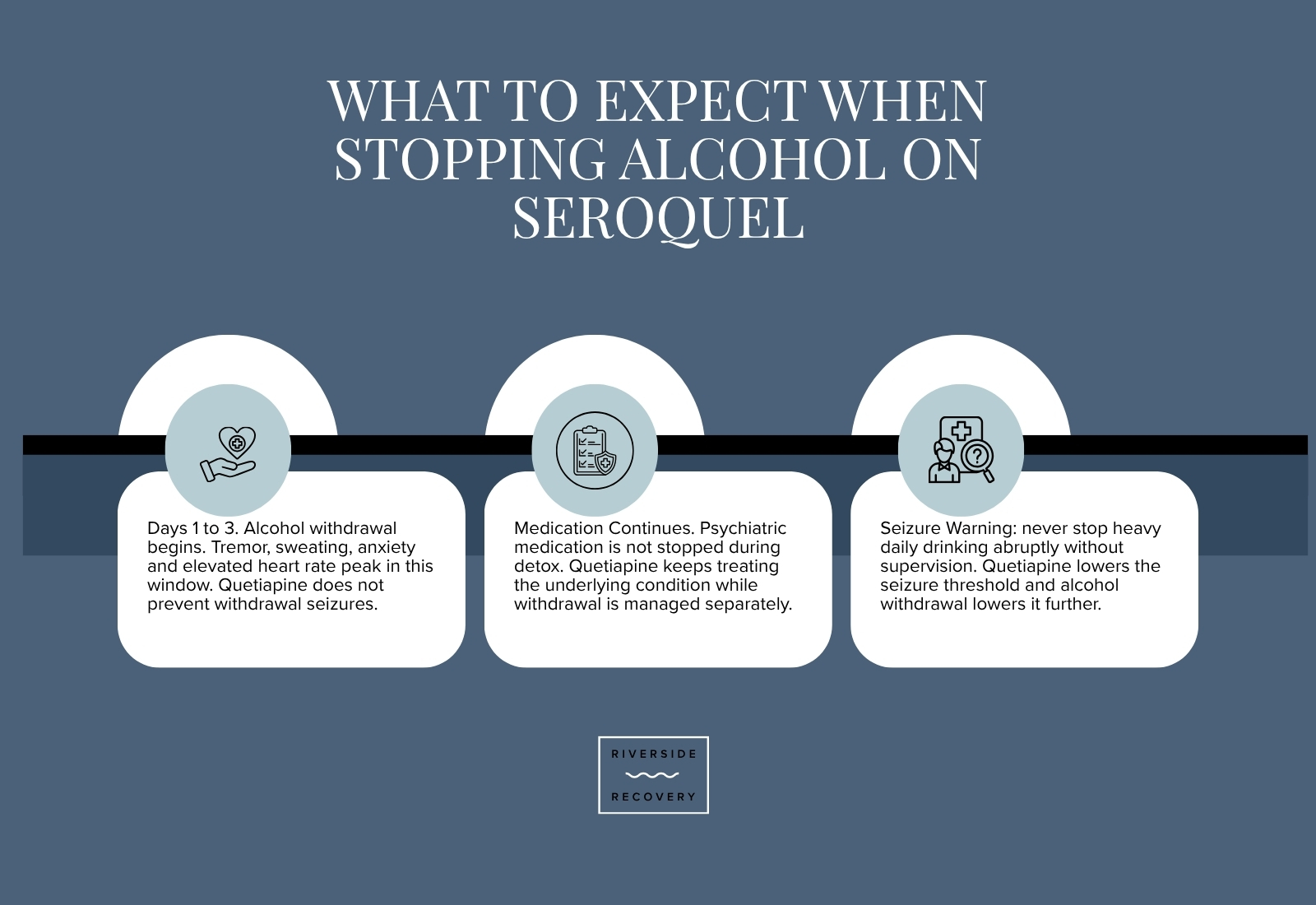
Psychiatric medication continues during detox. Quetiapine keeps treating the underlying condition while alcohol withdrawal is managed separately with benzodiazepines, which prevent withdrawal seizures. Quetiapine does not prevent them and lowers the seizure threshold.
That combination of risks is the reason supervision is not optional. Alcohol withdrawal lowers the seizure threshold on its own, and quetiapine lowers it further. Stopping heavy daily drinking abruptly without supervision carries genuine seizure risk for a person on this medication.
Can Seroquel be used for alcohol withdrawal?
Quetiapine is not a first-line withdrawal treatment. Benzodiazepines remain the standard because they prevent withdrawal seizures. Quetiapine treats agitation and insomnia during withdrawal in some protocols, as an adjunct rather than as the primary agent.
How long after drinking can you take quetiapine?
StatPearls gives the half-life of quetiapine as about 7 hours, and peak plasma concentration arrives 1 to 2 hours after a dose. Nightly dosing means no genuinely clear window exists, because the next dose arrives before the previous one has cleared. The pattern to discuss with a prescriber is the drinking itself rather than the timing around individual drinks.
Where both a psychiatric diagnosis and heavy drinking are present, treating either alone leaves the other driving relapse.
How Is Alcohol Use Treated With a Co-Occurring Diagnosis?
Integrated treatment addresses the substance use and the psychiatric condition simultaneously rather than sequentially. Treating alcohol use disorder alone leaves untreated bipolar disorder or depression driving relapse, and treating the psychiatric condition alone leaves alcohol undermining every medication.
Alcohol worsens the exact symptoms quetiapine treats. It destabilizes mood in bipolar disorder, deepens depressive episodes, and disrupts the sleep architecture that mood stability depends on. It also makes assessing whether the dose is correct much harder, because the prescriber cannot separate medication response from alcohol effect.
Diagnosis matters for medication choice. Someone taking quetiapine for bipolar disorder needs the mood stabilization maintained throughout withdrawal. Someone taking 25 mg for sleep during active drinking may not need it once the drinking stops, and that reassessment belongs to a prescriber who can see both conditions. The same reassessment applies to mixing Zoloft and alcohol and other psychiatric prescriptions started during active use.
Getting both assessed together is what determines whether quetiapine stays in the plan.
Where Can You Get Treatment in Tampa?
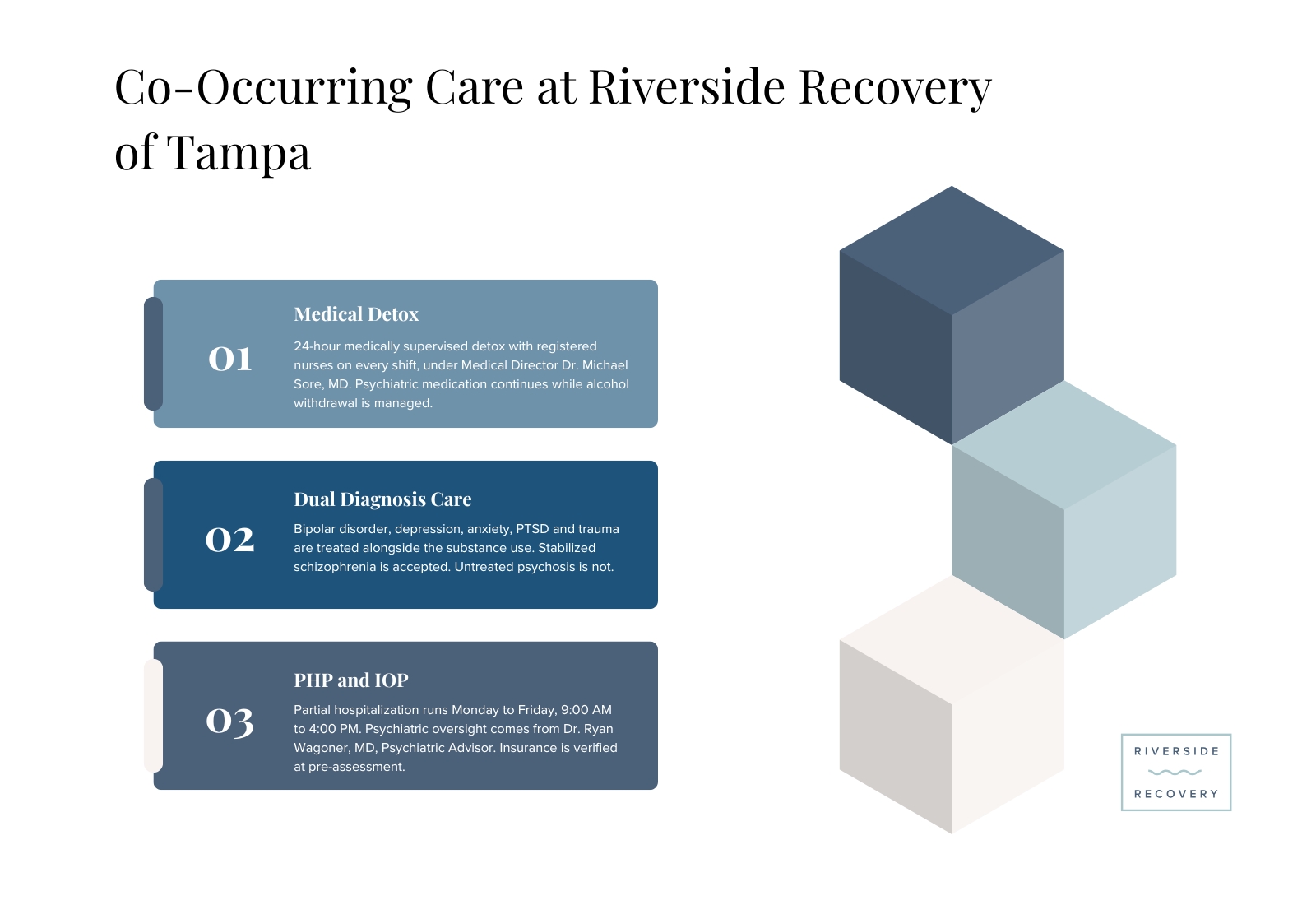
Riverside Recovery of Tampa provides 24-hour medically supervised detox with registered nurses on every shift, continuing psychiatric medication throughout. Psychiatric prescribing sits with the medical team under Medical Director Dr. Michael Sore, MD.
Bipolar disorder, depression, anxiety, PTSD and trauma are treated alongside the alcohol use disorder. Stabilized schizophrenia is accepted. Untreated psychosis is not, and that boundary is worth confirming during the pre-assessment rather than at the door.
Quetiapine is not stopped at admission. It continues treating the underlying condition while withdrawal is managed separately, which matters specifically because abrupt discontinuation of an antipsychotic during withdrawal destabilizes both conditions at once. The clinical team maintains 1:8 staffing against a Florida requirement of 1:15.
Partial hospitalization runs Monday to Friday, 9:00 AM to 4:00 PM, and intensive outpatient meets three to five days weekly on a morning or evening track. Insurance is verified during the phone pre-assessment.
Frequently Asked Questions
What should you not mix Seroquel with?
Alcohol, benzodiazepines, opioids and other sedatives, because all deepen central nervous system depression. Medications that prolong the QT interval also require caution, as does anything affecting how quetiapine is metabolized.
Does alcohol stop Seroquel from working?
Alcohol worsens the mood and psychotic symptoms quetiapine treats, so the medication works against the drinking. It also makes assessing whether the dose is correct much harder.
Is low-dose quetiapine addictive?
Quetiapine carries no DEA schedule and does not produce classic dependence. Stopping abruptly after long use causes discontinuation symptoms including rebound insomnia, so tapering under medical supervision is standard.
Can you drink occasionally on Seroquel?
Prescribing information advises avoiding alcohol during quetiapine treatment. Risk scales with amount rather than disappearing at low volumes, and individual response varies with dose, body size and other medications.
Does Riverside Recovery of Tampa accept patients on antipsychotics?
Yes. Psychiatric medication continues during detox, and stabilized schizophrenia is accepted. Untreated psychosis is not accepted.
How long is residential treatment?
Residential treatment typically runs 30 days and extends to 60 or 90 days on clinical need. The clinical and medical teams set the level of care together after a biopsychosocial assessment within the first 24 hours.
Is treatment covered by insurance?
Insurance is verified during the phone pre-assessment before arrival. The facility is accredited by CARF and The Joint Commission.