
Is this really a problem if nothing has fallen apart? A person with high-functioning alcohol use disorder asks that question more than anyone. The career, the family, the mortgage are all intact, and that surface stability is exactly why this form of alcohol use disorder stays hidden the longest.
Alcohol use disorder does not require a visible collapse to be real. A diagnosis requires a pattern. Where alcohol has become the constant in every good day and every difficult one, the information below explains what is happening clinically and what effective treatment looks like.
Key Takeaways
- Per the National Institute on Alcohol Abuse and Alcoholism (NIAAA), 27.9 million Americans ages 12 and older met the DSM-5 criteria for alcohol use disorder in 2024, and SAMHSA reports that 80% of people who needed treatment for a substance use disorder in 2024 did not receive it.
- NIAAA researchers identified a “functional subtype” of alcohol dependence in a nationally representative study, representing 19.5% of all alcohol-dependent individuals. NIAAA describes this group as typically middle-aged and well-educated, with stable jobs and families. Treatment-seeking is low across the alcohol-dependent population generally, and NIAAA notes that the young adult subtype, the largest of the five at 31.5%, rarely seeks any kind of help for its drinking.
- “High-functioning alcoholism” is not a formal clinical diagnosis. Clinicians classify it under alcohol use disorder (AUD) using DSM-5-TR criteria, with severity determined by the number of diagnostic criteria met, not by whether external functioning appears stable.
- Untreated alcohol use disorder triggers progressive neuroadaptation in GABA-A receptor systems and dopamine reward pathways, producing deepening tolerance and withdrawal severity that compound with every drinking cycle.
- The median delay from AUD onset to a first treatment episode exceeds six years, a gap that significantly worsens long-term neurological, hepatic, and cardiovascular outcomes.
What Is a High-Functioning Alcoholic?
A high-functioning alcoholic is a person who meets the DSM-5 diagnostic criteria for alcohol use disorder (AUD) while maintaining employment, relationships, and social obligations that obscure the severity of their drinking. The term describes a behavioral presentation, not a clinical subtype. Clinicians diagnose AUD and determine its severity by counting the number of DSM-5-TR criteria a patient meets within a 12-month period, without factoring in career status or social stability.
The Functional Subtype of Alcohol Use Disorder
In 2007, NIAAA researchers published a landmark study identifying five distinct subtypes of alcohol dependence in a nationally representative sample of 1,484 individuals with past-year alcohol dependence. The sample came from the National Epidemiologic Survey on Alcohol and Related Conditions. The functional subtype accounted for 19.5% of all participants with alcohol dependence, making it the third most common, behind the young adult subtype at 31.5% and the young antisocial subtype at 21%. The functional subtype averaged 41 years of age, reported the highest income and education levels of all five subtypes, and was most likely to be married and employed full-time.
The functional subtype drank an average of four drinks per day on drinking days, with consumption concentrated primarily in the evenings and on weekends. Despite this level of consumption meeting NIAAA criteria for heavy alcohol use, the majority in this group did not identify as having an alcohol problem. Most people in this group did not seek treatment. Treatment-seeking is low across all five subtypes, and NIAAA singles out the young adult subtype as rarely seeking any kind of help.
High-functioning AUD is not a protected state. NIAAA research confirms that the functional subtype accumulates the same organ damage, neurological changes, and psychiatric comorbidities as other AUD presentations. The distinction lies in the timeline of visible consequences rather than in whether those consequences occur.
High-Functioning vs. Stereotypical AUD Presentation
High-functioning alcohol use disorder consistently produces the opposite external signal set from the stereotypical AUD presentation. The table below compares both across the dimensions most relevant to identifying and addressing the condition:
| Dimension | Stereotypical AUD | High-Functioning AUD |
|---|---|---|
| Employment | Frequent absences, job loss | High-performing, often overextended |
| Social functioning | Isolation, broken relationships | Active social life centered on alcohol |
| Drinking pattern | Often throughout the day | Controlled timing (evenings, weekends) |
| Tolerance | Visible intoxication at moderate amounts | Large quantities with no visible impairment |
| Self-perception | May recognize a problem | Denies problem using achievements as evidence |
| Treatment-seeking | More likely after visible consequences | Median 6-year delay before seeking help |
| Physical appearance | Visible physical decline common | Typically well-groomed, physically active |
| DSM-5 severity tier | Often severe (6+ criteria) | Mild to moderate (2-5 criteria) most common |
Why Does High-Functioning Alcohol Use Disorder Stay Hidden?
High-functioning alcohol use disorder remains unrecognized because chronic ethanol exposure produces progressive neurological changes that are invisible from the outside while simultaneously reinforcing the individual’s belief that drinking is controlled. Two intersecting mechanisms sustain this pattern: the pharmacological effect of alcohol on attentional processing, and progressive neuroadaptation that raises the tolerance threshold with every drinking cycle.
Neuroadaptation and Tolerance in Alcohol Use Disorder
Neuroadaptation describes the compensatory changes the central nervous system produces in response to chronic alcohol exposure. Alcohol acutely enhances inhibitory GABA-A receptor neurotransmission, producing sedation and anxiety relief. Repeated exposure triggers downregulation of GABA-A receptor density and sensitivity, requiring progressively greater alcohol consumption to produce the same inhibitory effect.
Simultaneously, alcohol inhibits excitatory NMDA receptor signaling, and the brain compensates by upregulating NMDA receptor expression across affected circuits. The dual neuroadaptive change produces two compounding consequences: escalating tolerance that demands increasing intake, and a state of CNS hyperexcitability during any alcohol-free interval that manifests as anxiety, irritability, and physical discomfort.
Dopamine reward pathways undergo parallel deterioration. Chronic ethanol exposure depletes dopamine signaling capacity through D2 receptor downregulation in the mesolimbic pathway, producing anhedonia between drinking episodes and intensifying the neurobiological drive to drink as the primary available source of dopamine reinforcement.
Alcohol Myopia Theory and the Mechanism of Denial
Alcohol myopia theory, developed by Steele and Josephs in 1990, establishes that ethanol pharmacologically restricts attentional capacity. Intoxicated individuals process only the most salient and immediate situational cues while failing to register inhibitory information or long-term consequence data. Impaired control is not a character flaw or a choice. Impaired control is a documented pharmacological effect of ethanol on prefrontal cortex executive function.
For high-functioning individuals, the most salient immediate cues are consistently positive: continued employment, intact relationships, and broad social acceptance of their drinking behavior. Alcohol myopia theory explains why a person consumes six or more standard drinks in an evening and sincerely conclude they have no problem. The accumulating liver damage, cognitive decline, and cardiovascular strain fall outside the attentional window that ethanol pharmacologically narrows.
Allostatic Load and the Hidden Progression
Allostatic load describes the cumulative neurobiological deficit that develops when chronic alcohol exposure repeatedly challenges the brain’s reward and stress regulation systems beyond their capacity for normal homeostatic recovery. Each drinking cycle that triggers neuroadaptation, followed by a withdrawal interval that reinforces the need to drink again, adds to this progressive neurological burden.
The clinically significant consequence of allostatic load is that the brain’s baseline reward and stress regulation capacity progressively erodes. Anxiety, dysphoria, and sleep disruption that alcohol originally relieved become present even during sober intervals because the regulatory systems that managed them have been structurally weakened. That effect is why high-functioning individuals who attempt to moderate without clinical support find that sustained motivation alone is insufficient to produce lasting change.
What Are the Signs of a High-Functioning Alcoholic?
High-functioning alcohol use disorder signs span behavioral, physical, and emotional domains, and each individual sign is rationalized when considered in isolation. The DSM-5 AUD diagnostic framework evaluates the relationship between a person and alcohol rather than visible impairment, which means the most diagnostically significant signs are internal and subjective rather than externally observable.

Behavioral Signs of a Functioning Alcoholic
The following behavioral signs indicate that alcohol has moved from social use to a primary organizing principle of daily functioning, across 6 clinical findings:
- Drinking on a consistent, predictable schedule: The person drinks at fixed times each day and becomes irritable, anxious, or preoccupied when that schedule is interrupted or delayed by even a few hours.
- Creating rules to prove control: Telling yourself “I only drink wine,” “I never drink before 5 PM,” or “I can stop whenever I want” functions as a cognitive denial mechanism rather than as evidence of controlled consumption.
- Needing alcohol to perform: Requiring a drink to relax before a presentation, a social gathering, or a difficult conversation indicates that alcohol has become a required coping mechanism rather than an optional social choice.
- Planning activities around alcohol availability: Selecting restaurants, events, or social settings based on whether alcohol is served, or declining alcohol-free environments, reflects a significant reorganization of behavioral priorities.
- Experiencing alcohol-induced blackouts: Blackouts occur when blood alcohol concentration reaches a threshold that prevents the hippocampus from encoding new long-term memories. Blackouts of this kind are common in high-functioning drinkers who consume large quantities while appearing socially functional.
- Drinking consistently more than intended: Opening a second bottle after planning to stop at one glass is a direct behavioral expression of DSM-5 AUD Criterion 1 and represents a clinically meaningful loss of voluntary control over consumption.
Physical Signs of a High-Functioning Alcoholic
Physical signs of high-functioning alcohol use disorder reflect the hepatic, neurological, and systemic consequences of chronic ethanol exposure, across 5 systemic consequences:
- High tolerance with minimal visible impairment: Consuming five or more standard drinks without slurring speech or losing coordination indicates hepatic and neuronal tolerance, not moderation or a unique physiological advantage.
- Tremor, sweating, or anxiety on waking: Shakiness and diaphoresis during morning hours reflect CNS hyperexcitability produced by GABA-A receptor downregulation and NMDA receptor upregulation during sleep-related alcohol abstinence.
- Disrupted sleep despite regular drinking: Alcohol suppresses REM sleep and disrupts sleep architecture, producing fatigue, fragmented sleep, and early morning waking that worsen progressively as neuroadaptation deepens.
- Gastrointestinal symptoms: Chronic ethanol exposure inflames the gastrointestinal tract, producing acid reflux, nausea, and abdominal discomfort misattributed to dietary factors or occupational stress.
- Escalation of consumption over time: Needing three drinks to achieve the effect that one drink produced two years earlier directly reflects hepatic alcohol dehydrogenase (ADH) upregulation and the progressive neuronal tolerance that characterizes established AUD.
Emotional and Psychological Signs of a Functioning Alcoholic
Emotional signs of high-functioning alcohol use disorder are treated as primary anxiety or mood disorders before the alcohol relationship is properly assessed, across 4 misdiagnosis patterns:
- Anxiety and restlessness between drinking episodes: CNS hyperexcitability during low-alcohol periods produces anxiety, irritability, and agitation that are experienced as baseline personality traits rather than as the mild withdrawal activity they clinically represent.
- Reliance on alcohol to manage emotional states: Drinking to relieve stress, loneliness, boredom, or anxiety transforms alcohol from a social substance to a pharmacological emotional regulator, meeting DSM-5 AUD criteria for both craving and use in response to psychological distress.
- Defensive reactions to comments about drinking: Responding with anger, deflection, or dismissal when drinking habits are mentioned reflects cognitive dissonance between internal awareness of the problem and the need to protect the externally functioning self-image.
- Guilt or shame that coexists with continued drinking: Experiencing regret about the previous night’s consumption while repeating the same intake level the following day reflects the loss-of-control component that is central to the DSM-5 AUD diagnosis.
How High-Functioning Alcohol Use Disorder Progresses Over Time
High-functioning alcohol use disorder follows a four-stage progression that unfolds over years or decades rather than weeks, across 4 progression stages:
- Stage 1 (Pre-alcoholic phase): Alcohol produces noticeable stress relief and social ease. Tolerance begins building quietly. Alcohol becomes the preferred coping strategy for anxiety, boredom, or social discomfort, but external functioning remains fully intact and drinking frequency appears socially normative.
- Stage 2 (Early high-functioning AUD): Blackouts begin occurring. Drinking frequency and total consumption increase. Rules and rituals emerge to create an illusion of control. Morning discomfort or anxiety after heavy drinking appears but is attributed to stress or poor diet rather than to early withdrawal activity.
- Stage 3 (Established high-functioning AUD): Daily drinking is established. Physical dependence produces mild withdrawal symptoms (anxiety, shakiness, sweating) during alcohol-free intervals. Rationalization and denial are deeply entrenched, reinforced by continued professional performance. AUD is present by DSM-5 criteria even when no one, including the individual, has named it.
- Stage 4 (Advanced AUD with deteriorating function): Allostatic load accumulation reaches a threshold where functioning begins to visibly deteriorate. Organ damage becomes clinically detectable. Independent attempts to stop or moderate consistently fail. The gap between internal awareness of the problem and external presentation begins to close.
How Do You Self-Screen for Alcohol Use Disorder?
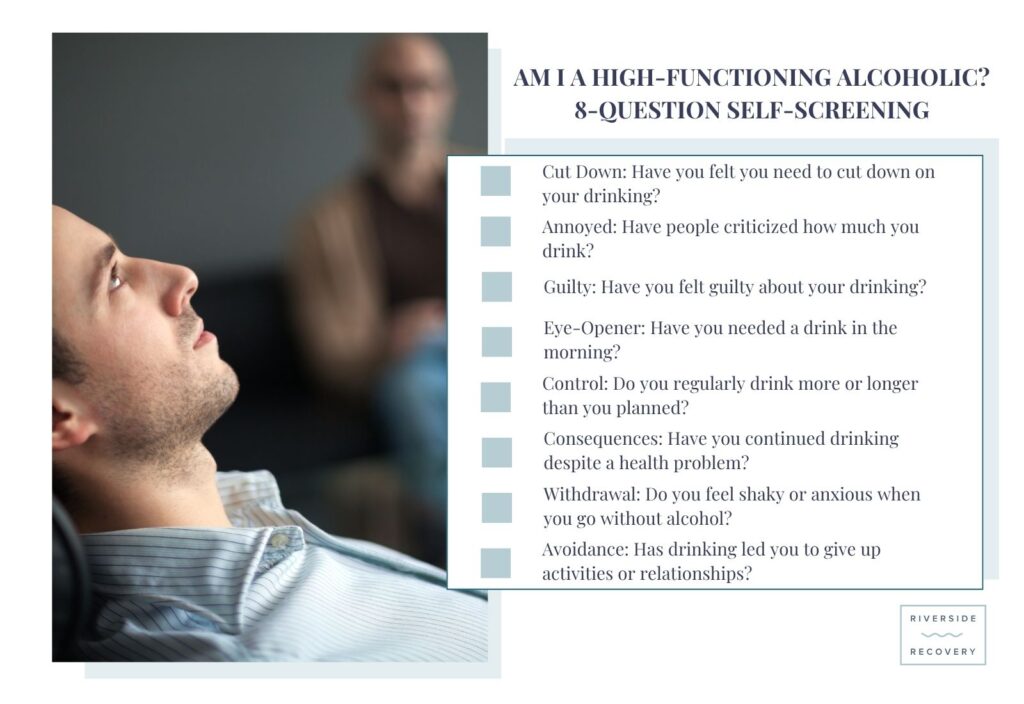
The questions below are adapted from the CAGE questionnaire and DSM-5 AUD criteria for self-reflection purposes only. The screening questions do not replace a formal clinical evaluation. Two or more “yes” responses on the CAGE items indicate a probable alcohol use disorder and warrant professional assessment.
The 4 CAGE screening questions:
- Cut down: Have you ever felt you needed to cut down on your drinking?
- Annoyed: Have people annoyed you by criticizing how much you drink?
- Guilty: Have you ever felt guilty about drinking?
- Eye-opener: Have you ever needed a drink in the morning to steady your nerves or ease a hangover?
Additional indicators based on DSM-5 AUD criteria:
- Do you drink more, or for longer, than you planned on more than one occasion?
- Have you continued drinking despite knowing it was worsening your anxiety, depression, or a physical health condition?
- Have you experienced shakiness, sweating, or intense anxiety when hours have passed without a drink?
- Has drinking led you to give up activities, relationships, or obligations that were previously important to you?
A clinician determines AUD severity and appropriate level of care within a single structured interview. Discomfort rather than relief in answering these questions is itself clinically significant.
What Are the Health Risks of High-Functioning Alcohol Use Disorder?
High-functioning alcohol use disorder produces organ-level damage, psychiatric comorbidity, and progressive neurological deterioration on the same clinical timeline as recognized AUD, regardless of whether career or social functioning remains intact. The evidence firmly contradicts the belief that professional achievement protects against the physiological consequences of chronic ethanol exposure.
Physical Health Consequences of Chronic Alcohol Use
Chronic ethanol exposure damages the liver through a three-stage progressive sequence: hepatic steatosis (fatty liver) develops first, followed by alcoholic hepatitis, then fibrosis progressing to irreversible cirrhosis. According to NIAAA, alcohol accounts for 43.1% of all liver disease deaths in the United States annually, and 15 to 20% of individuals with chronic heavy alcohol use develop cirrhosis in their lifetimes.
Cardiovascular consequences include alcoholic cardiomyopathy, sustained hypertension, and elevated hemorrhagic stroke risk. Chronic alcohol depletes thiamine (vitamin B1) through more than one mechanism, creating the risk of Wernicke’s encephalopathy. Wernicke’s encephalopathy is an acute neurological emergency marked by oculomotor abnormalities, ataxia and confusion, and it progresses to irreversible Korsakoff’s syndrome without treatment. The CDC reports that alcohol causes approximately 178,000 deaths per year in the United States, making excessive alcohol use the third-leading preventable cause of death.
Peripheral neuropathy from direct axonal neurotoxicity and alcoholic myopathy from chronic ethanol-mediated muscle protein degradation accumulate silently in high-functioning individuals. The conditions above are attributed to occupational stress or aging rather than to alcohol exposure, delaying both accurate diagnosis and clinical intervention.
Co-Occurring Mental Health Disorders in Alcohol Use Disorder
Alcohol use disorder and psychiatric comorbidities share a bidirectional relationship in which each condition amplifies the clinical severity of the other. According to SAMHSA, 21.2 million adults in the United States have a co-occurring substance use disorder and mental illness. Among adults who met criteria for past-year alcohol dependence, 27.9% also had major depressive disorder, against 11.3% of those with alcohol misuse alone. The 12-month odds of an independent major depression ran close to four times higher than in adults without an alcohol use disorder. Large epidemiological surveys put the odds ratios for comorbidity between an alcohol use disorder and any anxiety disorder between 2.1 and 3.3. The two conditions co-occur about two to three times as often as chance alone would predict.
High-functioning individuals with AUD receive antidepressant or anxiolytic prescriptions at higher rates before the primary alcohol relationship is identified. That sequencing produces inadequate clinical outcomes because SSRIs and benzodiazepines do not address the neuroadaptive mechanisms sustaining AUD, and chronic alcohol consumption directly antagonizes antidepressant efficacy by disrupting serotonin reuptake dynamics. Integrated dual diagnosis treatment that addresses both conditions within a single clinical framework consistently produces better recovery outcomes than sequential or siloed treatment approaches.
The Kindling Effect and the Risk of Delayed Treatment
The kindling effect describes a clinically documented neurological phenomenon in which repeated alcohol withdrawal episodes progressively sensitize neural circuits, producing more severe withdrawal symptoms and greater seizure risk with each subsequent episode. First characterized by Ballenger and Post in 1978, the kindling effect has specific and serious implications for high-functioning individuals who repeatedly attempt to control or stop drinking without medical supervision.
Each self-managed withdrawal attempt creates neural sensitization that raises the clinical severity of the next episode, even if months of reduced drinking occur between attempts. Seek emergency medical care immediately if any of these 4 alcohol withdrawal signs appear:
- Grand mal (tonic-clonic) seizures
- Confusion, visual hallucinations, or extreme disorientation
- Severe uncontrollable tremors
- High fever combined with rapid heart rate and profuse sweating (delirium tremens)
The alcohol withdrawal symptoms of advanced withdrawal carry a significant mortality risk. The kindling effect means that delaying treatment does not reduce this risk; it progressively compounds it with each subsequent cycle.
How Is Alcohol Use Disorder Treated?
Effective treatment for alcohol use disorder is a clinical process that addresses the neuroadaptive changes sustaining dependence through pharmacological stabilization, evidence-based behavioral therapy, and progressive step-down support. Willpower and motivation alone cannot reverse the GABA-A receptor downregulation, NMDA upregulation, and dopamine system depletion that chronic ethanol exposure produces in the brain’s reward and stress regulation circuits.
Medical Detoxification
Medically supervised alcohol detox addresses the acute withdrawal consequences of neuroadaptation within a clinically monitored environment. Standard protocols use benzodiazepines in symptom-triggered or scheduled tapering doses to prevent seizures and stabilize CNS excitability. The CIWA-Ar (Clinical Institute Withdrawal Assessment for Alcohol) provides a standardized severity scoring tool that guides medication titration throughout the detox period.
For high-functioning individuals with established neuronal tolerance, the CIWA-Ar reveals withdrawal severity that is significantly higher than subjectively reported symptoms suggest. Medical detox is the required first clinical stage before evidence-based behavioral treatment begins, rather than a standalone intervention.
Evidence-Based Behavioral Therapies
Cognitive behavioral therapy (CBT) for AUD targets the cognitive distortions, minimization patterns, and behavioral triggers that sustain problematic drinking, including the rationalization frameworks that are particularly pronounced in high-functioning presentations. CBT produces neuroplastic changes in prefrontal cortex regulation of reward-related decision-making, supporting the restoration of executive function that chronic alcohol impairs.
Dialectical behavior therapy (DBT) addresses the emotional dysregulation that alcohol has been used to manage, providing specific distress tolerance, emotional regulation, and interpersonal effectiveness skills. Motivational interviewing (MI) is particularly effective for high-functioning individuals whose denial reflects genuine ambivalence, resolving the cognitive dissonance between stated values and actual drinking behavior through structured reflective dialogue.
Medication-Assisted Treatment for Alcohol Use Disorder
Three FDA-approved medications reduce AUD relapse risk through distinct neurobiological mechanisms. Naltrexone, an opioid receptor antagonist, blocks the dopaminergic reinforcement response to alcohol and reduces craving intensity at the mu-opioid receptor level. Vivitrol is the monthly extended-release injectable formulation of naltrexone, eliminating daily adherence requirements for individuals who benefit from a sustained-release format.
Acamprosate (Campral) reduces the glutamatergic hyperexcitability that characterizes protracted abstinence syndrome, directly targeting the anxiety, insomnia, and dysphoria that drive relapse risk during early recovery. Post-acute withdrawal syndrome (PAWS) persists for weeks to months after acute detox completion and represents the primary neurobiological driver of relapse among individuals who complete detox but do not engage in structured step-down programming.
How Does Riverside Recovery of Tampa Treat Alcohol Use Disorder?
Riverside Recovery of Tampa provides a full continuum of care for alcohol use disorder on an integrated campus at 4004 N. Riverside Drive, Tampa, Florida, with a second location in New Port Richey. The facility accepts most major private insurance plans and maintains 24-hour admissions availability for individuals seeking immediate clinical evaluation.
Medical Detox Program
Riverside Recovery of Tampa’s drug and alcohol detox program provides 24-hour clinical monitoring for alcohol withdrawal with a five-provider medical team led by an emergency board-certified and addiction-certified Medical Director. The program reduces benzodiazepine doses under medical supervision rather than stopping them abruptly, accepts medically complex cases including patients with significant liver disease and co-occurring medical conditions, and maintains no BAL cutoff for admission. Primary therapist continuity from detox through residential treatment ensures clinical consistency throughout the full inpatient episode.
Residential Inpatient Treatment
Riverside Recovery of Tampa’s residential inpatient program provides 30-day structured care with twice-weekly individual therapy sessions, daily evidence-based group programming in CBT, DBT, and relapse prevention, and a structured family therapy component. The 60,000-square-foot riverside campus provides a non-institutionalized setting with private room configurations available for professionals who require enhanced privacy and device access during treatment. Discharge planning begins on the first day of admission and continues throughout the stay.
Partial Hospitalization and Intensive Outpatient Programs
Riverside Recovery of Tampa’s partial hospitalization program (PHP) provides Monday through Friday structured programming from 9 AM to 4 PM, offering clinically intensive step-down care while clients live off-site. The intensive outpatient program (IOP) is available in morning and evening formats at both Tampa and New Port Richey locations. The format supports individuals managing work and family obligations alongside structured clinical engagement three to five sessions per week. Same-day assessments are available for individuals ready to begin the evaluation process immediately.
Dual Diagnosis Treatment
Riverside Recovery of Tampa’s dual diagnosis treatment program addresses co-occurring alcohol use disorder and psychiatric conditions, including major depressive disorder, generalized anxiety disorder, PTSD, and bipolar disorder, within a single integrated clinical framework. A licensed clinical psychologist provides a minimum of 12 weekly hours of consultation, treatment planning, and crisis management support across both campuses. Psychiatric medication management for co-occurring conditions is available through the facility’s medical team at all levels of care.
Frequently Asked Questions
What is considered a high-functioning alcoholic?
A high-functioning alcoholic is a person who meets the DSM-5 diagnostic criteria for alcohol use disorder while maintaining employment, social relationships, and daily obligations that mask the severity of their drinking. The term is not a formal clinical diagnosis. The number of the 11 DSM-5-TR criteria a person meets within 12 months determines AUD severity, and it does not depend on whether their external life appears stable.
What are the six signs of a functioning alcoholic?
The six most clinically significant signs include: drinking on a predictable daily schedule with anxiety or irritability when that schedule is interrupted. Two more are creating self-imposed rules to rationalize consumption, and experiencing morning shakiness or anxiety during alcohol-free intervals. The remaining three are requiring alcohol to manage stress or social situations, continued drinking despite a known physical or mental health consequence; and repeated unsuccessful attempts to cut down or stop.
What is the difference between a high-functioning alcoholic and a closet alcoholic?
A high-functioning alcoholic meets AUD criteria while maintaining visible social and professional functioning, with drinking that is often socially apparent but minimized. A closet alcoholic conceals drinking from others through hidden bottles and covert consumption. The behaviors can overlap but represent distinct presentations. Riverside Recovery of Tampa’s resource on hiding alcohol covers the signs of secret drinking in detail.
Can a high-functioning alcoholic stop drinking on their own?
Abrupt alcohol cessation without medical supervision carries significant risk for individuals with physical dependence, including generalized tonic-clonic seizures and delirium tremens. The kindling effect means each unsupervised withdrawal attempt progressively increases both severity and seizure risk for subsequent episodes. Medical evaluation before attempting to stop is clinically indicated regardless of how well a person appears to function externally.
What percentage of people with alcohol use disorder are high-functioning?
According to NIAAA research, the functional subtype of alcohol dependence represents approximately 19.5% of all alcohol-dependent individuals in the United States, making it the second most common AUD presentation. NIAAA characterizes this group as middle-aged and well-educated, with stable jobs and families, and notes that most do not seek treatment.
How do I talk to someone about high-functioning alcohol use disorder?
Approach the conversation during a calm, sober moment rather than immediately after an incident. Use specific, observable behavioral observations rather than character judgments: noting that they become visibly anxious when they cannot drink is more clinically actionable than broad characterizations. Offer concrete next steps, including accompanying them to an initial assessment, rather than framing the conversation as a confrontation or ultimatum.
Is drinking every day considered alcohol use disorder?
Daily drinking does not automatically meet the DSM-5 criteria for alcohol use disorder. Daily drinking does meet NIAAA’s definition of heavy alcohol use when it exceeds 14 drinks per week for men or 7 per week for women. Daily drinking that produces tolerance, generates withdrawal symptoms between sessions, or continues despite negative physical or psychological consequences meets the diagnostic threshold for AUD regardless of how controlled each session appears.
References
- National Institute on Alcohol Abuse and Alcoholism. (2025). Alcohol use disorder (AUD) in the United States: Age groups and demographic characteristics. https://www.niaaa.nih.gov/alcohols-effects-health/alcohol-topics/alcohol-facts-and-statistics/alcohol-use-disorder-aud-united-states-age-groups-and-demographic-characteristics
- National Institute on Alcohol Abuse and Alcoholism. (2007). Researchers identify alcoholism subtypes. niaaa.nih.gov
- Moss, H. B., Chen, C. M., & Yi, H. Y. (2007). Subtypes of alcohol dependence in a nationally representative sample. Drug and Alcohol Dependence, 91(2-3), 149-158. https://pmc.ncbi.nlm.nih.gov/articles/PMC2094392/
- National Institute on Alcohol Abuse and Alcoholism. (2025). Alcohol use disorder: From risk to diagnosis to recovery. https://www.niaaa.nih.gov/health-professionals-communities/core-resource-on-alcohol/alcohol-use-disorder-risk-diagnosis-recovery
- National Institute on Alcohol Abuse and Alcoholism. (2024). Alcohol treatment in the United States. https://www.niaaa.nih.gov/alcohols-effects-health/alcohol-topics-z/alcohol-facts-and-statistics/alcohol-treatment-united-states
- Centers for Disease Control and Prevention. (2024, February 29). Deaths from excessive alcohol use — United States, 2016–2021. MMWR Morb Mortal Wkly Rep, 73(8), 154–161. https://www.cdc.gov/mmwr/volumes/73/wr/mm7308a1.htm
- Substance Abuse and Mental Health Services Administration. (2025). Co-occurring disorders and other health conditions. https://www.samhsa.gov/substance-use/treatment/co-occurring-disorders
- National Institute on Drug Abuse. (2020). Drugs, brains, and behavior: The science of addiction. https://nida.nih.gov/research-topics/addiction-science/drugs-brain-behavior-science-of-addiction
- National Institute on Alcohol Abuse and Alcoholism. (2025). Alcohol facts and statistics. https://www.niaaa.nih.gov/sites/default/files/publications/NIAAA_Alcohol_Facts_and_Stats_0.pdf
- Koob, G. F., & Le Moal, M. (2008). Addiction and the brain’s antireward system. Annual Review of Psychology, 59, 29-53.
- American Psychiatric Association. (2022). Diagnostic and Statistical Manual of Mental Disorders, Fifth Edition, Text Revision (DSM-5-TR). American Psychiatric Publishing.
- Steele, C. M., & Josephs, R. A. (1990). Alcohol myopia: Its prized and dangerous effects. American Psychologist, 45(8), 921-933.