
Panic Disorder & Substance Use Treated Together in Tampa, FL
A drink or a pill stops a panic attack in twenty minutes. Then it starts causing them. We treat panic disorder and substance use disorder at the same time, with licensed psychiatric providers and extended benzodiazepine tapers, on one campus in Tampa, FL.
In crisis or thinking about suicide? Call or text 988, or chat at 988lifeline.org/chat. Available 24 hours a day in English and Spanish, with ASL support at 988lifeline.org. If someone is in immediate danger, call 911.
Verify Your Insurance
Free & Confidential · 60 Seconds
"*" indicates required fields
HIPAA-compliant · No obligation · Results in minutes
 Joint CommissionAccredited
 LegitScriptCertified
 ASAM 3.7Certified by CARF
 ASAM 3.5Certified by CARF
 NAATPMember Provider
Panic Disorder & Substance Use Treatment
Why does treating the addiction alone leave panic disorder in place?
Because the panic attacks were there first, and detox does not touch them. Panic disorder and substance use disorder run on the same feedback loop: an attack arrives, a drink or a benzodiazepine ends it in twenty minutes, and the brain files that away as the only thing that works.
The relief is real, which is what makes it dangerous. Alcohol and benzodiazepines both act on GABA, the brain's braking system, so they genuinely abort a panic attack. Then the drug clears, GABA activity rebounds low, and anxiety returns above where it started. That rebound is a panic trigger in its own right, so the loop tightens every cycle.
This is not anxiety caused by drinking. In the National Epidemiologic Survey on Alcohol and Related Conditions, conducted by NIAAA, only 0.2% of co-occurring anxiety cases were substance-induced. The panic disorder is an independent condition, and it needs its own treatment.
A free, confidential phone assessment takes about 15 minutes. Call (833) 875-7701.
It may be time to reach out if you're noticing:
- Drinking or taking something to stop an attack, or to stop one from starting
- Carrying alcohol or a pill with you so you never get caught without it
- Avoiding driving, stores, work, or crowds in case an attack happens there
- Attacks getting worse, not better, since the drinking or the pills started
- Trying to cut back or come off, and the panic spiking hard
Level of Care
What does hospital-level care for co-occurring panic disorder look like?
A 68-bed riverfront campus with registered nurses on every shift, five medical providers, and benzodiazepine tapers of 30 days or more when clinically indicated, extended further where the taper needs longer.
30+ day benzodiazepine tapers
Tapers of 30 days or more, extended further when clinically indicated. The 2025 Joint Clinical Practice Guideline on Benzodiazepine Tapering warns that rapid dose reduction can cause seizures and delirium, and in someone with panic disorder it produces rebound attacks.
1:8 therapist-to-client ratio
Nearly double the attention Florida requires at 1:15, with registered nurses on every shift and 24-hour medical coverage during withdrawal.
24/7 admissions, same-day intake
Our admissions line answers around the clock, and a morning call can become a same-day admission. No waiting list, no callback queue.




Understanding Panic Disorder
What is panic disorder?
Panic disorder is an anxiety disorder defined by recurrent, unexpected panic attacks plus at least one month of persistent worry about the next one, or a change in behavior to avoid it. The attacks arrive out of the blue, with no external trigger.
A panic attack is a sudden surge of intense fear that peaks within minutes and brings physical symptoms with it: pounding heart, chest tightness, shortness of breath, trembling, sweating, nausea, dizziness, numbness, and a sense of unreality or of dying. Most attacks resolve within 20 to 30 minutes.
Having one panic attack is common and does not mean you have panic disorder. What makes it a disorder is the second half: the anticipatory fear, and the shrinking of your life around it. People stop driving, stop shopping alone, stop taking meetings, and start structuring days around exits.
Alcohol and benzodiazepines enter the picture as the fastest available exit, and that is where panic disorder becomes a co-occurring condition, also called dual diagnosis. Per NIMH, panic disorder affects 2.7% of U.S. adults in a given year, and it is highly treatable when both sides are treated at once.
Panic disorder at a glance
- Attacks peak within minutes and usually pass within 20 to 30 minutes. They are not dangerous, even though they feel life-threatening.
- Affects 2.7% of U.S. adults in a given year and 4.7% over a lifetime. Source: NIMH
- More common in women at 3.8% than men at 1.6%. Average onset is around age 24. Source: NIMH
- Diagnosed through clinical interview with a licensed psychiatric provider, after ruling out cardiac and thyroid causes.
- Responds well to treatment. Cognitive behavioral therapy and psychiatric medication management are both first-line.
Start treatment in Tampa today
Panic disorder and substance use are treatable together. Our Tampa, FL team offers same-day assessments, real-time insurance verification, and an admissions line that is open right now.
Call (833) 875-7701Symptoms & Causes
What are the signs and symptoms of panic disorder?
A panic attack requires four or more of 13 physical and cognitive symptoms arriving together and peaking within minutes. Panic disorder requires recurrent unexpected attacks plus a month or more of worry about the next one.
Common signs & symptoms
- Pounding, racing, or skipping heartbeat
- Chest pain or tightness that feels like a cardiac event
- Shortness of breath, or a choking or smothering sensation
- Sweating, trembling, shaking, or chills and hot flushes
- Nausea, stomach distress, dizziness, or feeling faint
- Numbness or tingling in the hands, feet, or face
- Feeling detached from yourself or from reality
- Fear of losing control, going crazy, or dying
- Persistent dread of the next attack, and avoiding places it might happen
- Drinking or taking a benzodiazepine to end an attack or prevent one
- Needing more than before to feel steady, or attacks worsening when you cut back
Common causes & risk factors
- Genetics and family history, since panic disorder runs in families
- Brain chemistry, specifically GABA, serotonin, and norepinephrine signaling in the fear circuit
- An oversensitive threat-detection response that reads normal body sensations as danger
- Trauma, bereavement, and major life transitions, which commonly precede a first attack
- Alcohol and benzodiazepine use, since rebound after each dose is itself a panic trigger
- Stimulants including cocaine, methamphetamine, high-dose caffeine, and nicotine withdrawal
- Thyroid disease, cardiac conditions, and certain medications, which is why medical screening comes first
In crisis or thinking about suicide?
If you or someone you love is in immediate danger, call 911. For free, confidential support 24 hours a day, call or text 988, or chat online at 988lifeline.org/chat. Services are available in English and Spanish, and ASL support is available for Deaf and hard of hearing callers at 988lifeline.org. You don't have to face this alone.
The two currents: a private 60-second check-in
Stays on this page , nothing is sent or savedSix honest questions, one at a time : three about the attacks, three about drinking or taking something for them. As you answer, watch the two lines below. When they braid together, that's the pattern our program exists for.
Sudden waves of intense fear that peak within minutes, out of nowhere?
Racing heart, chest tightness, or feeling like you can't breathe during them?
Avoiding places, driving, or situations in case another attack happens there?
Drinking, or taking something, to end an attack or stop one starting?
Tried to cut back or come off, and the attacks got worse?
Needing more than before to feel steady?
If this check-in surfaced thoughts of suicide or self-harm, reach the 988 Suicide & Crisis Lifeline before anything else. Call or text 988, or chat at 988lifeline.org/chat, 24 hours a day in English and Spanish, with ASL support at 988lifeline.org. If someone is in immediate danger, call 911.
This check-in is not a diagnosis or a screening tool, and it can't replace a clinical assessment. Only a licensed provider can evaluate panic disorder or a substance use disorder . Our free, confidential phone assessment takes about 15 minutes.
By the Numbers
How common is panic disorder, and how often does it occur with substance use?
Panic disorder affects about 1 in 21 U.S. adults over a lifetime, and it has one of the strongest links to alcohol use disorder of any anxiety disorder. These figures come from named public-health authorities.
An estimated 2.7% of U.S. adults had panic disorder in the past year, higher in women at 3.8% than men at 1.6%. Source: NIMH
4.7% of U.S. adults experience panic disorder at some point in life, roughly 1 in 21 people. Source: NIMH
Of adults with past-year panic disorder, 44.8% had serious impairment in work, home life, or relationships. Source: NIMH
17.3% of adults with panic disorder also met criteria for a past-year alcohol use disorder. Source: NESARC, NIAAA
Anxiety disorders and alcohol use disorders co-occur two to three times more often than chance alone would predict, and panic disorder shows one of the strongest associations. Source: NIAAA
About 21.5 million U.S. adults live with both a mental illness and a substance use disorder. Source: SAMHSA
Panic vs Anxiety
What is the difference between a panic attack and an anxiety attack?
A panic attack is a clinical term with diagnostic criteria: sudden onset, peak within minutes, four or more of 13 physical and cognitive symptoms. An anxiety attack is not a clinical diagnosis. It describes anxiety that builds gradually, in response to something identifiable, and can last hours or days.
Panic attack
- Onset is abrupt, often with no trigger you can name
- Peaks within about 10 minutes, usually over in 20 to 30
- Physical symptoms dominate: heart, chest, breathing, dizziness
- Fear is of immediate catastrophe, of dying or losing control
- A defined clinical term in the DSM-5-TR, with specific criteria
Anxiety attack
- Builds gradually, usually tied to an identifiable stressor
- Can last hours or days at lower intensity
- Worry and rumination dominate over physical symptoms
- Fear is of a future outcome rather than immediate collapse
- Not a DSM-5-TR diagnosis, though the anxiety it describes is real
Is a panic attack the same as a heart attack?
No, but the overlap in symptoms is genuine and it is why many first panic attacks end in an emergency room. Chest pain, racing heart, shortness of breath, and sweating occur in both. A panic attack peaks within minutes and eases; cardiac pain often builds with exertion and persists. Any first episode of chest pain warrants medical evaluation. Cardiac and thyroid screening is part of our intake for exactly this reason.
Are panic attacks dangerous?
Panic attacks are not physically dangerous. They do not cause heart attacks, strokes, or death, and they end on their own. The danger sits in what people do to stop them: driving impaired, escalating benzodiazepine doses, mixing alcohol with sedatives, or withdrawing from life entirely. Those consequences are what require treatment, alongside anxiety and substance use disorder care where both are present.
Types & Presentations
Are there different types of panic disorder?
The DSM-5-TR lists one diagnosis with no official subtypes. What clinicians distinguish are presentations and closely related diagnoses, and the distinction matters because each one changes the treatment plan.
Panic disorder
Recurrent unexpected panic attacks plus a month or more of persistent worry about further attacks, or behavior change to avoid them. This is the core diagnosis.
Panic disorder with agoraphobia
The DSM-5-TR separates agoraphobia into its own diagnosis, and it frequently co-occurs. Fear of situations where escape feels impossible: driving, crowds, stores, public transport.
Nocturnal panic attacks
Attacks that wake you from sleep, with no dream content and no trigger. Commonly mistaken for a cardiac event or for alcohol withdrawal, and they respond to the same treatment.
Expected vs unexpected attacks
Unexpected attacks are the hallmark of panic disorder. Expected attacks, cued by a known trigger, point instead toward a phobia, social anxiety disorder, or PTSD.
Panic attacks as a specifier
Panic attacks occur across depression, PTSD, and substance use disorders without meaning panic disorder is present. The DSM-5-TR records this as a specifier, not a separate diagnosis.
Substance-induced panic
Attacks driven directly by intoxication or withdrawal, particularly from alcohol, benzodiazepines, or stimulants. Per NIAAA's NESARC data, this accounts for only 0.2% of co-occurring anxiety cases.
What Makes Us Different
Why Riverside Recovery for panic disorder & substance use treatment
Industry accredited, exceptional care
Riverside Recovery holds dual accreditation from CARF and The Joint Commission, is LegitScript certified, holds ASAM Level 3.5 and 3.7 certification, and is a NAATP member provider. Our detox unit is a teaching site for University of South Florida psychiatry fellows.
Our Florida Dual Diagnosis ProgramTake a look inside our facility

- Extended benzodiazepine tapers of 30 days or more when clinically indicated
- Registered nurses on every shift, with 24-hour medical coverage
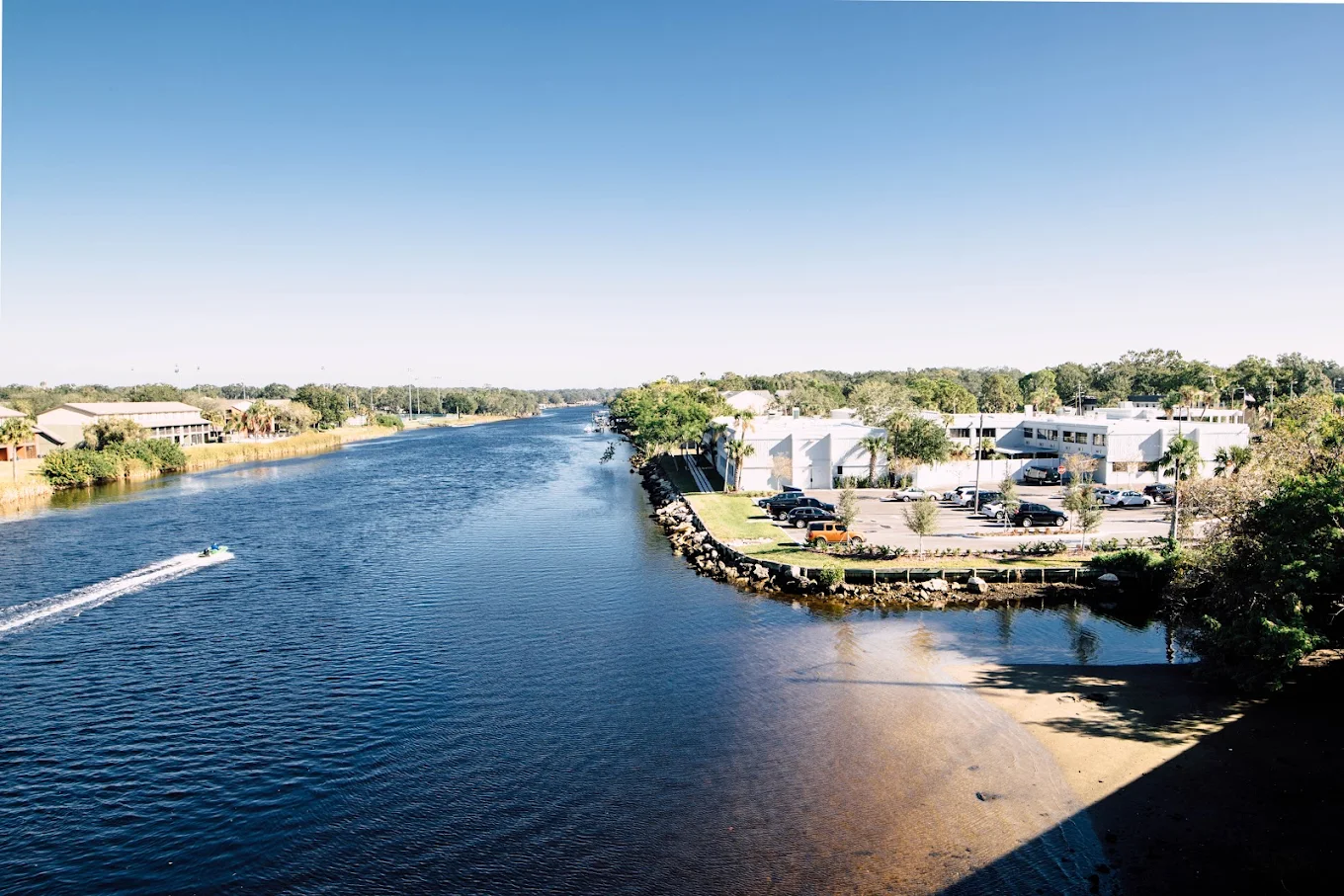
- 68-bed riverfront campus with pool, gymnasium, and open green space
- Same-day admissions, seven days a week
What our patients say
"This treatment center truly saved my life and helped ease me into recovery. The technicians, therapists, and groups gave me everything I needed. Would highly recommend to anyone who is struggling."
Verified Google Review See More ReviewsBenzodiazepines, Alcohol & Panic
Do benzodiazepines and alcohol make panic disorder worse?
Yes, over time both make panic disorder worse. Alcohol and benzodiazepines reduce anxiety by boosting GABA, the brain's inhibitory signal. The brain compensates by dialing GABA sensitivity down, so baseline anxiety rises and each dose buys less relief than the last.
That is tolerance, and in panic disorder it has a specific signature: interdose withdrawal. As a short-acting benzodiazepine wears off, GABA activity dips below baseline and produces the exact symptoms it was prescribed to stop. People read this as their panic disorder getting worse and take the next dose sooner, which accelerates dependence rather than treating anything.
Xanax is the clearest example, because its short half-life makes the rebound sharpest. It is also among the most commonly prescribed medications for panic attacks, which is how a legitimate prescription becomes a dependence that neither the patient nor the prescriber intended.
The risk is not theoretical. Per NIDA's analysis of CDC mortality data, benzodiazepine-involved overdose deaths rose from 1,135 in 1999 to 11,537 in 2017, driven largely by combination with opioids and alcohol. Never stop a benzodiazepine abruptly: unsupervised benzodiazepine withdrawal can cause seizures.
The panic–sedative cycle
- The attack hits, and a drink or a pill ends it in about 20 minutes.
- Relief teaches the brain that this is the only thing that works.
- GABA sensitivity drops, so baseline anxiety climbs between doses.
- Interdose withdrawal produces new attacks that look like worsening panic.
- Doses come sooner and larger, and avoidance keeps widening.
See the cycle and where treatment cuts it
There are two doorways into the same loop. Pick the one that sounds more like you, or the person you're worried about, then break it.
Why do I get panic attacks the day after drinking?
Because alcohol withdrawal starts within hours of your last drink, even after a single heavy night. Blood alcohol falls, GABA activity drops below baseline, and glutamate and cortisol surge, which produces racing heart, dread, and full panic attacks the next morning. Dehydration and lost REM sleep add to it. People call this hangxiety; clinically it is early alcohol withdrawal, and it is one of the most reliable panic triggers there is.
Can you come off benzodiazepines safely with panic disorder?
Yes, with a taper long enough for GABA receptors to recover, and with the panic disorder treated at the same time. A rapid washout strips the medication out faster than the brain can adapt, and the rebound attacks send people straight back to it. Our medical team runs tapers of 30 days or more when clinically indicated, with 24-hour nursing coverage throughout. The 2025 Joint Clinical Practice Guideline on Benzodiazepine Tapering notes that a full taper can take months to years. Abrupt cessation carries a seizure risk and should never be attempted alone.
Our Approach
How do you treat panic disorder and addiction together?
With one treatment plan covering both conditions. Medical screening and a psychiatric evaluation happen in the first 24 hours, the taper and the panic treatment run concurrently rather than in sequence, and three to four goals are set with you.
Cognitive Behavioral Therapy
The first-line psychotherapy for panic disorder. CBT retrains the catastrophic reading of body sensations that turns a fast heartbeat into a full attack.
Dialectical Behavior Therapy
Distress tolerance for the twenty minutes an attack lasts, which is exactly the window people currently fill with a drink or a pill.
Accelerated Resolution Therapy
Resolves the traumatic memories that often sit underneath a first panic attack, frequently within a few sessions.
Motivational Interviewing
Builds your own reasons to tolerate discomfort rather than end it chemically. No lectures, no ultimatums.
Psychiatric medication management
Five medical providers manage the benzodiazepine taper and non-addictive alternatives for panic across every level of care, with 24-hour nursing coverage during withdrawal.
Mindfulness, yoga & art therapy
Breath and body work matter more in panic disorder than in most conditions, because slowing respiration directly interrupts the physical cascade of an attack.
Interoceptive exposure, the CBT technique of deliberately provoking mild panic sensations to break the fear of them, is a core component of the field's standard protocol for panic disorder. Ask our admissions team which panic-specific protocols your individual treatment plan will include before you admit.
Testimonials
Real recovery, real people
"This treatment center truly saved my life and helped ease me into recovery. The technicians, therapists, and groups gave me everything I needed. Would highly recommend to anyone who is struggling."
"As someone who works in mental health and substance abuse, I can say Riverside Recovery does amazing work. We trust them with our clients and refer to them often. They are saving lives."
"Riverside gave me the tools I needed to face a life of recovery. They helped change my life. Thank you for the care and compassion you show each client every day."
Full Continuum of Care
Care that steps down with you, without starting over
Your taper schedule, your treatment plan, and your therapeutic relationships carry through every transition. No new facility mid-taper, no new intake, no starting the panic work from scratch.
24-hour medically supervised withdrawal, with extended benzodiazepine tapers of 30 days or more when clinically indicated.
Full-time structured care on our riverfront campus, typically 30 days, extendable to 60 or 90 based on clinical need.
Programming Monday to Friday, 9am to 4pm, while you live off-site. Typical length of stay is 4 to 6 weeks.
Nine clinical hours a week, mornings or 6pm to 9pm evenings, structured around work and family.
Psychiatric oversight from Dr. Ryan Wagoner, MD and Dr. Michael Sore, MD runs through every level, so the panic disorder is treated the entire way through. Our drug rehab in Tampa, FL keeps the taper and the panic treatment in one plan from admission to aftercare.
Insurance
Will insurance cover panic disorder and substance use treatment?
Federal parity law requires insurers to cover mental health and substance use treatment on the same terms as any other medical care. We are in-network with most major private carriers across Tampa Bay and verify your benefits in real time on the first call.
Accepted plans include Aetna, Blue Cross Blue Shield, Humana, Optum, Magellan, Tricare, Oscar Health, AmeriHealth, Health First, Beacon Health, and AvMed. Don't see your carrier? Call us. We work with several additional plans.






FAQ
Panic disorder & substance use treatment, answered
What is panic disorder?
What are 5 signs of panic disorder?
What is the difference between a panic attack and an anxiety attack?
Are there different types of panic disorder?
How long does a panic attack last?
Are panic attacks dangerous?
What causes panic disorder?
How do you treat panic disorder?
Can you fully recover from panic disorder?
What is dual diagnosis (co-occurring disorders)?
How often does panic disorder occur with alcohol use disorder?
Does alcohol cause panic attacks?
Can you come off benzodiazepines safely if you have panic disorder?
Should panic disorder and addiction be treated at the same time?
Do you treat panic disorder on its own?
How fast can I get into treatment in Tampa, FL?
Will my insurance cover treatment for co-occurring panic disorder in Florida?
Who do you treat at your Tampa and New Port Richey locations?
Our Location
Riverside Recovery of Tampa
Centrally located on the Hillsborough River near downtown Tampa, a 15-minute drive from Tampa International Airport.
4004 N Riverside Dr, Tampa, FL 33603
(833) 875-7701
Your first day here, for panic disorder & substance use
- Medical screening for cardiac and thyroid causes before anything is assumed to be panic
- A psychiatric evaluation on the day you arrive, not weeks later
- Standardized screening including PHQ-9, GAD-7, and a full biopsychosocial assessment
- A taper schedule set by a medical provider if benzodiazepines are involved, with nursing coverage overnight
- One clinical team from that first assessment through outpatient, so you tell your story once
- Serving Hillsborough, Pinellas, and Pasco counties, with airport pickup for families traveling in
Before you go : one free, private step
You don't have to decide anything today. In about 60 seconds we can confirm whether your insurance covers treatment for panic disorder and substance use, with no obligation and no follow-up pressure.
HIPAA-compliant · Free & confidential · In crisis? Call or text 988 any time.