



OCD & Substance Use Treated Together in Tampa, FL
When the intrusive thoughts drive the drinking and the drinking makes the thoughts louder, treating one alone doesn't hold. We treat obsessive-compulsive disorder and substance use disorder at the same time, with one psychiatric and clinical team, on one campus in Tampa, FL.
In crisis or thinking about suicide? Call or text 988, or chat at 988lifeline.org/chat. Available 24 hours a day in English and Spanish, with ASL support at 988lifeline.org. If someone is in immediate danger, call 911.
Verify Your Insurance
Free & Confidential · 60 Seconds
"*" indicates required fields
HIPAA-compliant · No obligation · Results in minutes
 Joint CommissionAccredited
 LegitScriptCertified
 ASAM 3.7Certified by CARF
 ASAM 3.5Certified by CARF
 NAATPMember Provider
OCD & Substance Use Disorder Treatment
Why does treating the addiction alone leave OCD in place?
Treating the substance use alone leaves the obsessions and compulsions running. OCD and substance use disorder feed each other: the intrusive thought raises anxiety, the drink or the drug lowers it for an hour, and the relief teaches the brain to reach for it again.
Alcohol is the most common answer people with OCD reach for, because it blunts anxiety fast. It also fragments sleep, raises baseline anxiety the next day, and makes intrusive thoughts louder, so the amount required to get quiet keeps climbing. Detox alone hands the OCD back untreated, and untreated OCD is a direct route back to drinking.
At Riverside Recovery, the same psychiatric and clinical team treats both conditions from day one through discharge. Our Florida dual diagnosis program is built for exactly this overlap.
A free, confidential phone assessment takes about 15 minutes. Call (833) 875-7701.
It may be time to reach out if you're noticing:
- Drinking or using to quiet intrusive thoughts or get through a ritual
- Hours a day lost to checking, washing, counting, or mental reviewing
- Trying to cut back, and the obsessions getting louder instead of quieter
- Needing more than before to reach the same amount of quiet
- Hiding both the rituals and the drinking from people close to you
Level of Care
What does hospital-level care for co-occurring OCD look like in Tampa, FL?
A 68-bed riverfront campus with 24-hour medical coverage, licensed psychiatric providers, and every level of care in one place. One of the few facilities in the region equipped for medically complex, co-occurring cases, without feeling like a hospital.
1:8 therapist-to-client ratio
Nearly double the attention Florida requires at 1:15, so your therapist knows your specific obsessions and triggers, not a diagnosis code.
One therapist, detox through discharge
You tell the hard parts once. The clinician who hears your intrusive thoughts in detox is the same one working with you in residential.
24/7 admissions and same-day intake
Our admissions line answers around the clock, and a morning call can become a same-day admission. Help doesn't wait for a callback.


Understanding OCD
What is OCD (obsessive-compulsive disorder)?
Obsessive-compulsive disorder is a chronic mental health condition built from two parts: obsessions, which are unwanted intrusive thoughts, images, or urges that keep returning, and compulsions, which are the repeated physical or mental acts a person performs to make the distress stop.
The compulsion works, briefly. Washing, checking, counting, confessing, or mentally reviewing drops the anxiety for a few minutes. That relief is what locks the cycle in place, because the brain learns the ritual is what kept the feared outcome away. The next obsession arrives sooner and demands more.
OCD is not tidiness, preference for order, or being "a little OCD." Per the National Institute of Mental Health, it is a diagnosable disorder that caused serious functional impairment in 50.6% of the U.S. adults who had it in the past year. Onset is usually adolescence or early adulthood, and it rarely resolves without treatment.
The DSM-5-TR places OCD in its own chapter rather than among the anxiety disorders, though it frequently co-occurs with both, and where it does we treat anxiety and substance use disorder or panic disorder and substance use in the same plan.
Alcohol and drugs enter the picture as a shortcut around the ritual. When someone drinks to shut down an obsession instead of performing the compulsion, OCD and substance use disorder become one clinical problem, called co-occurring disorders or dual diagnosis, and both need treating at once.
OCD at a glance
- A neurobiological condition, not a personality trait or a habit you can decide to drop.
- Affects 1.2% of U.S. adults in a given year and 2.3% over a lifetime, roughly 1 in 40 adults. Source: NIMH
- Diagnosed through clinical interview with a licensed psychiatric provider, not a quiz.
- Frequently co-occurs with substance use, anxiety, and depression, which is why integrated care matters.
- Responds to treatment. Therapy and psychiatric medication management are both first-line.
Start treatment in Tampa today
OCD and substance use are treatable together. Our Tampa, FL team offers same-day assessments, real-time insurance verification, and an admissions line that is open right now.
Call (833) 875-7701Symptoms & Causes
What are the symptoms and causes of OCD?
OCD symptoms fall into obsessions and compulsions, and the compulsions are often invisible. A diagnosis is considered when the cycle takes more than an hour a day, causes real distress, or interferes with work, relationships, or daily function.
Common signs & symptoms
- Intrusive thoughts, images, or urges that return no matter how much you push back
- Fear of contamination, harm, mistakes, or acting on an unwanted impulse
- Washing, checking, counting, arranging, or repeating until it feels right
- Mental rituals such as reviewing, praying, or silently reassuring yourself
- Asking others for reassurance over and over about the same fear
- Avoiding people, places, or objects that set the obsession off
- Losing an hour or more a day to the thoughts or the rituals
- Drinking or using drugs to quiet the thoughts or get through a ritual
- Needing more alcohol or more of a substance than before to get the same quiet
- Trying to cut back on drinking or using, and the obsessions getting louder
Common causes & risk factors
- Genetics and family history, since OCD runs in families and risk rises with a first-degree relative
- Brain circuitry and serotonin signaling in the pathways that govern threat detection and habit
- Trauma, chronic stress, and major life transitions, which commonly trigger a first episode
- Streptococcal infection in childhood, linked to sudden-onset OCD in a small subset of cases
- Substance use, since alcohol and stimulant use raise baseline anxiety and intensify obsessions
- Untreated anxiety, which frequently sits alongside OCD and amplifies it
In crisis or thinking about suicide?
If you or someone you love is in immediate danger, call 911. For free, confidential support 24 hours a day, call or text 988, or chat online at 988lifeline.org/chat. Services are available in English and Spanish, and ASL support is available for Deaf and hard of hearing callers at 988lifeline.org. You don't have to face this alone.
The two loops: a private 60-second check-in
Stays on this page , nothing is sent or savedSix honest questions, one at a time : three about the obsessions and rituals, three about drinking or using. As you answer, watch the two lines below. When they braid together, that's the pattern our program exists for.
Unwanted thoughts, images, or urges that keep coming back?
Checking, washing, counting, or mentally reviewing until it feels right?
An hour or more of your day going to the thoughts or the rituals?
Drinking or using to quiet the thoughts or get through a ritual?
Tried to cut back, and the obsessions or rituals got louder?
Needing more than before to reach the same quiet?
If this check-in surfaced thoughts of suicide or self-harm, reach the 988 Suicide & Crisis Lifeline before anything else. Call or text 988, or chat at 988lifeline.org/chat, 24 hours a day in English and Spanish, with ASL support at 988lifeline.org. If someone is in immediate danger, call 911.
This check-in is not a diagnosis or a screening tool, and it can't replace a clinical assessment. Only a licensed provider can evaluate OCD or a substance use disorder . Our free, confidential phone assessment takes about 15 minutes.
By the Numbers
How common is OCD, and how often does it occur with substance use?
OCD affects roughly 1 in 40 U.S. adults over a lifetime, and about a quarter of people with OCD develop a substance use disorder. These figures come from named public-health and clinical authorities.
2.3% of U.S. adults have OCD at some point in life, roughly 1 in 40 people. Source: NIMH
An estimated 1.2% of U.S. adults had OCD in the past year, and prevalence is higher in women at 1.8% than men at 0.5%. Source: NIMH
Just over half of adults with past-year OCD experienced serious impairment in work, home life, or relationships. Source: NIMH
Lifetime prevalence of a co-occurring substance use disorder among people with OCD sits consistently around 25%. Source: International OCD Foundation
Among people with both conditions, 70% reported OCD preceded the substance use disorder by at least a year. Source: Brown Longitudinal Obsessive Compulsive Study
About 21.5 million U.S. adults live with both a mental illness and a substance use disorder. Source: SAMHSA
Types of OCD
Are there different types of OCD?
The DSM-5-TR lists one diagnosis, obsessive-compulsive disorder, with no official subtypes. Clinicians instead describe symptom dimensions, and most people have more than one. Naming yours matters because each dimension has its own triggers and its own relationship to drinking or using.
Contamination & washing
Fear of germs, illness, chemicals, or feeling dirty, answered with washing, cleaning, showering, or avoiding whole categories of places and objects.
Checking
Fear that a mistake will cause harm, answered with repeated checking of locks, stoves, brakes, emails, or your own body for signs of illness.
Symmetry & ordering
Distress when things are uneven or incomplete, answered with arranging, aligning, counting, or repeating an action until it feels right.
Intrusive taboo thoughts
Unwanted violent, sexual, or blasphemous thoughts that feel utterly against who you are. Having the thought is the symptom, not a sign you want to act on it.
Pure O and mental compulsions
OCD with no visible ritual. The compulsion is internal: reviewing, arguing with the thought, praying, or scanning your body for a reaction. It is still OCD.
Relationship & health-focused OCD
Relentless doubt about a partner, your own identity, or a physical symptom, answered with reassurance-seeking, research, and confessing.
What Makes Us Different
Why Riverside Recovery for OCD & substance use treatment
Industry accredited, exceptional care
Riverside Recovery holds dual accreditation from CARF and The Joint Commission, is LegitScript certified, holds ASAM Level 3.5 and 3.7 certification, and is a NAATP member provider. Our detox unit is also a teaching site for University of South Florida psychiatry fellows.
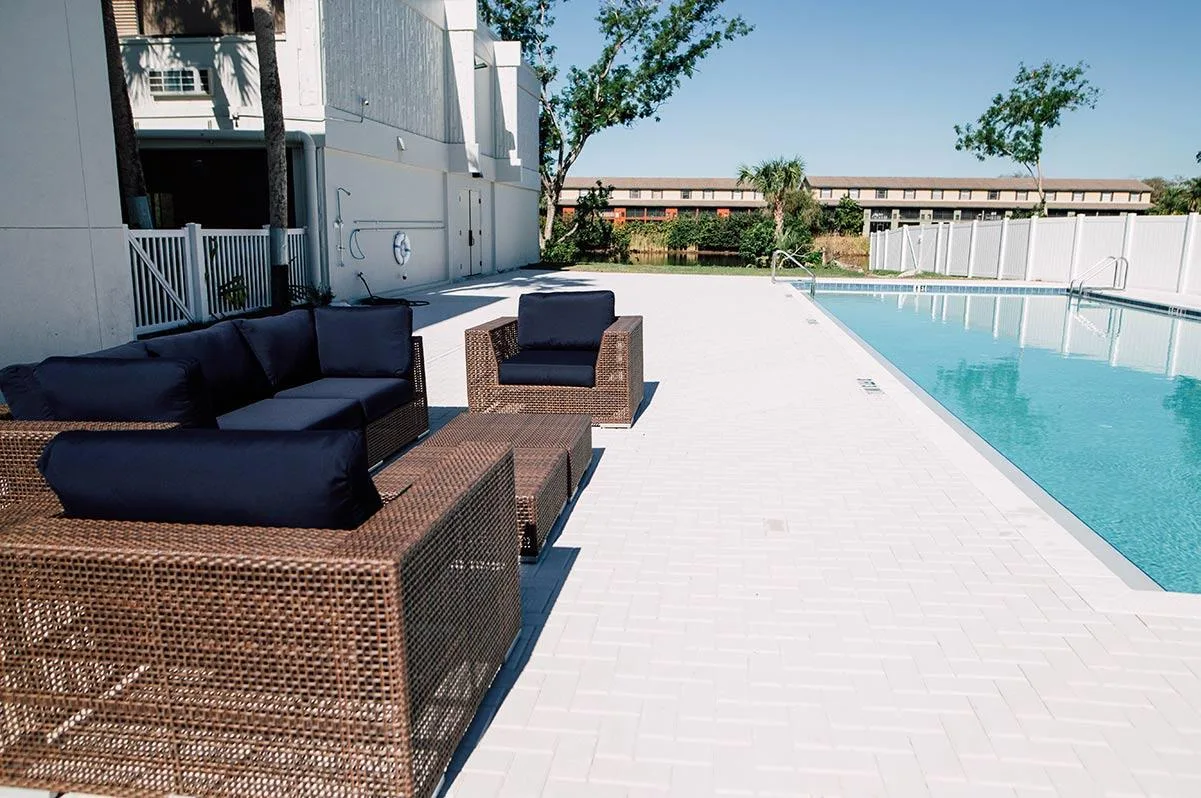
Take a look inside our facility

- Licensed psychiatric providers treating OCD and addiction together
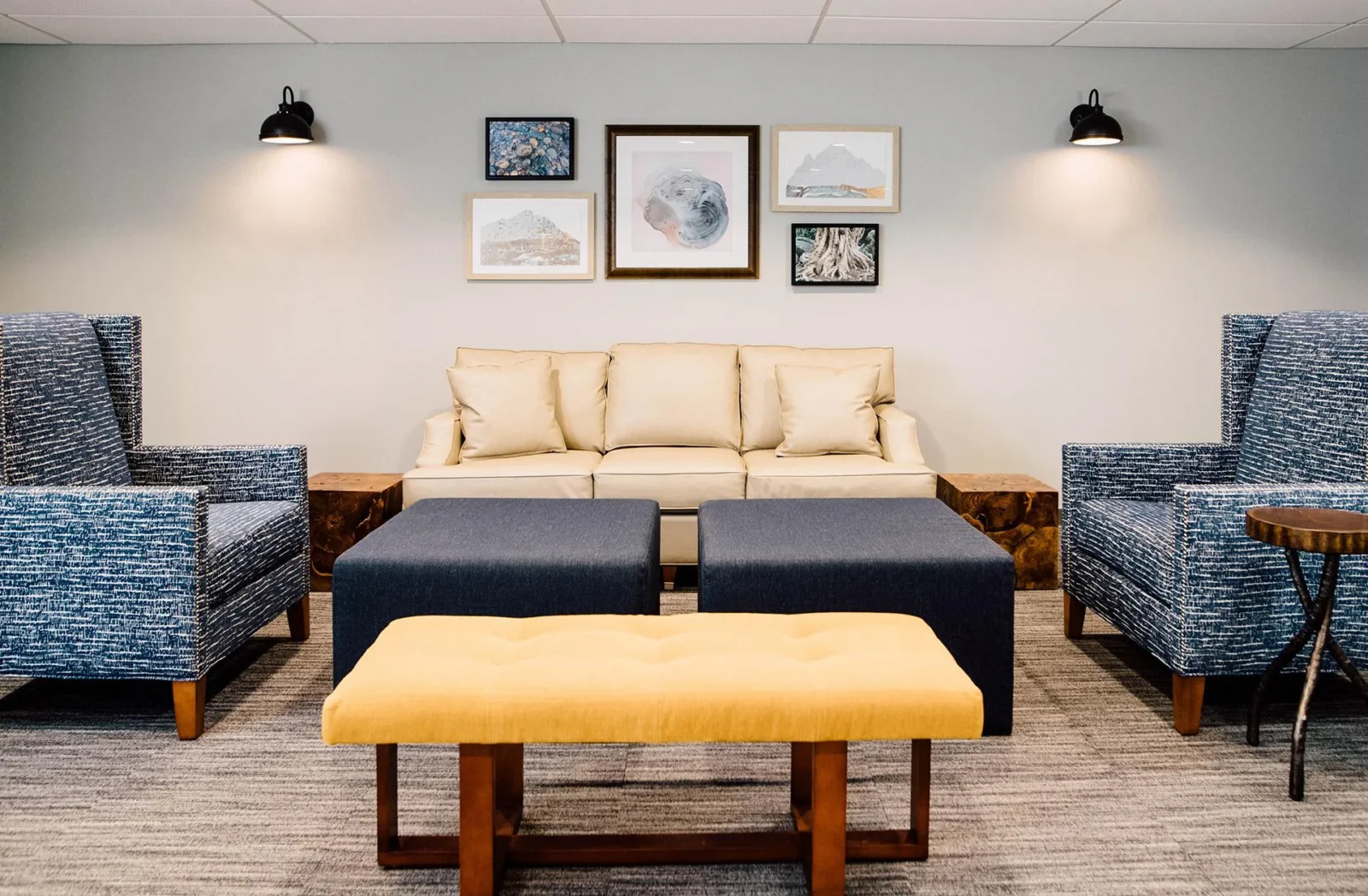
- 68-bed riverfront campus with pool, gymnasium, and open green space
- Full continuum of care, medical detox through outpatient
- Same-day admissions, seven days a week
What our patients say
"This treatment center truly saved my life and helped ease me into recovery. The technicians, therapists, and groups gave me everything I needed. Would highly recommend to anyone who is struggling."
Verified Google Review See More ReviewsAlcohol & OCD
Does alcohol make OCD worse?
Yes. Alcohol makes OCD worse. It is a central nervous system depressant that lowers anxiety for two to three hours, then rebounds it higher than baseline as the body clears it, which is when obsessions return with more force.
The mechanism is straightforward. Alcohol suppresses REM sleep, and short REM sleep raises next-day anxiety and weakens the prefrontal control people rely on to resist a compulsion. It also disrupts serotonin signaling, the same system that first-line OCD medication works on, so drinking heavily while on psychiatric medication reduces how well that medication works.
Alcohol is also the substance most often reached for. It is legal, fast, and it works on the first try, which is exactly what makes it dangerous for someone spending hours a day fighting intrusive thoughts. Repeat that shortcut nightly and it becomes a diagnosable alcohol use disorder sitting on top of untreated OCD.
Per the International OCD Foundation, roughly 25% of people with OCD develop a substance use disorder in their lifetime, and the Brown Longitudinal Obsessive Compulsive Study found OCD came first by at least a year in 70% of those cases. The order matters: get sober without treating the OCD, and the obsessions that started the drinking are still there on day 30.
The OCD–alcohol cycle
- The obsession spikes anxiety, and a drink lowers it faster than any ritual can.
- Relief teaches the brain that alcohol is the compulsion, so it gets used sooner each time.
- Rebound anxiety and lost REM sleep push obsessions higher the following day.
- Tolerance climbs, so the volume required to reach the same quiet keeps rising.
- Withdrawal mimics OCD, since agitation and dread spike hard when drinking stops.
See the cycle and where treatment cuts it
There are two doorways into the same loop. Pick the one that sounds more like you, or the person you're worried about, then break it.
Why do people with OCD drink or use drugs?
Because alcohol and sedatives work faster than a ritual. A compulsion might take twenty minutes of checking to bring anxiety down; two drinks do it in ten and require nothing. People with OCD also use to sleep, to sit through social situations where rituals aren't possible, and to blunt the shame of the thoughts themselves. This is self-medication, not weakness, and it is one of the most common paths into a co-occurring disorder.
Will OCD go away if I stop drinking?
No. Sobriety improves OCD but does not resolve it. Anxiety, sleep, and medication response all improve within two to four weeks of stopping alcohol, which lowers the volume on the obsessions. The underlying disorder remains, and in early sobriety it frequently gets louder before it gets quieter, because the substance that muted it is gone and the rituals return to fill the gap. That window is where relapse happens, which is why our psychiatric team treats the OCD during detox rather than after it.
Our Approach
How do we treat OCD and addiction together?
One treatment plan, one team, both conditions. Your plan is built from a biopsychosocial assessment and a psychiatric evaluation in the first 24 hours, then reviewed as your symptoms change. These are the core therapies our clinical team draws on.
Cognitive Behavioral Therapy
The foundation for OCD work. CBT for substance use disorder targets the belief that the ritual or the drink is what keeps the feared outcome away, then dismantles it.
Dialectical Behavior Therapy
Distress tolerance and emotion regulation, which is what you need in the gap between an obsession arriving and a compulsion or a drink answering it.
Accelerated Resolution Therapy
Uses guided eye movements to resolve traumatic memories, which frequently sit underneath both the obsessions and the drinking. Often effective within a few sessions.
Motivational Interviewing
Builds your own reasons to sit with discomfort rather than resolve it with a substance. No lectures, no ultimatums, no pressure.
Contingency management
Structured reinforcement for the behaviors that hold recovery together, useful when OCD has trained your brain to chase immediate relief.
Psychiatric medication management
Five medical providers, including psychiatric-certified nurse practitioners and physician assistants, manage medication for OCD and substance use across every level of care.
Exposure and response prevention, a specialized branch of CBT, is the field's first-line psychotherapy for OCD. Ask our admissions team which OCD-specific protocols your individual treatment plan will include before you admit.
Testimonials
Real recovery, real people
"This treatment center truly saved my life and helped ease me into recovery. The technicians, therapists, and groups gave me everything I needed. Would highly recommend to anyone who is struggling."
"As someone who works in mental health and substance abuse, I can say Riverside Recovery does amazing work. We trust them with our clients and refer to them often. They are saving lives."
"Riverside gave me the tools I needed to face a life of recovery. They helped change my life. Thank you for the care and compassion you show each client every day."
Full Continuum of Care
Care that steps down with you, without starting over
Your history, your treatment plan, and your therapeutic relationships carry through every transition. No new facility, no new intake, no repeating the thoughts you had to work up to saying out loud the first time.
24-hour medically supervised withdrawal, with extended benzodiazepine tapers of 30 days or more when clinically indicated.
Full-time structured care on our riverfront campus, typically 30 days, extendable to 60 or 90 based on clinical need.
Programming Monday to Friday, 9am to 4pm, while you live off-site. Typical length of stay is 4 to 6 weeks.
Nine clinical hours a week, mornings or 6pm to 9pm evenings, structured around work and family.
Psychiatric oversight from Dr. Ryan Wagoner, MD and Dr. Michael Sore, MD runs through every level, so the OCD is treated the entire way through. Our addiction treatment center in Tampa, FL keeps both conditions in one plan from admission to aftercare.
Insurance
Will insurance cover OCD and substance use treatment?
Federal parity law requires insurers to cover mental health and substance use treatment on the same terms as any other medical care. We are in-network with most major private carriers across Tampa Bay and verify your benefits in real time on the first call.
Accepted plans include Aetna, Blue Cross Blue Shield, Humana, Optum, Magellan, Tricare, Oscar Health, AmeriHealth, Health First, Beacon Health, and AvMed. Don't see your carrier? Call us. We work with several additional plans.






FAQ
OCD & substance use treatment, answered
What is OCD (obsessive-compulsive disorder)?
How can you tell if someone has OCD?
Are there different types of OCD?
Can you have OCD without visible compulsions?
What is the life of a person with OCD like?
What can I do to stop OCD?
What is dual diagnosis (co-occurring disorders)?
How often does OCD occur with a substance use disorder?
Does alcohol make OCD worse?
Why do people with OCD drink or use drugs?
Will OCD go away if I stop drinking?
Should OCD and addiction be treated at the same time?
Do you treat OCD on its own?
What therapies treat co-occurring OCD and substance use disorder?
Is OCD genetic?
How fast can I get into treatment in Tampa, FL?
Will my insurance cover treatment for co-occurring OCD in Florida?
Who do you treat at your Tampa and New Port Richey locations?
Our Location
Riverside Recovery of Tampa
Centrally located on the Hillsborough River near downtown Tampa, a 15-minute drive from Tampa International Airport.
4004 N Riverside Dr, Tampa, FL 33603
(833) 875-7701
Your first day here, for OCD & substance use
- A private intake and a psychiatric evaluation on the day you arrive, not weeks later
- Standardized screening including PHQ-9, GAD-7, and a full biopsychosocial assessment
- Medical screening for alcohol or drug withdrawal, with detox rooms on this same campus
- Three to four treatment goals built with you, naming your specific obsessions and triggers
- One clinical team from that first assessment through outpatient, so you tell your story once
- Serving Hillsborough, Pinellas, and Pasco counties, with airport pickup for families traveling in
Before you go : one free, private step
You don't have to decide anything today. In about 60 seconds we can confirm whether your insurance covers treatment for OCD and substance use, with no obligation and no follow-up pressure.
HIPAA-compliant · Free & confidential · In crisis? Call or text 988 any time.