


Gateway drugs are substances whose early use is statistically linked to higher rates of harder drug use, a pattern the research confirms as real, and neither universal nor inevitable.
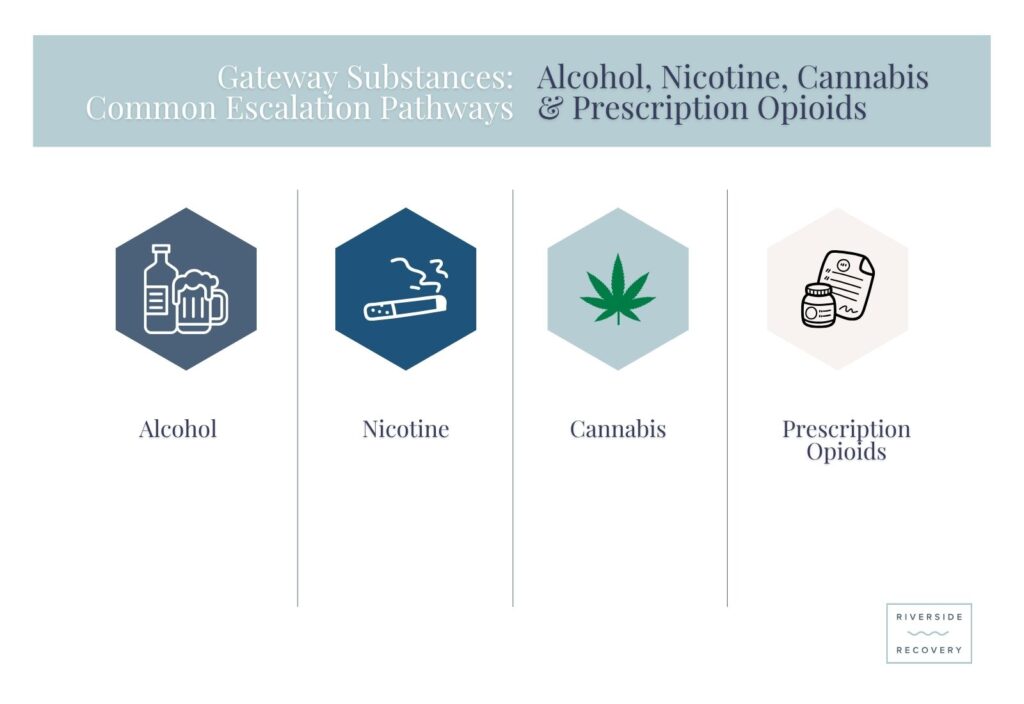
The three most frequently cited examples in peer-reviewed literature are alcohol, tobacco, and cannabis. Neuroscience has confirmed that exposure to these substances produces measurable changes in the brain’s mesolimbic dopamine pathway that increase sensitivity to other drugs.
What the research does not support is the idea that using a gateway drug makes hard drug use unavoidable. Most people who use cannabis, alcohol, or tobacco never develop a substance use disorder involving harder substances.
What drives escalation is a complex interaction of genetics, age of first use, trauma history, and access to treatment. Understanding where the evidence is solid and where it is contested is the foundation of effective prevention and early intervention.
Key Takeaways
- Per Kandel and Kandel (2014) in the New England Journal of Medicine, 87.9% of people aged 18 to 34 who had used cocaine smoked cigarettes before first using it, providing the first molecular evidence for nicotine as a primary gateway drug.
- The Substance Abuse and Mental Health Services Administration documents that heroin initiation is 19 times higher among people who previously misused prescription pain relievers compared to those without prior opioid misuse history.
- The National Institute on Drug Abuse (NIDA) explicitly states that the majority of people who use marijuana do not go on to use harder substances, directly challenging the all-or-nothing framing of the gateway drug theory.
- The common liability to addiction (CLA) model, supported by large-scale twin studies, proposes that genetic and environmental vulnerability, not sequential drug use itself, primarily determines who develops a substance use disorder.
- Early substance use initiation before age 18 is one of the strongest neurobiological predictors of later substance use disorder, because the prefrontal cortex, which governs impulse control, does not fully mature until the mid-20s.
What Is a Gateway Drug?
A gateway drug is a psychoactive substance whose use statistically correlates with, and in some cases neurobiologically primes, subsequent use of more potent or more addictive substances.
Defining the Gateway Drug Concept
There are 4 core characteristics that define a gateway drug:
- The concept originated in the epidemiological work of Dr. Denise Kandel at Columbia University in 1975. Kandel identified a consistent sequence in adolescent drug use, progressing from wine or beer to cigarettes or hard liquor to marijuana to other illicit substances.
- The term “gateway drug” was politically amplified in the 1980s by anti-drug campaigner Robert DuPont, who introduced the phrase into federal drug policy debates and public health discourse.
- Three characteristics define gateway substances in the scientific literature: they are typically legal or widely accessible, they activate dopamine release in the nucleus accumbens, and their use statistically precedes other drug use in large-population epidemiological studies.
- No scientific consensus has produced a single, universal list of gateway substances. Alcohol, tobacco, cannabis, and nonmedical prescription drugs are the four most cited in peer-reviewed literature, with alcohol and nicotine now recognized by NIDA as carrying neurobiological mechanisms comparable to cannabis.
How the Gateway Drug Hypothesis Differs From Other Addiction Frameworks
There are 4 key distinctions between competing addiction models:
- The gateway drug hypothesis is a sequential causation model: it proposes that earlier exposure to a specific substance directly predisposes the user, through neurochemical sensitization, to develop a substance use disorder involving harder drugs.
- This is distinct from the common liability to addiction (CLA) model, which proposes that shared genetic, environmental, and psychosocial vulnerability predisposes individuals to all substance use simultaneously, with initiation sequence driven by drug availability and social context rather than neurobiological priming.
- The DSM-5 does not classify any substance as a “gateway drug.” The DSM-5 recognizes 10 substance classes and diagnoses substance use disorder across mild (2 to 3 criteria), moderate (4 to 5 criteria), and severe (6 or more criteria) severity levels based on 11 standardized criteria, with no reference to sequential initiation patterns.
- The Kandels themselves concluded in 2014 that both models are complementary, not competing, with common liability explaining general susceptibility to all substance use and specific neurobiological mechanisms explaining why particular substances produce directional sequential patterns.
How Do Gateway Drugs Prime the Brain for Addiction?
Gateway substances alter the mesolimbic dopamine pathway in ways that measurably increase sensitivity to other addictive drugs, a process research identifies as cross-sensitization.
Mesolimbic Dopamine Pathway Sensitization
There are 4 neurobiological changes underlying gateway drug effects:
- All drugs of abuse produce dopamine release in the nucleus accumbens shell, the brain’s primary reward interface. With repeated exposure, ventral tegmental area (VTA) dopamine neurons undergo long-term potentiation, producing amplified dopamine responses to drug cues and reducing baseline dopamine tone during abstinence.
- This sensitization, described by Robinson and Berridge as incentive salience, shifts craving from pleasure-seeking to compulsive motivational drive. Incentive salience persists independently of anticipated pleasure, explaining why cravings endure long after acute withdrawal resolves.
- Chronic nicotine exposure increases dopamine D2 receptor binding in the ventral striatum, lowering the reward threshold and rendering the nucleus accumbens more responsive to cocaine and amphetamines in subsequent exposures.
- Chronic cannabis exposure reduces CB1 cannabinoid receptor density in the prefrontal cortex and striatum, impairing top-down inhibitory control over reward-seeking and increasing susceptibility to opioid cross-sensitization through shared mesolimbic pathways.
Cross-Sensitization and Epigenetic Priming
There are 4 molecular mechanisms of gateway drug priming:
- Cross-sensitization is the neurobiological process by which prior exposure to one substance lowers the threshold for a rewarding response to a pharmacologically distinct substance. Levine et al. (2011), published in Science Translational Medicine, demonstrated that nicotine pre-exposure enhanced cocaine reward by inhibiting histone deacetylase (HDAC) enzymes in the striatum, increasing histone H3 and H4 acetylation at the FosB gene promoter.
- Delta-FosB (ΔFosB) accumulation in D1-type medium spiny neurons of the nucleus accumbens functions as a sustained molecular switch for addiction. Repeated exposure to alcohol, nicotine, cannabinoids, and opioids all produce ΔFosB accumulation, which downregulates dynorphin signaling, upregulates GluR2 AMPA receptor expression, and drives dendritic spine remodeling that persists weeks to months after cessation.
- Nicotine-induced epigenetic priming is unidirectional: nicotine sensitizes the brain to cocaine, but cocaine does not sensitize the brain to nicotine. This directional asymmetry, verified experimentally, supports nicotine’s classification as a primary gateway drug rather than a statistical correlate.
- Adolescent cannabis exposure in animal models increases heroin and morphine self-administration in adulthood through CB1 and mu-opioid receptor co-expression in the nucleus accumbens shell, with cross-sensitization replicated by Scherma et al. (2020).
The Adolescent Brain and the Vulnerability Window
There are 4 neurobiological factors that make adolescents uniquely susceptible:
- The prefrontal cortex, which governs impulse control, risk assessment, and inhibitory regulation of reward-seeking, continues developing until approximately age 25. Substance exposure during this developmental window permanently alters prefrontal-striatal connectivity in ways not observed when initiation occurs in adulthood.
- The dual systems model (Casey, Jones, and Hare, 2008) describes the adolescent brain as pairing mature subcortical reward sensitivity with immature prefrontal regulatory capacity. This neurobiological imbalance produces heightened vulnerability to reward-driven substance use, behavioral sensitization, and escalation to substance use disorder.
- Substance use initiation concentrates in mid-to-late adolescence, and each year of delayed initiation substantially reduces the probability of developing a clinically significant substance use disorder.
- NIDA confirms that individuals who use cannabis before age 18 are more likely to develop cannabis use disorder than those who initiate in adulthood, due to CB1 receptor downregulation during critical synaptic pruning and axonal myelination phases unique to adolescent neurodevelopment.
Gateway Drugs Compared: Alcohol, Nicotine, Cannabis, and Prescription Opioids
The four most researched gateway substances differ significantly in their neurobiological mechanisms, escalation rates, and the specific drug classes they sensitize the brain toward.
| Substance | Primary gateway mechanism | Escalation rate | Drug classes cross-sensitized | Age of typical initiation | NIDA position |
|---|---|---|---|---|---|
| Alcohol | Mesolimbic dopamine activation; GABA-A potentiation; NMDA inhibition | Users up to 16x more likely to use illicit drugs (University of Florida) | Stimulants, opioids, cannabis | 13 to 15 | Recognized as carrying gateway mechanisms comparable to cannabis |
| Nicotine | HDAC inhibition; histone H3/H4 acetylation at FosB promoter | 87.9% of cocaine users (18 to 34) smoked first | Stimulants (cocaine, amphetamines) | 13 to 16 | Identified as primary molecular gateway drug (Kandel, 2014) |
| Cannabis | CB1/mu-opioid receptor co-expression; dopamine sensitization | 44.7% of lifetime users eventually used another illicit substance | Opioids | 15 to 17 | Majority of users do not escalate; gateway mechanisms parallel to alcohol and nicotine |
| Prescription opioids | Mu-opioid receptor upregulation; withdrawal-driven heroin initiation | Heroin initiation 19x higher with prior Rx opioid misuse | Heroin, illicit fentanyl | Variable (often 18 to 25) | 75% of heroin users who began in the 2000s were introduced to opioids through prescription drugs (Cicero et al., 2014) |
Alcohol as a Gateway Drug
Key findings on alcohol’s role as a gateway substance include:
- Alcohol activates mesolimbic dopamine release in the nucleus accumbens while simultaneously potentiating GABA-A receptors and inhibiting NMDA glutamate receptors, producing anxiolytic and euphoric effects that establish strong associative reward conditioning attached to social contexts where other substances are available.
- A secondary analysis of 2008 Monitoring the Future data covering a nationally representative sample of US 12th graders identified alcohol as the gateway substance leading to tobacco, marijuana and other illicit drug use, and found that students who used alcohol were significantly more likely to use both licit and illicit drugs.
- Alcohol use disorder (AUD) is the most prevalent substance use disorder in the United States, and adolescent alcohol exposure produces lasting reductions in prefrontal cortical thickness and GABAergic inhibitory capacity that increase vulnerability to co-occurring substance use disorders.
- Comprehensive research on the neurological and physiological consequences of alcohol use disorder demonstrates how early alcohol exposure across the escalation continuum permanently alters reward-system architecture.
Nicotine and Tobacco as Gateway Drugs
There are 4 key findings on nicotine’s gateway mechanisms:
- Kandel and Kandel (2014), in a landmark New England Journal of Medicine paper, demonstrated that nicotine acts as a gateway drug through a specific epigenetic mechanism: inhibition of HDAC enzymes in the striatum increases histone H3 and H4 acetylation at the FosB gene promoter, amplifying cocaine’s rewarding effects through a pathway distinct from nicotine’s direct pharmacological action.
- Among US adults aged 18 to 34 who had ever used cocaine, 87.9% had smoked cigarettes before using cocaine and only 3.5% used cocaine first, on 2012 national survey data reported by Kandel and Kandel, demonstrating a strong unidirectional sequential pattern consistent with neurobiological priming rather than coincidental co-use.
- NIH research confirms that the gateway effect extends to e-cigarettes and vaping, as nicotine’s HDAC-inhibitory epigenetic effects are independent of delivery method, meaning the adolescent brain is sensitized whether nicotine is inhaled via combustion or vapor.
- Nicotine is the only gateway substance for which a direct molecular mechanism of cross-sensitization has been experimentally verified in peer-reviewed research, distinguishing it from alcohol and cannabis, whose human gateway effects remain primarily epidemiological.
Cannabis as a Gateway Drug
Key findings on cannabis’s gateway status include:
- The CDC acknowledges limited evidence suggesting that cannabis use increases the risk of using other drugs while explicitly stating that most cannabis users do not progress to harder substances, a position consistent across major public health institutions.
- Secades-Villa et al. (2015), using National Epidemiologic Survey on Alcohol and Related Conditions data, found that 44.7% of lifetime cannabis users eventually used another illicit substance. SAMHSA data nonetheless shows that less than 0.3% of cannabis users abused heroin, less than 0.2% abused cocaine, and less than 0.1% abused methamphetamine.
- Cross-national epidemiological data fundamentally challenges the universal gateway hypothesis for cannabis. Degenhardt and colleagues, analyzing the WHO World Mental Health Surveys across 17 countries, found that in Japan 83.2% of other illicit drug users had not used cannabis first, and in Nigeria 77.8% had not, patterns incompatible with a pharmacological mechanism and consistent with social availability driving escalation sequences.
- NIDA’s official position explicitly states that alcohol and nicotine carry cross-sensitization mechanisms comparable to cannabis, indicating cannabis’s gateway status in U.S. data reflects its social availability rather than uniquely potent neurobiological properties.
Prescription Opioids as Gateway Drugs
There are 4 key findings on prescription opioids as a modern gateway substance:
- Muhuri et al. (2013), using SAMHSA data, documented that heroin initiation rates were 19 times higher among individuals with prior nonmedical prescription opioid use compared to those with no such history, establishing prescription opioids as a high-probability pathway to heroin use disorder.
- The shift in heroin initiation pathways over two decades illustrates the prescription opioid gateway effect: Cicero and colleagues, in a retrospective analysis of 2,797 people entering treatment for heroin use, found that about 80% of those who began using heroin in the 1960s started with heroin itself, while 75% of those who began more recently were introduced to opioids through prescription drugs. Mass availability of a licit opioid created an entirely new initiation pathway.
- 86% of young, urban injection drug users in one national sample reported prior nonmedical prescription opioid use, with opioid withdrawal avoidance, not recreational drug-seeking, identified as the primary driver of heroin initiation, a pattern well-documented in data on substance use patterns across Florida.
- Prescription opioid misuse primes mu-opioid receptors through receptor upregulation and analgesic tolerance, driving heroin-seeking as a cost-effective alternative when prescription supplies are interrupted or access is restricted.
Is the Gateway Drug Theory Myth, Fact, or Something In Between?
The gateway drug theory is neither a proven universal law nor a discredited myth. The theory describes a real epidemiological pattern driven by neurobiological priming and shared vulnerability factors that differ by population, substance, and context.
Evidence Supporting the Gateway Hypothesis
There are 4 strands of evidence in favor of gateway drug theory:
- Kandel’s pioneering longitudinal research, initiated in 1975 and replicated in later cohorts, consistently documented a statistically significant sequential pattern in which adolescents who used one substance category were substantially more likely to advance to the next in a predictable progression from licit to illicit substances.
- Levine et al. (2011) provided the first experimental molecular evidence that nicotine actively primes the brain’s response to cocaine through histone acetylation, moving the gateway hypothesis from epidemiological correlation to demonstrable neurobiological causation for at least one substance pair.
- Fergusson et al. (2006), a 25-year longitudinal study of 1,265 New Zealand birth cohort members, found evidence consistent with a causal model linking early cannabis use to later illicit drug use, after statistically controlling for more than 60 confounding variables including family environment and pre-existing psychiatric symptoms.
- Animal models consistently demonstrate cross-sensitization: adolescent rodents pre-exposed to nicotine show significantly greater cocaine self-administration; adolescent rodents pre-exposed to THC show increased heroin and morphine self-administration, with lasting alterations in nucleus accumbens neurotransmitter profiles confirming lasting neurobiological changes.
Evidence Against the Gateway Hypothesis
There are 4 strands of evidence challenging gateway drug theory as a universal mechanism:
- The National Institute of Justice (2018), after reviewing 23 peer-reviewed studies, concluded no causal link between cannabis use and other illicit drug use can be established, noting that statistical correlation persists across populations but direct pharmacological causation cannot be claimed from observational data alone.
- RAND Corporation researchers Morral, McCaffrey, and Paddock (2002) demonstrated mathematically that the gateway sequence could be fully explained by individual drug propensity and opportunity alone, without requiring any neurobiological priming mechanism to produce the observed epidemiological patterns.
- Cross-national data fundamentally undermines universality. In the WHO World Mental Health Surveys, 83.2% of other illicit drug users in Japan had not used cannabis first, and 77.8% in Nigeria had not. These proportions are incompatible with a universal pharmacological gateway mechanism and strongly implicate social opportunity as the primary driver of initiation sequence.
- The National Academies of Sciences, Engineering, and Medicine (2017) reviewed the full evidence base and concluded there is no substantial evidence that cannabis use causes progression to use of harder substances at the population level, the most comprehensive institutional review of the evidence to date.
The Common Liability to Addiction Model
There are 4 key features of the common liability to addiction model and its relationship to gateway theory:
- The common liability to addiction (CLA) model, formalized by Vanyukov et al. (2012) in Drug and Alcohol Dependence, proposes that a latent underlying vulnerability shaped by genetic polymorphisms, early environmental adversity, and neurobiological temperament predisposes individuals to substance use disorders across all drug classes simultaneously.
- Twin studies support the CLA model by showing shared genetic architecture across substances. NIDA estimates that genes and their interaction with the environment account for between 40 and 60% of a person’s risk of addiction, with shared genetic architecture linking susceptibility to alcohol use disorder, cannabis use disorder, stimulant use disorder, and opioid use disorder simultaneously in the same individuals.
- The CLA model explains cross-national gateway sequence variability: in societies where heroin is more accessible than cannabis to young people, heroin functions as the de facto gateway drug, while the initiation sequence shifts without any change in the underlying neurobiological vulnerability.
- The Kandels’ 2014 NEJM paper reconciled both frameworks, concluding that common liability explains general susceptibility to all substance use, while specific mechanisms such as nicotine’s HDAC-inhibitory effects explain directional sequential patterns for particular substance pairs.
Who Is Most at Risk of Escalating From Gateway Substances to Harder Drugs?
Not all individuals who use gateway substances are equally likely to escalate: specific genetic, developmental, experiential, and psychiatric risk factors reliably differentiate those at highest risk from the majority who do not progress.
Genetic and Biological Risk Factors
There are 4 genetic and biological contributors to escalation risk:
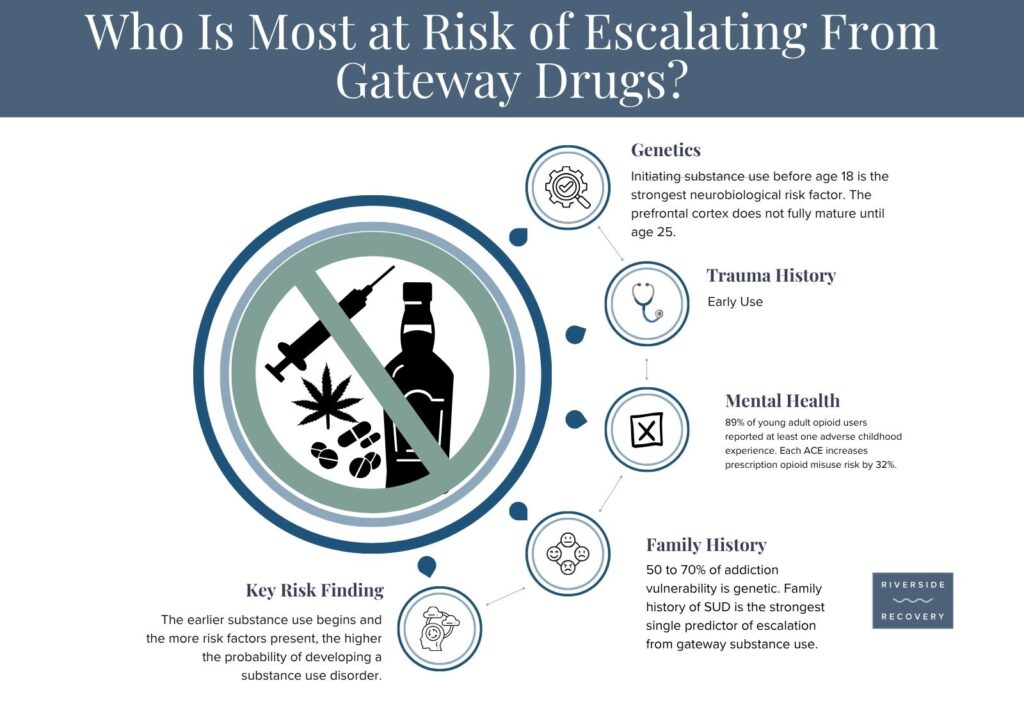
- Twin and adoption studies place a substantial share of individual vulnerability to substance use disorder with genetic factors, and NIDA puts the range at 40 to 60%. Candidate variants include polymorphisms in dopamine receptor genes (DRD2, DRD4), serotonin transporter genes (SLC6A4), and opioid receptor genes (OPRM1).
- A family history of substance use disorder is among the strongest single predictors of progression from gateway substance use to clinically significant substance use disorder, independent of socioeconomic status, peer environment, or quantity of substance used.
- Individuals carrying the DRD2 Taq1A allele show reduced striatal dopamine D2 receptor density, producing reward deficiency syndrome characteristics including a higher drive to use more than one substance to achieve adequate reward-system activation.
- COMT (catechol-O-methyltransferase) gene variants that reduce prefrontal dopamine availability impair top-down inhibitory regulation of reward-seeking, increasing the probability that early gateway substance use will progress to compulsive drug-seeking behavior in the presence of substance availability.
Age of First Use and Neurodevelopmental Risk
The relationship between initiation age and substance use disorder risk involves:
- Epidemiological research consistently demonstrates that the earlier substance use is initiated, the higher the probability of developing a clinically significant substance use disorder. Each year of delayed initiation substantially reduces lifetime risk, with initiation after age 21 showing the steepest risk reduction curve.
- Substance use initiation concentrates in mid-to-late adolescence, the period of maximum prefrontal cortex-subcortical imbalance, when reward-driven decision-making dominates without fully mature inhibitory regulatory capacity.
- NIDA confirms that adolescent cannabis use before age 18 is associated with higher rates of cannabis use disorder and greater susceptibility to opioid cross-sensitization compared to adult-onset cannabis use, consistent with CB1 receptor downregulation during critical developmental synaptic remodeling windows.
- Synaptic pruning and axonal myelination during adolescence are permanent structural processes: substance-induced disruptions during these windows produce lasting changes in prefrontal-striatal connectivity that increase impulsivity and reward sensitivity into adulthood and cannot be fully reversed.
Adverse Childhood Experiences and Trauma
There are 4 findings on adverse childhood experiences (ACEs) and escalation risk:
- ACEs produce dose-dependent increases in substance use disorder risk, with each additional ACE category associated with a 32% increase in prescription opioid misuse odds for males and a 24% increase for females (Guarino et al., 2021).
- Guarino et al. (2021) report that 89% of opioid-using young adults had at least one ACE, and 46% had four or more, demonstrating the near-universal overlap between unresolved childhood trauma and opioid use disorder in clinical populations.
- ACEs dysregulate the HPA axis (hypothalamic-pituitary-adrenal axis), producing chronic cortisol elevation and corticotropin-releasing factor (CRF) hyperactivation in the extended amygdala, making stress-induced drug craving a primary driver of escalation from gateway substance use to harder drug use.
- Trauma history directly amplifies the risk of emotional and behavioral relapse, as unresolved post-traumatic stress symptoms drive negative reinforcement substance use patterns that accelerate progression from experimental use to substance use disorder.
Mental Health Comorbidities and Co-Occurring Disorders
There are 4 findings on co-occurring psychiatric conditions and escalation risk:
- Anxiety disorders, major depressive disorder, conduct disorder, and PTSD each independently increase the probability of progressing from gateway substance use to harder drug use, and each additional co-occurring disorder raises the risk of developing clinically significant substance dependence.
- SAMHSA’s 2024 National Survey on Drug Use and Health records more than 21 million American adults with both a substance use disorder and a mental illness, illustrating the scale at which psychiatric comorbidity shapes addiction trajectories rather than merely accompanying them.
- Cannabis use disorder significantly increases the odds of developing opioid use disorder, alcohol use disorder, and stimulant use disorder in individuals with pre-existing anxiety disorders, because the anxiolytic properties of cannabis reinforce negative reinforcement substance use patterns that generalize to harder drugs.
- Individuals with co-occurring mental health conditions benefit most from integrated dual diagnosis programs that address co-occurring mental health conditions and substance use disorder simultaneously, rather than treating each diagnosis sequentially in separate clinical settings.
Treatment for Substance Use Disorders at Riverside Recovery of Tampa
Riverside Recovery of Tampa provides a full continuum of evidence-based care for adults whose substance use disorder began with gateway substance exposure and has progressed to require clinical intervention.

Medical Detox Program
The features of Riverside Recovery of Tampa’s medical detox program include:
- The medically supervised detox program at Riverside Recovery of Tampa accepts patients with medically complex presentations, including polydrug dependence, high blood alcohol levels, and co-occurring medical conditions, without the blood alcohol level cutoff restrictions applied by most comparable facilities.
- A team of five medical providers, including emergency board-certified Medical Director Dr. Sore, provides 24-hour nursing and physician oversight, including medically supervised benzodiazepine tapering for individuals with benzodiazepine use disorder. The 2025 Joint Clinical Practice Guideline on Benzodiazepine Tapering, developed by ten societies including the American Society of Addiction Medicine, notes that people who have taken benzodiazepines for a long time may need more than a year to stop the medication fully.
Residential Addiction Treatment Program
There are 2 key components of residential treatment at Riverside Recovery of Tampa:
- The residential addiction treatment program provides a structured, 24-hour therapeutic environment on a 60,000-square-foot campus situated on the Hillsborough River, with therapist continuity from detox through residential care preserving therapeutic alliance during the most clinically vulnerable treatment transition.
- Six hours of daily structured programming include CBT groups, DBT skills training, relapse prevention, psychoeducation, 12-step recovery, and two individual therapy sessions per week, providing the clinical depth required for polydrug presentations and co-occurring psychiatric conditions.
Partial Hospitalization Program
The partial hospitalization program structure has 2 elements:
- PHP operates Monday through Friday from 9:00 AM to 4:00 PM, with individual therapy, group therapy, psychoeducation, mindfulness, CBT, DBT, spirituality, relapse prevention, and 12-step recovery skills delivered in a structured day format for individuals transitioning from residential care.
- PHP clients at Riverside Recovery of Tampa maintain therapist continuity with their residential treatment provider, reducing re-acclimation burden and preserving the clinical relationship during the highest-risk transition period in the recovery continuum.
Medication-Assisted Treatment
There are 2 medication-assisted treatment options available at Riverside Recovery of Tampa:
- Medication-assisted treatment at Riverside Recovery of Tampa includes on-site Suboxone initiation, Vivitrol injections, Sublocade, naltrexone, and Campral/Acamprosate, continuing through residential and partial hospitalization levels of care for individuals whose substance use disorder includes opioid use disorder or alcohol use disorder.
- MAT eligibility is assessed on a case-by-case basis by the medical team, with IPN and PRN program evaluations available through Medical Director Dr. Sore for licensed professionals requiring specialized professional monitoring track assessment.
Dual Diagnosis Treatment
There are 2 features of Riverside Recovery of Tampa’s dual diagnosis program:
- Co-occurring mental health conditions are treated alongside substance use disorder through an integrated dual diagnosis model staffed by a 16-member clinical team including primary therapists, recovery support specialists, case managers, and psychiatric providers.
- Accelerated Resolution Therapy (ART), a trauma-focused intervention, is available for individuals whose gateway substance use developed from trauma-driven negative reinforcement patterns, addressing the neurobiological roots of stress-induced drug-seeking rather than symptom suppression alone.
Frequently Asked Questions
What is a gateway drug?
A gateway drug is a substance whose use statistically precedes and may neurobiologically contribute to use of more potent or more addictive drugs. Alcohol, tobacco, and cannabis are the three most frequently cited in scientific literature. The term reflects both epidemiological sequential patterns and, for nicotine specifically, a demonstrable molecular mechanism of cross-sensitization verified through peer-reviewed experimental research.
What are the top 3 gateway drugs?
Alcohol, nicotine, and cannabis are the three substances most consistently identified as gateway drugs in epidemiological research. NIDA now recognizes that alcohol and nicotine carry cross-sensitization mechanisms comparable to cannabis. Prescription opioids have emerged as a fourth major gateway substance, particularly for heroin use disorder, with heroin initiation 19 times higher among individuals with prior nonmedical prescription opioid use.
Is marijuana a gateway drug?
Cannabis use statistically precedes other illicit drug use in approximately 44.7% of lifetime users, according to NESARC data. However, NIDA explicitly states that the majority of marijuana users do not progress to harder substances. The CDC acknowledges limited evidence of a gateway effect while noting most users never escalate. Genetics, early initiation age, and trauma history predict escalation, and cannabis use alone does not.
Does the gateway drug theory have scientific support?
The theory has partial support. Epigenetic research confirms nicotine produces measurable neurobiological priming for cocaine. The longitudinal work of Fergusson and colleagues in New Zealand and of Secades-Villa and colleagues in the United States documents real sequential escalation patterns. However, the National Institute of Justice concluded in 2018 that no causal link between cannabis use and other drug use can be established. The National Academies of Sciences found no substantial evidence that cannabis causes progression to harder substances at a population level.
What does NIDA say about gateway drugs?
NIDA states that some research suggests marijuana use is likely to precede use of other substances, consistent with gateway drug theory. However, NIDA emphasizes that the majority of marijuana users do not go on to use harder drugs. NIDA also identifies alcohol and nicotine as carrying comparable cross-sensitization mechanisms, indicating no single substance uniquely functions as a gateway drug for all individuals across all populations.
What is the common liability to addiction model?
The common liability to addiction model, formalized by Vanyukov et al. (2012), proposes that shared genetic and environmental vulnerability, rather than sequential drug use initiation, primarily determines who develops a substance use disorder. The common liability model explains why individuals predisposed to addiction tend to use more than one substance without requiring one substance to cause use of another. The model and the gateway hypothesis are now considered complementary rather than competing frameworks.
Who is most at risk of progressing from gateway drugs to harder substances?
Individuals at highest risk include those with a family history of substance use disorder, those who first used substances before age 18, survivors of adverse childhood experiences (ACEs). Risk also concentrates in people with co-occurring psychiatric conditions such as anxiety disorders, PTSD, or conduct disorder. Genetic factors account for 50 to 70% of addiction vulnerability. Social isolation, drug availability, and absence of early treatment access further amplify escalation risk.
At what age does gateway drug use typically begin?
Substance use initiation concentrates in mid-to-late adolescence. Alcohol is typically the first substance used, with median initiation in early adolescence. Cannabis initiation peaks between ages 15 and 17. Early initiation significantly amplifies substance use disorder risk because the prefrontal cortex, responsible for impulse control, does not fully mature until approximately age 25.
References
- Kandel, E. R., & Kandel, D. B. (2014). A molecular basis for nicotine as a gateway drug. New England Journal of Medicine, 371(10), 932–943. PMID: 25184865.
- Cicero, T. J., Ellis, M. S., Surratt, H. L., & Kurtz, S. P. (2014). The changing face of heroin use in the United States: A retrospective analysis of the past 50 years. JAMA Psychiatry, 71(7), 821–826. PMID: 24871348.
- Degenhardt, L., Dierker, L., Chiu, W. T., et al. (2010). Evaluating the drug use “gateway” theory using cross-national data. Drug and Alcohol Dependence, 108(1–2), 84–97. PMID: 20060657.
- Levine, A., Huang, Y., Drisaldi, B., et al. (2011). Molecular mechanism for a gateway drug: Epigenetic changes initiated by nicotine prime gene expression by cocaine. Science Translational Medicine, 3(107).
- National Institute on Drug Abuse. (2020, July). Is marijuana a gateway drug? https://nida.nih.gov/research-topics/cannabis-marijuana
- Substance Abuse and Mental Health Services Administration. (2025). 2024 National Survey on Drug Use and Health. https://www.samhsa.gov/data/data-we-collect/nsduh-national-survey-drug-use-and-health/national-releases/2024
- National Institute of Justice. (2018). Is cannabis a gateway drug? Key findings and literature review. https://nij.ojp.gov/library/publications/cannabis-gateway-drug-key-findings-and-literature-review
- Muhuri, P. K., Gfroerer, J. C., & Davies, M. C. (2013). Associations of nonmedical pain reliever use and initiation of heroin use in the United States. Substance Abuse and Mental Health Services Administration.
- Vanyukov, M. M., Tarter, R. E., Kirillova, G. P., et al. (2012). Common liability to addiction and “gateway hypothesis”: Theoretical, empirical, and evolutionary perspective. Drug and Alcohol Dependence, 123(Suppl 1), S3–S17.
- Secades-Villa, R., Garcia-Rodríguez, O., Jin, C. J., et al. (2015). Probability and predictors of the cannabis gateway effect: A national study. International Journal of Drug Policy, 26(2), 135–142.
- Fergusson, D. M., Boden, J. M., & Horwood, L. J. (2006). Cannabis use and other illicit drug use: Testing the cannabis gateway hypothesis. Addiction, 101(4), 556–569.
- National Academies of Sciences, Engineering, and Medicine. (2017). The health effects of cannabis and cannabinoids. National Academies Press.
- Nestler, E. J. (2001). Molecular basis of long-term plasticity underlying addiction. Nature Reviews Neuroscience, 2(2), 119–128.
- Centers for Disease Control and Prevention. (2024). Youth and substance use. https://www.cdc.gov/youth-behavior/risk-behaviors/substance-use-among-youth.html
- American Psychiatric Association. (2022). Diagnostic and statistical manual of mental disorders (5th ed., text rev.). American Psychiatric Publishing.
- Guarino, H., Moore, S. K., Marsch, L. A., & Florio, L. (2021). Adverse childhood experiences and prescription opioid misuse in a nationally representative sample. Drug and Alcohol Dependence, 227, 108986.