


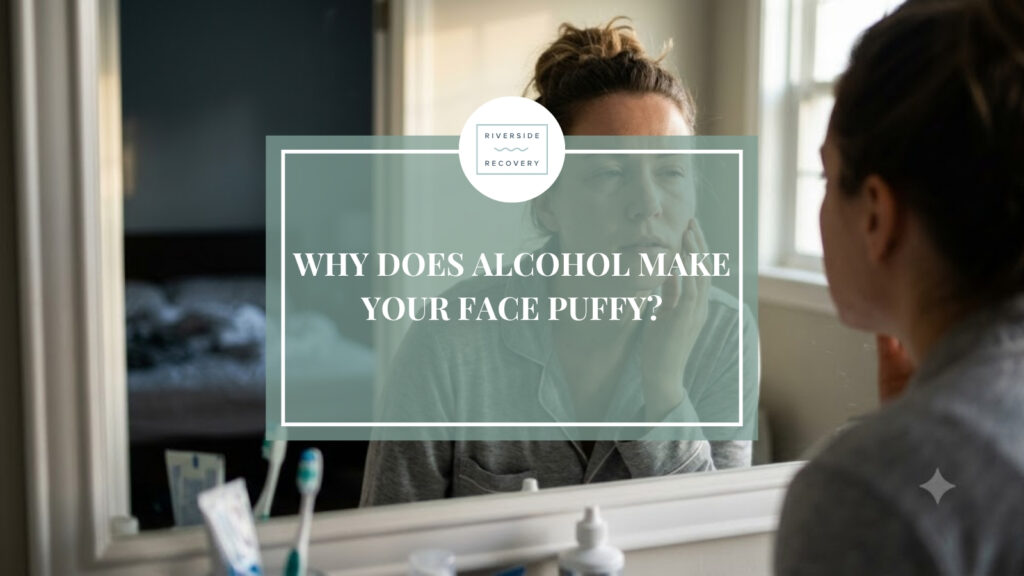

Alcohol makes your face puffy because it causes your blood vessels to expand and leak fluid into surrounding tissue, while also disrupting the hormones that control how your body holds onto water.
This creates a double effect: flushing and visible swelling from dilated facial vessels, plus water retention that settles into the soft tissue around your eyes, cheeks, and jaw. In people who drink heavily over time, the liver’s ability to regulate fluid balance breaks down, and stress hormone changes keep the puffiness from fully going away even after drinking stops.
The difference between a mildly puffy face the morning after drinking and chronically swollen facial features is both mechanistic and clinical, with the latter signaling advancing alcohol use disorder and its systemic consequences.
Key Takeaways
- Acute alcohol-related facial puffiness results primarily from acetaldehyde-driven histamine release, vasodilation from prostaglandin PGE2 production, and aldosterone suppression causing fluid retention in soft tissue.
- Chronic facial puffiness from heavy drinking reflects cortisol dysregulation, reduced hepatic albumin synthesis causing osmotic fluid redistribution, and parotid gland enlargement (alcoholic sialadenosis) that produces visible jaw and cheek swelling.
- In the 2024 National Survey on Drug Use and Health, 27.9 million people ages 12 and older, or 9.7% of that age group, had alcohol use disorder in the past year. Persistent facial changes are among the most externally observable markers of advancing AUD.
- Alcohol flush reaction, caused by aldehyde dehydrogenase 2 (ALDH2) deficiency predominantly in East Asian populations, produces more intense facial swelling and flushing from acetaldehyde accumulation.
- Facial puffiness that persists more than 24 hours after drinking, or accompanies other symptoms including jaundice, ankle swelling, or abdominal distension, may indicate alcohol-related liver disease requiring medical evaluation.
What Causes Alcohol to Make Your Face Puffy?
Alcohol-related facial puffiness results from multiple simultaneous physiological processes that affect vascular tone, fluid regulation, inflammatory signaling, and liver function in ways that change depending on whether the drinking is acute or chronic.
Vasodilation and Acetaldehyde-Driven Inflammation
Ethanol metabolism produces acetaldehyde as its primary intermediate product. Acetaldehyde is a toxic compound that triggers mast cell degranulation and histamine release in facial skin and subcutaneous tissue, producing local vasodilation, increased vascular permeability, and tissue edema that manifest as visible facial puffiness and redness.
- Prostaglandin PGE2 upregulation: Acetaldehyde stimulates cyclooxygenase (COX) enzyme activity, increasing prostaglandin E2 production in facial tissue; PGE2 is a potent vasodilator that dilates dermal capillaries and arterioles, producing the flushed, swollen appearance of the face after drinking
- Histamine release: Acetaldehyde triggers mast cell degranulation, releasing histamine that increases vascular permeability and allows plasma proteins and fluid to leak into interstitial tissue, producing puffiness in the loose connective tissue of the face, particularly around the eyes and cheeks
- Direct vascular effects: Ethanol itself produces vasodilation of facial superficial vessels through nitric oxide-mediated smooth muscle relaxation, contributing to the immediate facial flushing and redness that precedes the more persistent puffiness
Aldosterone Suppression and Water Retention
Alcohol suppresses antidiuretic hormone (ADH, vasopressin) release, producing the well-known diuretic effect of drinking. However, as blood alcohol clears, a rebound ADH surge and aldosterone activation causes the body to retain fluid to replace the water lost during the drinking episode, with some of this retained fluid accumulating in facial soft tissue.
- ADH rebound effect: Post-drinking ADH rebound increases renal water reabsorption beyond baseline, producing fluid retention that is preferentially distributed to loose connective tissue including the face, eyelids, and ankles
- Aldosterone activation: Dehydration from alcohol’s diuretic effect activates the renin-angiotensin-aldosterone system; aldosterone increases sodium and water retention, with excess sodium accumulation in facial tissue drawing water into the extracellular space and producing puffiness
- Hangover puffiness timing: The facial puffiness that peaks the morning after drinking reflects this ADH rebound and aldosterone-mediated fluid retention phase more than the direct vasodilation effect of active alcohol
Alcohol Flush Reaction: ALDH2 Deficiency
Individuals with aldehyde dehydrogenase 2 (ALDH2) genetic deficiency, most common in East Asian populations (affecting approximately 35 to 40 percent of East Asians), experience more pronounced facial flushing and swelling because acetaldehyde accumulates to much higher concentrations before being metabolized to acetate. This produces a more intense and prolonged inflammatory response with greater facial edema per unit of alcohol consumed.
Why Does Chronic Heavy Drinking Cause Persistent Facial Puffiness?
Persistent facial puffiness in chronic heavy drinkers reflects different mechanisms from acute alcohol puffiness, involving liver dysfunction, cortisol dysregulation, parotid gland enlargement, and nutritional deficiencies that sustain facial edema independent of the last drinking episode.

Cortisol Dysregulation and HPA Axis Effects
Chronic heavy alcohol use dysregulates the hypothalamic-pituitary-adrenal (HPA) axis, elevating baseline cortisol production. High cortisol promotes sodium and water retention, glucocorticoid-driven fluid redistribution toward the face and trunk (similar to Cushing’s syndrome), and suppression of normal diuretic mechanisms.
Parotid Gland Enlargement (Alcoholic Sialadenosis)
Alcoholic sialadenosis is a non-inflammatory parotid gland enlargement that produces visible bilateral swelling of the cheeks and jaw area, giving the face a rounded, puffed appearance. The mechanism involves peripheral neuropathy affecting parotid gland autonomic innervation, combined with direct toxic effects of ethanol metabolites on parotid acinar cells.
- Clinical appearance: Bilateral parotid enlargement produces a characteristic “chipmunk cheek” or hamster face appearance that is distinct from the fluid puffiness of acute drinking and persists through sobriety in advanced cases
- Reversibility: Alcoholic sialadenosis partially reverses with sustained abstinence in most patients, though complete normalization depends on the duration of chronic exposure and extent of gland remodeling
Liver Dysfunction and Albumin Loss
As alcohol-related liver disease advances, reduced hepatic albumin synthesis lowers serum albumin concentration. Albumin is the primary protein that maintains oncotic pressure within blood vessels; when serum albumin falls below the threshold of 3.5 g/dL (hypoalbuminemia), oncotic pressure in capillaries drops and fluid leaks into tissue throughout the body, including the face.
When Does Alcohol-Related Facial Puffiness Signal Something Serious?
Acute facial puffiness after a night of drinking that resolves within 24 hours is a benign, reversible physiological response. These clinical signs indicate that facial changes may reflect advancing alcohol-related disease requiring medical evaluation.

Warning Signs That Require Medical Evaluation
- Persistent puffiness lasting more than 24 hours without drinking: May indicate alcohol-related liver disease with hypoalbuminemia or cortisol dysregulation from chronic HPA axis disruption
- Jaundice accompanying facial swelling: Yellow skin or eye discoloration alongside facial edema indicates significant hepatic dysfunction with bilirubin accumulation
- Bilateral leg swelling (pitting edema) alongside facial puffiness: Indicates systemic fluid retention from hypoalbuminemia or cardiac complications of alcohol-related cardiomyopathy
- Abdominal distension (ascites): Abdominal fluid accumulation alongside facial and limb edema signals cirrhotic portal hypertension requiring urgent hepatology evaluation
- Parotid enlargement that does not resolve within weeks of abstinence: Persistent sialadenosis warrants evaluation to rule out parotid pathology beyond alcoholic sialadenosis
Alcohol Use Disorder Treatment at Riverside Recovery of Tampa
Facial puffiness from chronic heavy drinking is one of the most visible external signs of advancing alcohol use disorder. At Riverside Recovery of Tampa, CIWA-Ar-guided medical detoxification begins the process of physiological stabilization that allows the body to begin normalizing fluid balance, cortisol regulation, and hepatic function.

Residential treatment provides the structured 30 to 90-day abstinence window in which the most significant physiological recovery occurs. Nutritional rehabilitation addressing thiamine, B-vitamin, and albumin-supporting protein intake is integrated into residential programming through dietary support. Step-down through Day/Night Treatment and IOP monitors physiological recovery alongside behavioral treatment. All programs available with same-day assessment at (800) 871-5440.
Frequently Asked Questions
Does alcohol make your face puffy?
Yes. Alcohol produces facial puffiness through acetaldehyde-driven histamine release and vascular permeability increase, ADH suppression followed by rebound fluid retention, vasodilation from prostaglandin PGE2 production, and in chronic drinkers, aldosterone activation, cortisol dysregulation, and reduced hepatic albumin synthesis. Acute puffiness after one night of drinking typically resolves within 24 hours; chronic facial puffiness from AUD requires sustained abstinence to reverse.
Why does my face swell when I drink alcohol?
Facial swelling from alcohol begins with acetaldehyde triggering histamine release from mast cells in facial tissue, increasing vascular permeability and allowing fluid to leak into the loose connective tissue around eyes, cheeks, and jaw. Ethanol’s vasodilation of dermal capillaries compounds this by increasing fluid pressure in facial vessels. Rebound fluid retention as blood alcohol clears adds an additional wave of swelling that typically peaks the morning after drinking.
How do I get rid of alcohol face puffiness?
Acute alcohol facial puffiness resolves with time, hydration to correct dehydration-related aldosterone activation, cold compresses to reduce local vasodilation, and sleep in an elevated head position to reduce dependent facial edema. It does not respond to diuretics and is not accelerated by further alcohol intake. Chronic facial puffiness from heavy drinking requires sustained abstinence rather than symptom management.
Does alcohol cause permanent facial puffiness?
Chronic heavy drinking can produce changes that are slow to reverse, including alcoholic sialadenosis (parotid enlargement), liver-related hypoalbuminemia causing persistent edema, and HPA axis cortisol dysregulation. Most of these changes improve significantly with sustained abstinence, though complete reversal depends on duration of heavy drinking and extent of organ involvement. True permanent facial changes from alcohol are rare without end-stage liver disease.
What is alcohol face or alcoholic face?
Alcoholic face refers to the characteristic facial appearance of chronic heavy drinkers, including persistent facial puffiness or bloating, rhinophyma (reddened, enlarged nose from sebaceous gland hyperplasia), telangiectasias (broken capillaries visible under facial skin), jaundiced or sallow skin coloring from liver dysfunction, and in some cases bilateral parotid enlargement (sialadenosis) giving a rounded, puffy facial profile distinct from acute drinking puffiness.
Why do I look puffy after drinking but thin otherwise?
Alcohol-related facial puffiness occurs independently of body weight because it reflects regional fluid redistribution into loose facial connective tissue rather than generalized fat gain. Ethanol’s ADH suppression produces a diuretic effect during drinking, with fluid rebound specifically accumulating in the face, eyelids, and hands where connective tissue is most permeable. This produces a bloated face with an otherwise unchanged body composition after a single drinking episode.
References
- Zakhari, S. (2006). Overview: How is alcohol metabolized by the body? Alcohol Research and Health, 29(4), 245–254.
- Lieber, C. S. (2004). Alcoholic fatty liver: Its pathogenesis and mechanism of progression to inflammation and fibrosis. Alcohol, 34(1), 9–19.
- Substance Abuse and Mental Health Services Administration. (2023). National Survey on Drug Use and Health, 2022 results. U.S. Department of Health and Human Services.
- Mandel, L., & Vakkas, J. (2004). Alcoholic (beer) sialosis. Journal of Oral and Maxillofacial Surgery, 62(10), 1312–1314.
- Badawy, A. A. (2012). Alcohol and violence and the possible role of serotonin. Criminal Behaviour and Mental Health, 22(5), 300–320.
- National Institute on Alcohol Abuse and Alcoholism. (2023). Alcohol and the immune system. Retrieved from niaaa.nih.gov
- American Psychiatric Association. (2022). Diagnostic and Statistical Manual of Mental Disorders, Fifth Edition, Text Revision (DSM-5-TR). American Psychiatric Publishing.