

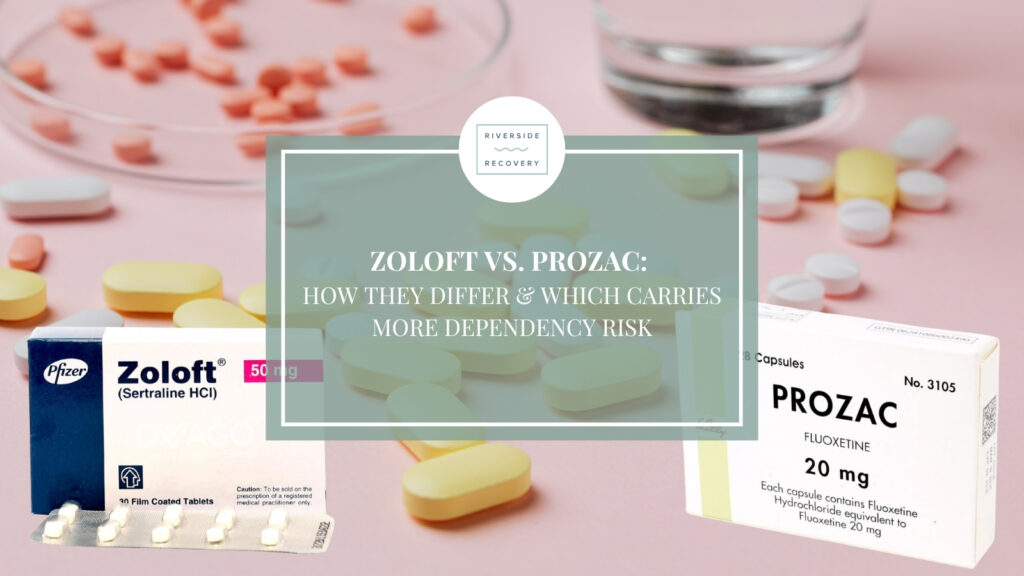

Zoloft and Prozac are both selective serotonin reuptake inhibitors (SSRIs), but they carry different pharmacokinetic profiles, FDA-approved indications, and discontinuation risk levels that influence which medication a clinician prescribes.
If you are comparing these two antidepressants, the most important clinical differences are not in how they work but in how long they last, what conditions each treats more effectively, and what happens when you stop taking them.
Neither Zoloft nor Prozac produces physical dependence in the substance use disorder sense. Both can cause SSRI discontinuation syndrome when stopped abruptly, and Prozac carries measurably lower discontinuation risk due to its uniquely long half-life.
Understanding the distinction between discontinuation syndrome and true drug dependency matters significantly for anyone managing depression or anxiety alongside a substance use history.
Key Takeaways
- Zoloft (sertraline) and Prozac (fluoxetine) are both selective serotonin reuptake inhibitors (SSRIs); neither is a controlled substance, and neither produces substance use disorder dependence.
- Prozac’s active metabolite norfluoxetine extends the effective half-life to 4 to 16 days, making abrupt discontinuation significantly less likely to trigger SSRI discontinuation syndrome compared to Zoloft’s 26-to-40-hour half-life.
- According to the FDA, Zoloft is approved for six conditions, including PTSD and social anxiety disorder; Prozac is approved for five conditions, including bulimia nervosa and treatment-resistant depression in combination with olanzapine.
- Prozac is a potent CYP2D6 and CYP2C19 inhibitor, generating more clinically significant drug-drug interactions than sertraline at standard therapeutic doses.
- Individuals with co-occurring major depressive disorder and a substance use disorder require integrated dual diagnosis treatment, as antidepressant pharmacotherapy alone does not address the neurobiological changes produced by long-term substance use.
What Are Zoloft and Prozac?
Zoloft and Prozac are brand names for two distinct SSRI antidepressants, sertraline and fluoxetine, both FDA-approved as first-line pharmacological treatments for major depressive disorder and several anxiety-related conditions.
Sertraline (Zoloft): FDA-Approved Uses
Sertraline received FDA approval in 1991. Its approved indications cover a broader range of anxiety-related diagnoses than fluoxetine, reflecting the drug’s clinical profile as better tolerated in patients with prominent anxiety symptoms.
FDA-approved uses for sertraline include:
- Major depressive disorder (MDD): First-line pharmacotherapy for adult and pediatric patients presenting with persistent depressive episodes.
- Obsessive-compulsive disorder (OCD): Approved for adults and children aged 6 and older; reduces compulsive behavior frequency through serotonin transporter inhibition.
- Post-traumatic stress disorder (PTSD): One of only two SSRIs with FDA approval specifically for PTSD; reduces hyperarousal, avoidance, and intrusive symptom clusters.
- Social anxiety disorder (SAD): Preferred first-line pharmacotherapy for SAD due to demonstrated superiority over fluoxetine in comparative trials.
- Panic disorder: Reduces frequency and severity of spontaneous panic attacks through serotonergic modulation of amygdala fear circuitry.
- Premenstrual dysphoric disorder (PMDD): Reduces mood lability, irritability, and dysphoria associated with the luteal phase of the menstrual cycle.
Fluoxetine (Prozac): FDA-Approved Uses
Fluoxetine received FDA approval in 1987 and became one of the most recognized psychiatric medications globally within a decade of launch. Its approved indications include unique approvals not available to sertraline.
FDA-approved uses for fluoxetine include:
- Major depressive disorder (MDD): First-line pharmacotherapy, including approval for pediatric patients aged 8 and older.
- Obsessive-compulsive disorder (OCD): Approved for adults and children aged 7 and older.
- Panic disorder: Reduces panic attack frequency with clinical trial evidence supporting efficacy at 20 to 60 mg daily.
- Bulimia nervosa: The only SSRI with FDA approval specifically for an eating disorder diagnosis; reduces binge-purge episode frequency.
- Bipolar depression (with olanzapine): Approved under the Symbyax combination formulation for depressive episodes in bipolar I disorder.
- Treatment-resistant depression: Approved in combination with olanzapine when two prior antidepressant trials have failed.

How Zoloft and Prozac Work in the Brain
Both sertraline and fluoxetine produce antidepressant effects by blocking the serotonin transporter (SERT), preventing serotonin reuptake into the presynaptic neuron and increasing serotonergic transmission at postsynaptic receptors throughout the limbic system.
Serotonin Transporter Inhibition Mechanism
The serotonin transporter (SERT) is a membrane protein that reabsorbs serotonin (5-hydroxytryptamine, 5-HT) from the synaptic cleft back into the presynaptic neuron. SSRIs bind competitively to SERT, blocking reuptake and elevating extracellular serotonin concentrations across the limbic system, prefrontal cortex, and raphe nuclei.
Elevated synaptic serotonin concentrations gradually reduce postsynaptic 5-HT1A autoreceptor sensitivity through a process called receptor desensitization. This desensitization, which takes 2 to 4 weeks to develop, explains why both sertraline and fluoxetine require sustained administration before full therapeutic effects are observed.
Key Pharmacokinetic Differences
Sertraline and fluoxetine share a mechanism but differ substantially in their pharmacokinetic profiles, which drives differences in tolerability, drug interactions, and discontinuation risk.
| Parameter | Sertraline (Zoloft) | Fluoxetine (Prozac) |
|---|---|---|
| Half-life | 26–40 hours | 1–6 days (parent); 4–16 days (norfluoxetine) |
| Active metabolite | Desmethylsertraline (minimal activity) | Norfluoxetine (equipotent to parent) |
| CYP inhibition | Moderate CYP2D6 inhibitor | Potent CYP2D6 and CYP2C19 inhibitor |
| Protein binding | 98% | 94% |
| Time to steady state | 1–2 weeks | 4–5 weeks (due to norfluoxetine) |
| Discontinuation risk | Moderate | Low (due to extended half-life) |
| Starting dose | 50 mg/day | 20 mg/day |
| Therapeutic range | 50–200 mg/day | 20–60 mg/day |
Zoloft vs. Prozac: Full Clinical Comparison
The table below compares both medications across the criteria most relevant to prescribing decisions and patient experience.
| Criteria | Sertraline (Zoloft) | Fluoxetine (Prozac) |
|---|---|---|
| Mechanism | SERT inhibition | SERT inhibition |
| FDA indications | MDD, OCD, PTSD, SAD, panic disorder, PMDD | MDD, OCD, panic disorder, bulimia nervosa, bipolar depression (combo) |
| Onset of effect | 2–4 weeks for mood; up to 8 weeks for full effect | 2–4 weeks for mood; up to 8 weeks for full effect |
| Half-life | 26–40 hours | 4–16 days (with norfluoxetine) |
| Drug interactions | Moderate | High (CYP2D6, CYP2C19 inhibition) |
| Discontinuation risk | Moderate | Low |
| Weight neutrality | Generally weight neutral | May cause mild initial weight loss |
| Pregnancy safety | Preferred SSRI in pregnancy (Category C) | Category C; more data available |
| Controlled substance | No | No |
Side Effects: What to Expect From Each
Zoloft and Prozac share a common SSRI side effect profile, but differ in the specific symptoms each is more likely to produce, which influences medication selection when a patient has a particular vulnerability.

Common Side Effects of Zoloft and Prozac
Common side effects shared by both medications include:
- Nausea: Most frequent in the first 2 weeks of treatment as serotoninergic receptor adaptation occurs in the gastrointestinal tract; typically resolves with continued use.
- Sexual dysfunction: Serotonin elevation suppresses dopaminergic reward signaling, reducing libido, delaying orgasm, and impairing erectile function in both men and women.
- Insomnia or drowsiness: SSRI-driven changes in REM sleep architecture produce insomnia or daytime drowsiness depending on individual neurological response and time of dosing.
- Headache and dizziness: Common in the titration phase as serotonergic tone increases across the central nervous system.
- Dry mouth: More common with fluoxetine due to its mild anticholinergic secondary properties at higher doses.
Sertraline produces diarrhea more frequently than fluoxetine. Fluoxetine produces more activation-related effects, including agitation and anxiety, particularly at initiation.
Severe Side Effects and Warnings
Seek immediate medical attention if any of the following occur while taking Zoloft or Prozac:
- Serotonin syndrome: Characterized by hyperthermia, muscle rigidity, myoclonus, and altered consciousness; triggered by combining SSRIs with other serotonergic medications.
- Suicidal ideation in patients under 25: Both carry an FDA black box warning for increased suicidal thoughts in children, adolescents, and young adults during the first weeks of treatment.
- Hyponatremia: SSRI-induced syndrome of inappropriate antidiuretic hormone secretion (SIADH) produces dangerous sodium depletion, particularly in elderly patients.
- Severe allergic reactions: Rash, urticaria, or anaphylaxis warrant immediate discontinuation and emergency evaluation.
- Mania activation in undiagnosed bipolar disorder: Both drugs can precipitate manic episodes in patients with bipolar disorder not yet receiving a mood stabilizer.
Long-Term Effects of SSRI Use
Long-term SSRI use produces neuroadaptive changes including downregulation of postsynaptic 5-HT receptors and altered hypothalamic-pituitary-adrenal (HPA) axis regulation. These changes are reversible with proper medication tapering but produce significant discontinuation symptoms if the medication is stopped abruptly.
Long-term considerations include:
- Sexual dysfunction persistence: Post-SSRI sexual dysfunction (PSSD) has been documented in a subset of patients even after discontinuation; the prevalence is not precisely established.
- Emotional blunting: Chronic SERT inhibition in the prefrontal cortex can produce a subjective reduction in emotional range that patients describe as feeling “flat” or “muted.”
- Weight changes: Both medications are generally weight neutral initially; long-term use is associated with modest weight gain in a proportion of patients, more pronounced with fluoxetine.
Discontinuation Syndrome and Dependency Risk
Neither Zoloft nor Prozac produces substance use disorder dependence, but both can cause SSRI discontinuation syndrome when stopped abruptly, with sertraline carrying a meaningfully higher discontinuation risk than fluoxetine.
What Is SSRI Discontinuation Syndrome?
SSRI discontinuation syndrome describes a cluster of symptoms that emerge within 24 to 72 hours of abrupt cessation or significant dose reduction in patients who have taken an SSRI for four weeks or longer. The syndrome reflects the nervous system’s response to the sudden removal of artificially elevated serotonergic tone.
Symptoms of SSRI discontinuation syndrome include:
- Flu-like symptoms: Fatigue, nausea, sweating, and chills produced by autonomic nervous system dysregulation following serotonin level reduction.
- Electric shock sensations (“brain zaps”): Brief, paresthesia-like pulses described as electric shocks in the head or limbs; caused by serotonergic withdrawal at sensory processing pathways.
- Rebound anxiety and irritability: Rapid return of anxiety symptoms often more intense than the original presentation due to receptor hypersensitivity during adjustment.
- Dizziness and insomnia: Vestibular sensitivity and disrupted serotonin-mediated REM regulation produce vertigo and sleep fragmentation during the withdrawal period.

Why Prozac Carries Lower Discontinuation Risk
Fluoxetine’s active metabolite norfluoxetine extends the effective plasma half-life to 4 to 16 days. This prolonged half-life creates a natural self-tapering effect when fluoxetine is stopped abruptly, as norfluoxetine gradually occupies SERT sites while plasma levels decline. The nervous system adapts to serotonin level changes gradually rather than experiencing a sudden drop.
Sertraline’s half-life of 26 to 40 hours produces a faster drop in SERT occupancy after the last dose, giving the nervous system less time to compensate. Clinical discontinuation guidelines recommend a slow taper of at least 2 to 4 weeks for sertraline; fluoxetine may often be stopped more abruptly without severe discontinuation effects, though tapering remains the standard of care.
Dependency vs. Discontinuation: A Critical Distinction
SSRI discontinuation syndrome is not the same as substance use disorder dependence. Substance use disorder produces compulsive drug-seeking behavior, tolerance requiring escalating doses, and continued use despite significant harm. SSRIs produce neither tolerance requiring dose escalation for the same therapeutic effect nor compulsive drug-seeking behavior.
Patients with a personal or family history of alcohol use disorder or substance use disorders are not at elevated risk of developing substance use disorder from SSRI use. However, individuals self-medicating depression or anxiety with alcohol, opioids, or other substances do face substantial risk of dual diagnosis, requiring concurrent psychiatric and addiction treatment for sustained recovery.
Treatment for Co-Occurring Depression and Substance Use at Riverside Recovery of Tampa
Riverside Recovery of Tampa provides integrated treatment for major depressive disorder, anxiety disorders, and substance use disorders occurring simultaneously, across a full continuum of care. Same-day assessments are available.
Dual Diagnosis Treatment
Riverside Recovery’s dual diagnosis treatment program addresses co-occurring mental health conditions and substance use disorders within a unified clinical plan, with psychiatric medication management and addiction treatment delivered by the same clinical team throughout every level of care.
Addiction Therapy Programs
Riverside Recovery’s addiction therapy programs apply Cognitive Behavioral Therapy (CBT), Dialectical Behavior Therapy (DBT), and Accelerated Resolution Therapy (ART) to the maladaptive thought patterns that sustain both depression and substance use behavior simultaneously.
Intensive Outpatient Program
Intensive outpatient addiction treatment at Riverside Recovery provides structured day and evening programming for clients managing co-occurring depression and substance use disorders who are medically stable and maintaining work or family obligations.
Residential Treatment
Clients whose substance use disorder and co-occurring depression require stabilization before outpatient care is clinically appropriate benefit from residential addiction treatment with on-site psychiatric services and medication management integrated from the first day of admission.
Frequently Asked Questions
Why Would You Switch From Zoloft to Prozac?
Clinicians switch patients from sertraline to fluoxetine when sertraline produces intolerable discontinuation effects during dose reductions, when drug interactions via CYP2D6 create management challenges with Zoloft, or when a patient’s condition shifts to include an indication for which fluoxetine is better supported by clinical trial evidence, such as treatment-resistant depression.
Is Zoloft Sedating or Energizing?
Zoloft produces variable energizing and sedating effects depending on the individual. Some patients experience mild fatigue and drowsiness, particularly in the initial titration phase. Others report improved energy as depressive symptoms resolve. The sedating or activating effect depends on the patient’s baseline serotonergic tone, dose, and time of administration.
Is Prozac Called the Happy Pill?
Prozac acquired the informal “happy pill” label following its 1987 FDA approval and cultural prominence in Peter Kramer’s 1993 book “Listening to Prozac.” The label is clinically misleading. Fluoxetine treats the neurobiological dysregulation underlying major depressive disorder; it does not produce euphoria, and it is not a controlled substance with abuse potential.
Why Is Sertraline Preferred Over Fluoxetine?
Sertraline is frequently preferred over fluoxetine when a patient has prominent anxiety, PTSD, or social anxiety disorder, conditions for which sertraline has stronger FDA-approved evidence.
Sertraline’s lower CYP2D6 inhibition also makes it safer in patients on multiple medications. Its pregnancy safety data is more robust than fluoxetine’s, making it the preferred SSRI in perinatal psychiatry. For individuals managing anxiety disorders alongside a substance use history, dedicated anxiety treatment that accounts for the interactions between SSRI pharmacotherapy and addiction recovery is an important part of integrated care.
References
- U.S. Food and Drug Administration. Zoloft (sertraline hydrochloride) prescribing information. https://dailymed.nlm.nih.gov/dailymed/drugInfo.cfm?setid=fe9e8b7d-61ea-409d-84aa-3ebd79a046b5
- U.S. Food and Drug Administration. Prozac (fluoxetine hydrochloride) prescribing information. https://www.accessdata.fda.gov/drugsatfda_docs/label/2017/018936s108lbl.pdf
- National Institute of Mental Health. Mental health medications: Antidepressants. https://www.nimh.nih.gov/health/topics/mental-health-medications
- Fava, M., Mulroy, R., Alpert, J., Nierenberg, A. A., & Rosenbaum, J. F. (2000). Emergence of adverse events following discontinuation of treatment with extended-release venlafaxine. American Journal of Psychiatry, 154(12), 1760–1762.
- American Psychiatric Association. (2022). Diagnostic and Statistical Manual of Mental Disorders, Fifth Edition, Text Revision (DSM-5-TR). American Psychiatric Publishing.
- Stahl, S. M. (2021). Stahl’s Essential Psychopharmacology: Neuroscientific Basis and Practical Applications (5th ed.). Cambridge University Press.