

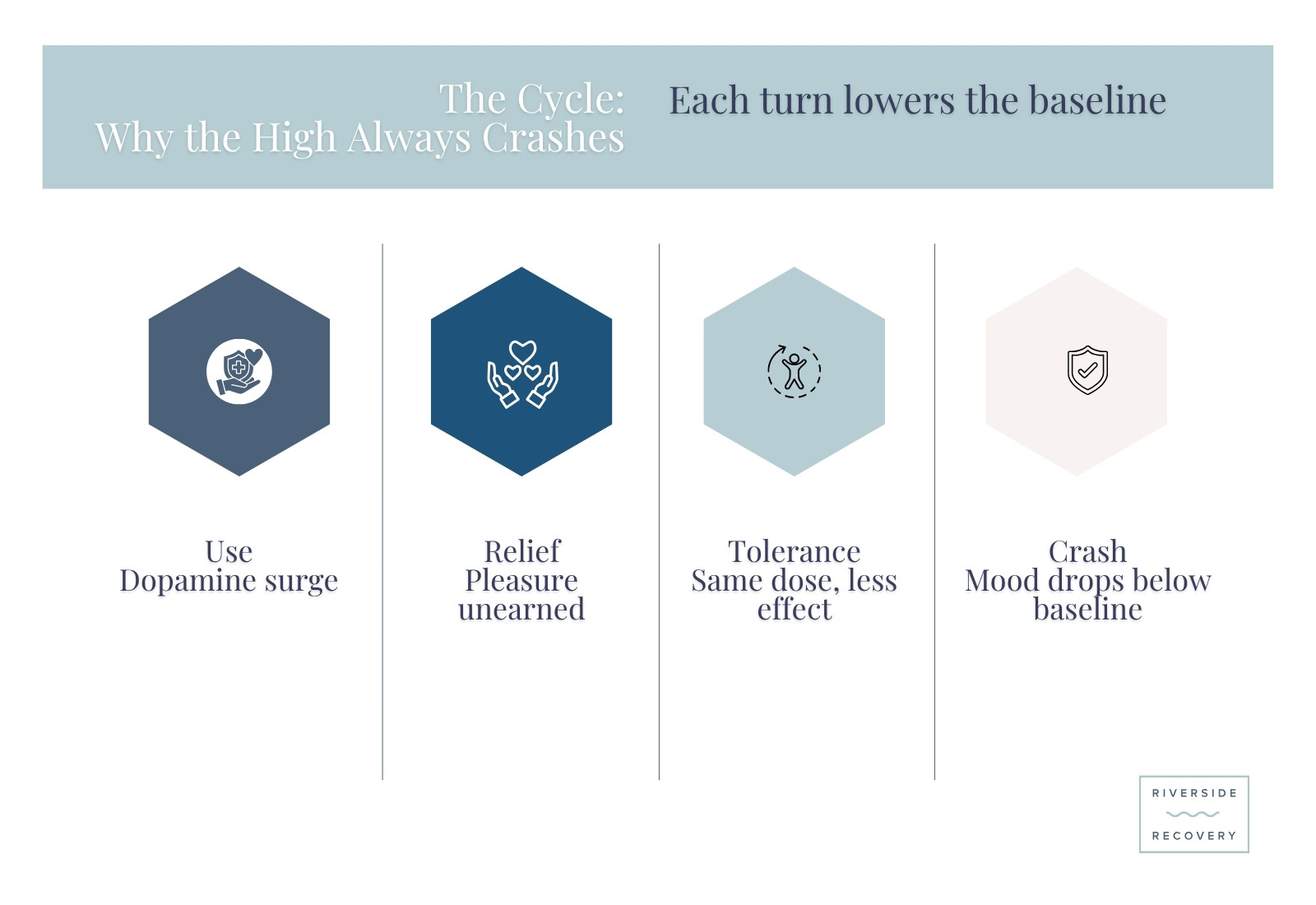
Drugs produce a false sense of happiness because they flood the brain’s reward circuit with dopamine far beyond what any natural reward releases. The feeling is chemical rather than earned, and the circuit adapts to it, which is why the same dose stops working.
Neuroadaptation is the reason willpower explanations fail. The person using is not choosing a drug over their family. Their reward system has been recalibrated so that ordinary sources of pleasure no longer register.
Why Do Drugs Create a False Sense of Happiness?
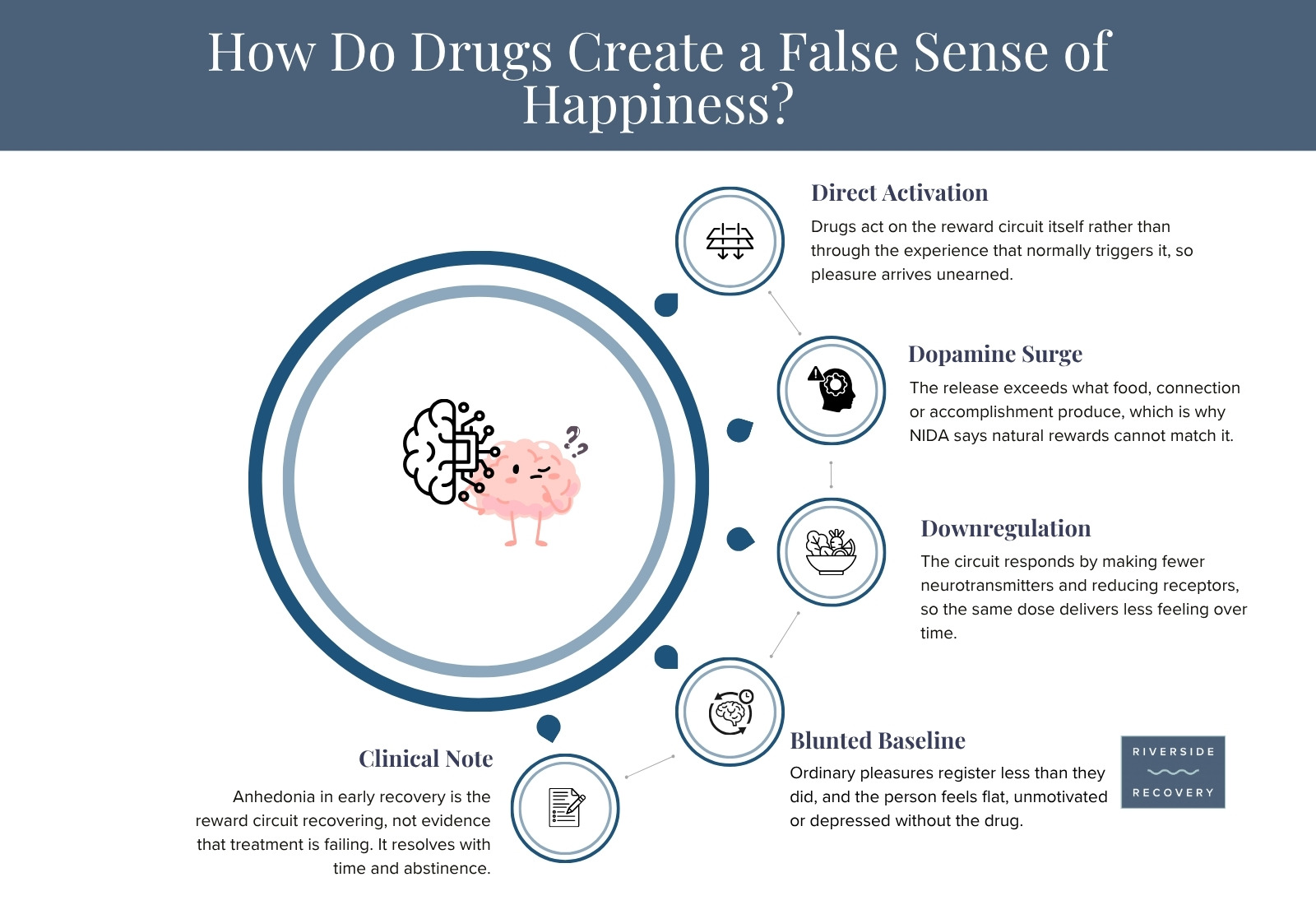
Drugs act directly on the brain’s reward circuit instead of through the experiences that normally trigger it, so the pleasure arrives without the event that would justify it. The National Institute on Drug Abuse describes this as a surge that natural rewards cannot match.
Food, connection and accomplishment release dopamine in measured amounts. A drug bypasses that process. What follows is relief, calm and a sense of freedom that the person did not have to build, which is precisely what makes it so difficult to give up.
The relief is real while it lasts. Calling it false does not mean the person imagined it. It means the feeling was produced by a chemical rather than by anything in their life changing.
What Happens in the Brain’s Reward System?
Repeated drug exposure causes the reward circuit to reduce its own dopamine response, a process NIDA calls tolerance. The person needs more of the drug to reach the previous effect, and ordinary pleasures produce less feeling than they did before. The prefrontal cortex, which governs impulse control, loses regulatory strength over the same period.
Tolerance explains two things families find hardest to understand. The first is escalation, where the amount keeps climbing. The second is anhedonia, where someone in early recovery reports that nothing feels good, because the circuit has not yet recovered its normal sensitivity.
Both resolve with time and abstinence, but neither resolves quickly, and the gap between stopping and feeling better is where most relapse occurs.
Why Does the High Always End in a Crash?
The crash is the reward circuit correcting after an artificial surge. Mood drops below baseline rather than returning to it, which produces depression, irritability and panic in the hours after use.
The crash is not a separate problem from the high. It is the same event, seen from the other end. A person in that state is managing withdrawal on top of whatever they were already carrying, which is why the pull back toward the drug is strongest exactly when their capacity to resist it is lowest.
Recognising the crash as predictable rather than personal changes what a person does with it.
How Do You Break the Cycle of Self-Medicating?
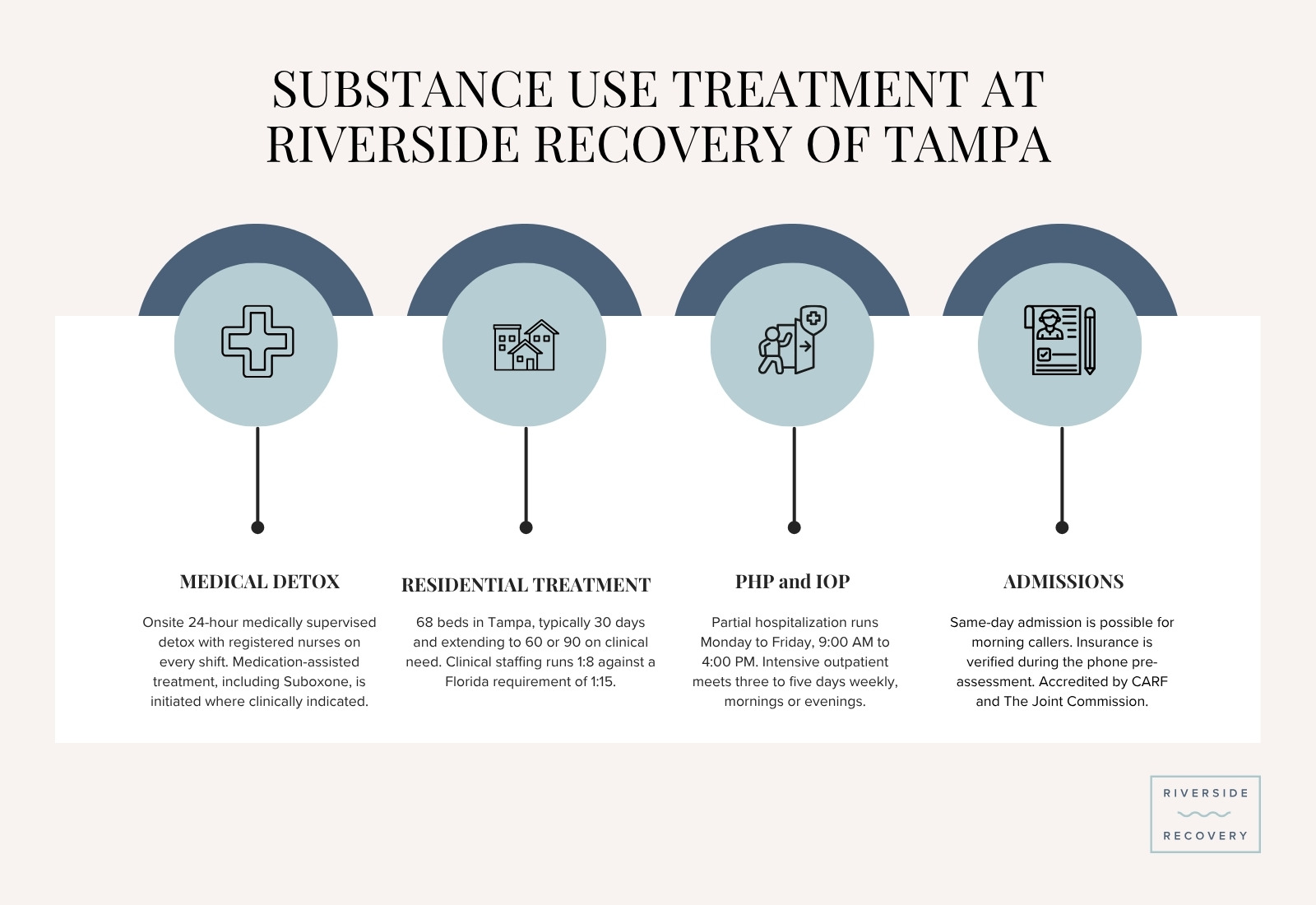
Treatment addresses the reason the drug was doing a job. Medically supervised medically supervised detox handles physical dependence, and cognitive behavioral therapy builds the coping capacity that has to exist before the substance can be removed safely.
Self-medicating is a solution to something. Removing it without replacing its function leaves the original problem exposed, which is why co-occurring mental health conditions are treated as comorbid conditions alongside the substance use rather than after it.
If you are in crisis or thinking about suicide, call or text 988, or chat at 988lifeline.org/chat. SAMHSA’s National Helpline, 1-800-662-HELP (4357), provides free confidential treatment referral 24 hours a day in English and Spanish.
Riverside Recovery of Tampa treats alcohol use disorder and opioid use disorder with medical detox, residential treatment and outpatient care on one campus. Call (800) 871-5440 to speak with our clinical intake team.
References
- National Institute on Drug Abuse. Drugs, Brains, and Behavior: The Science of Addiction. Bethesda, MD: National Institutes of Health. Available from: nida.nih.gov
- National Institute on Drug Abuse. Understanding Drug Use and Addiction DrugFacts. Bethesda, MD: National Institutes of Health. Available from: nida.nih.gov
- Substance Abuse and Mental Health Services Administration. National Helpline. Rockville, MD: SAMHSA.