



Alcoholic hepatitis is one of the most serious yet preventable consequences of heavy alcohol use. Alcohol-related liver disease (ARLD) became the leading indication for adult liver transplant in the United States at 41.1% of recipients in 2023, according to Organ Procurement and Transplantation Network registry data.
Alcohol-related liver disease progresses through three stages: fatty liver, alcoholic hepatitis and cirrhosis, each harder to reverse than the last. Severe alcoholic hepatitis carries a 30-day mortality of 30% to 50%.
Highlights
- Retail alcohol sales rose 34% during April to June 2020 against the same months in 2017 to 2019.
- Alcohol-related liver disease was the leading indication for adult liver transplant in the United States in 2023, at 41.1% of recipients. That total comprises 34.6% alcohol-associated cirrhosis and 6.5% alcohol-associated hepatitis, ahead of MASH at 20.3%.
- Severe alcoholic hepatitis, defined by a Maddrey discriminant function greater than 32, carries a 30-day mortality of 30% to 50%, per StatPearls. The score was originally derived to identify patients whose 28-day mortality risk exceeded 50%, and some series report rates that high.
- People with alcohol-related cirrhosis who keep drinking have less than a 50% chance of living more than five years, per NHS Inform Scotland.
- Most alcoholic hepatitis patients are aged 40 to 60, but younger cases are rising fast.
- Binge drinking means 5 or more drinks on an occasion for men and 4 or more for women. Federal surveillance defines heavy alcohol use as binge drinking on 5 or more days in the past month.
- Fatty liver can begin to reverse in as little as 2 weeks of abstinence. (NHS Wales)
What Is Alcoholic Hepatitis?
Alcoholic hepatitis is inflammation of the liver caused by prolonged heavy drinking. Liver cells swell and die, scar tissue forms, and the organ progressively loses its ability to filter toxins from the blood.
A liver saturated with alcohol stops breaking it down efficiently. The toxic byproducts that result attack and destroy hepatocytes, which produces the swelling, scarring and loss of function that define the condition.
Alcoholic hepatitis is a stage of alcohol-related liver disease (ARLD), and it sits between the earliest stage, alcoholic fatty liver disease, and the most advanced and irreversible stage, cirrhosis.
Acute alcoholic hepatitis usually develops over years of heavy drinking, but it can appear suddenly. A sudden onset produces rapid liver damage, jaundice and potential liver failure, even in people without a long history of heavy drinking. Severe episodes drive the liver into failure and cause death within weeks.
What Is Alcohol-Related Liver Disease (ARLD)?
Alcohol-related liver disease is the umbrella term for every form of liver damage caused by excessive drinking, covering three progressive stages: alcoholic fatty liver disease, alcoholic hepatitis, and cirrhosis. The liver is the body’s primary organ for detoxifying alcohol, producing bile, regulating blood glucose, and filtering harmful substances from the blood.
When the liver is consistently forced to process more alcohol than it can handle, it undergoes progressive damage across three overlapping stages:
What Are the Three Stages of Alcohol-Related Liver Disease?
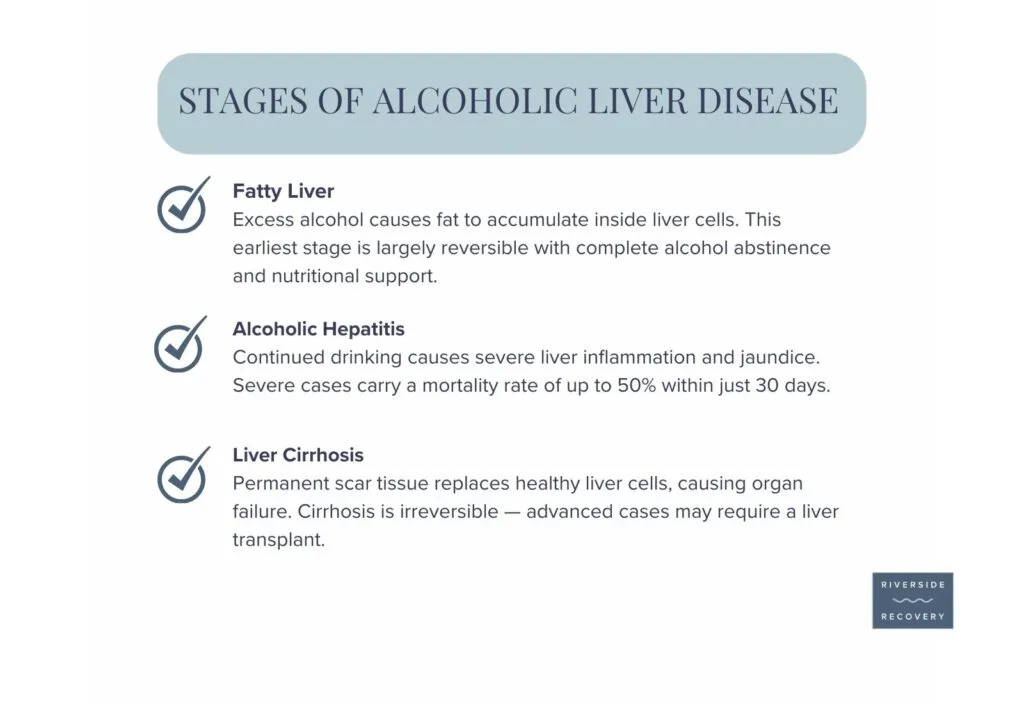
Alcohol-related liver disease runs through three stages: alcoholic fatty liver disease, in which fat accumulates and which reverses with abstinence; alcoholic hepatitis, in which the liver inflames and cells die; and cirrhosis, in which permanent scarring replaces functioning tissue.
Stage 1: Alcoholic Fatty Liver Disease (Steatosis)
Alcoholic fatty liver disease is the earliest stage of ARLD. Heavy drinking deposits fat inside liver cells faster than the liver can clear it. Clinicians call the result steatosis.
Alcoholic fatty liver disease is the liver’s first warning signal. Abstaining from alcohol for as little as 2 weeks allows fat levels to return to normal. At this stage most patients have no symptoms, which is why clinicians often miss the condition until it has progressed further.
Stage 2: Alcoholic Hepatitis
Alcoholic hepatitis develops when repeated or ongoing alcohol use inflames the liver severely. As the liver swells, it loses the ability to perform its critical functions. Scar tissue starts to form, liver cells die, and the risk of serious complications rises sharply.
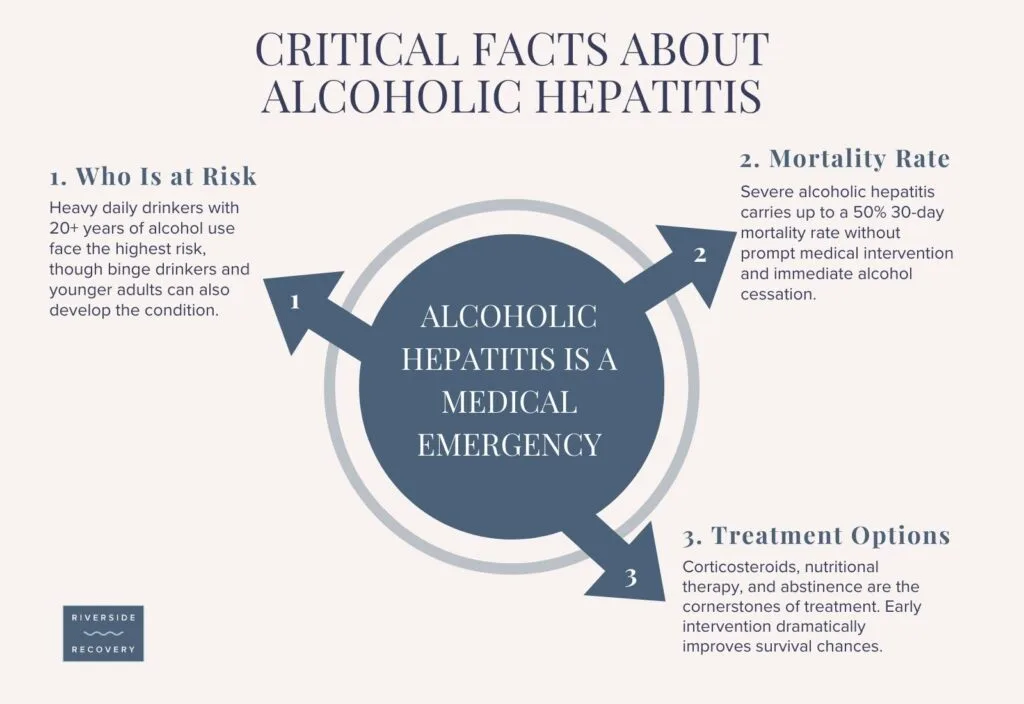
Severe alcoholic hepatitis carries a 30-day mortality of 30% to 50% where the Maddrey discriminant function is greater than 32. StatPearls reports that 40% of patients die within six months of the syndrome appearing. Liver damage from mild alcoholic hepatitis may still reverse if the person stops drinking completely and receives prompt medical care.
Stage 3: Alcohol-Related Cirrhosis
Cirrhosis is the final and most severe stage of ARLD. At this point, extensive scar tissue has replaced healthy liver tissue, permanently reducing the liver’s ability to function. Unlike the earlier stages, cirrhosis is not reversible.
A person with alcohol-related cirrhosis who continues to drink has less than a 50 percent chance of living more than five years, according to research by the NHS Inform Scotland. Stopping alcohol completely slows further damage and extends life expectancy, though the existing scarring does not reverse.
What Are the Symptoms of Alcoholic Hepatitis?
The symptoms of alcoholic hepatitis are abdominal pain, jaundice, loss of appetite, nausea, fatigue and fever. Symptoms surface only after the liver has sustained heavy damage, which is why clinicians diagnose the condition late.
Alcohol-related liver disease hides its early stages. The liver keeps working until a large share of its tissue is inflamed or scarred, so the first visible symptom often marks advanced disease.
The symptoms of alcoholic hepatitis are as follows:
- Abdominal pain and swelling.
- Nausea and vomiting, sometimes with blood.
- Yellowing of the skin and eyes (jaundice).
- Dark-colored urine.
- Fever.
- Fatigue and weakness.
- Poor appetite and unintended weight loss.
- Itching.
Severe alcoholic hepatitis develops rapidly and drives the liver into acute failure, which is a medical emergency. If you or someone you know is experiencing these symptoms alongside a history of heavy drinking, seek medical attention immediately.
What Is the Life Expectancy With Alcoholic Hepatitis?
Life expectancy after an alcoholic hepatitis diagnosis turns on two things: how severe the episode is, and whether the person stops drinking. Severe cases carry a 30-day mortality of 30% to 50%, while mild cases can stabilize or partly reverse with complete abstinence.
For mild alcoholic hepatitis, the prognosis is generally better. Most liver damage at this stage can stabilize or partially reverse with total abstinence, proper nutrition, and medical support.
For severe alcoholic hepatitis, defined by a Maddrey discriminant function greater than 32, 30-day mortality runs from 30% to 50%. StatPearls further reports that 40% of people with severe alcoholic hepatitis die within six months of the syndrome appearing.
Bittermann, Mahmud and Abt (2021), writing in JAMA Network Open, recorded a 106.6% rise in liver transplant waitlist additions for acute alcohol-associated hepatitis during the pandemic period, measured in the United Network for Organ Sharing registry.
The most important factor in improving life expectancy is stopping alcohol use immediately and completely, not reducing it, but stopping entirely.
Is Alcoholic Hepatitis Contagious?
No. Alcoholic hepatitis is not contagious. No contact, shared utensil or other route transmits it, because alcohol damages a person’s own liver cells directly and no infectious agent is involved.
Viral hepatitis is the important contrast. Specific viruses cause hepatitis A, B and C, and those viruses pass between people. Alcoholic hepatitis shares symptoms such as jaundice and abdominal pain with viral hepatitis, but its cause and its route are entirely different.
How Does Alcohol Damage the Liver?
Alcohol damages the liver at the cellular level: metabolizing it produces acetaldehyde and reactive oxygen species, which kill liver cells, trigger inflammation, and drive the scarring that ends in cirrhosis. Malnutrition compounds the damage by depriving the liver of what it needs to repair.
When the liver metabolizes alcohol, it produces highly toxic compounds, including acetaldehyde and reactive oxygen species. These substances directly damage liver cells (hepatocytes), trigger an inflammatory immune response, and disrupt normal cell function. As liver cells die and inflammation persists, the body attempts to repair the damage by forming scar tissue. Over time, this scar tissue accumulates and begins to replace functioning liver tissue, a process that ultimately leads to cirrhosis.
Malnutrition compounds the damage. People who drink heavily frequently have poor diets or lose the ability to properly absorb nutrients because alcohol and its toxic byproducts interfere with digestion and metabolism. A liver that is both damaged and undernourished deteriorates far more rapidly.
What Is the Difference Between Alcoholic Hepatitis and Decompensated Cirrhosis?
Alcoholic hepatitis is acute, reversible inflammation of the liver; decompensated cirrhosis is permanent scarring in which the organ can no longer perform its functions. The distinction matters because the first can improve with abstinence and the second cannot, and shifts the goal to managing complications and assessing transplant eligibility.
Alcoholic hepatitis involves acute inflammation of the liver. While serious, it can still be partially reversible if alcohol use stops and treatment begins promptly. The liver still retains some functional capacity.
Decompensated cirrhosis refers to cirrhosis that has progressed to the point where the liver can no longer maintain basic functions. Decompensated cirrhosis produces three hallmark complications. Fluid accumulates in the abdomen (ascites), enlarged veins in the esophagus bleed internally (esophageal varices), and toxin buildup strips brain function (hepatic encephalopathy). Decompensated cirrhosis is not reversible, and the primary treatment goal shifts to managing complications and evaluating transplant eligibility.
A person can have both conditions at once, which worsens the prognosis.
Who Is at Risk of Alcoholic Liver Disease?
Seven factors raise the risk of alcohol-related liver disease: heavy prolonged drinking, being female, obesity, malnutrition, genetic variation in alcohol metabolism, chronic hepatitis C infection, and binge-drinking patterns. Each is set out below:
- Heavy Alcohol Use: The most direct risk factor for ARLD is excessive, prolonged alcohol consumption. Heavy alcohol use means binge drinking on 5 or more days in the past month. Binge drinking means 5 or more standard drinks within about 2 hours for men, or 4 or more for women.
- Age: Most people diagnosed with alcoholic hepatitis are between 40 and 60 years old, though this is changing as rates rise among younger adults.
- Obesity: The combination of heavy drinking and obesity produces worse outcomes than either condition does individually. Fat in the liver from obesity leaves it far more vulnerable to the toxic effects of alcohol.
- Malnutrition: Heavy drinkers are frequently malnourished because alcohol suppresses appetite, causes nausea, and blocks the absorption of essential nutrients. A nutrient-depleted liver is more vulnerable to damage.
- Genetic factors: Genetics influence how efficiently a person’s body processes alcohol and may increase susceptibility to addiction and liver disease.
- Sex: Women are more susceptible to alcohol-related liver damage than men, even when drinking equal amounts. Women’s bodies process alcohol differently, leading to higher blood alcohol concentrations and greater liver exposure per drink.
- Race and ethnicity: Rates of alcoholic cirrhosis are higher among African-American and Hispanic males compared to Caucasian males, though the reasons are complex and not fully understood.
- Hepatitis C: Chronic hepatitis C infection, combined with heavy drinking, accelerates liver damage and raises the risk of cirrhosis and liver cancer.
How Is Alcoholic Hepatitis Diagnosed?
Clinicians diagnose alcoholic hepatitis by combining a drinking history, a physical examination, blood tests of liver enzymes and function, and imaging such as ultrasound, CT or MRI. A liver biopsy confirms the diagnosis and grades the damage when the picture stays unclear.
Clinicians work through the following five steps:
- Take a full medical and drinking history.
- Perform a physical examination.
- Order blood tests to assess liver enzyme levels and overall function.
- Use imaging such as ultrasound, CT scan, or MRI to assess the liver’s size and structure.
- In some cases, perform a liver biopsy to remove a small tissue sample for microscopic examination, confirm the diagnosis and assess the extent of damage.
Early and accurate diagnosis is critical because treatment options and outcomes differ by disease stage and severity.
How Is Alcoholic Hepatitis Treated?
Alcoholic hepatitis is treated with complete abstinence from alcohol, which is the single intervention that changes the outcome, alongside nutritional support, corticosteroids such as prednisolone in severe cases, transplant evaluation where medical treatment fails, and treatment of the underlying alcohol use disorder. Per AASLD guidance, treatment focuses on:
- Complete abstinence from alcohol: This is the single most important and impactful intervention at every stage of treatment. While medically supervised alcohol detox may be necessary to safely stop drinking, long-term recovery depends on maintaining abstinence after detox is complete.
- Nutritional support: Addressing the malnutrition that commonly accompanies heavy drinking is a key component of recovery. Adequate protein and caloric intake support liver cell repair.
- Corticosteroids: In cases of severe alcoholic hepatitis, corticosteroids such as prednisolone may be prescribed to reduce liver inflammation, though they are not appropriate for everyone and carry their own risks.
- Liver transplant evaluation: For patients with end-stage liver disease or severe alcoholic hepatitis who do not respond to medical treatment, liver transplantation may be considered.
- Treating the underlying alcohol use disorder: Alcohol use disorder drives alcoholic hepatitis directly, so treating it protects the liver. Appropriate levels of care include residential and inpatient drug rehab, partial hospitalization programs (PHP), and outpatient services.
How Did the Pandemic Drive the Rise in Alcohol-Related Liver Disease?
Pandemic-era drinking drove the rise in alcohol-related liver disease. Retail alcohol sales rose 34% across April to June 2020 against the same months in 2017 to 2019. Liver transplant waitlist additions for acute alcohol-associated hepatitis rose 106.6% during the pandemic period.
Sengupta and Dasarathy (2023), writing in Alcohol: Clinical and Experimental Research, report the 34% rise on Nielsen consumer-panel data covering 71,502 households. Bittermann, Mahmud and Abt (2021), writing in JAMA Network Open, measured the transplant figures in the United Network for Organ Sharing registry. In the American Psychological Association’s Stress in America poll, conducted by The Harris Poll in late February 2021, 23% of U.S. adults reported drinking more alcohol to cope with pandemic stress.
Lockdowns, isolation, economic disruption and the loss of social support turned alcohol into a coping mechanism for people under strain. For those already living with alcohol use disorder, the pandemic cut off treatment, support groups and routine healthcare.
Hospitals are still managing the resulting wave of liver disease. Severe alcoholic hepatitis has risen sharply among young women, a group that historically carried lower risk.
What Happens If Alcoholic Liver Disease Goes Untreated?
Untreated alcohol-related liver disease progresses to six life-threatening complications: permanent liver failure requiring transplant, ruptured esophageal varices, portal hypertension, hepatic encephalopathy, ascites, and hepatocellular carcinoma. Each is set out below:
- Permanent liver failure: Loss of liver function entirely, requiring a transplant to survive.
- Esophageal varices: Enlarged, fragile veins in the esophagus that rupture and produce severe internal bleeding.
- Portal hypertension: Dangerously elevated blood pressure in the liver’s portal vein.
- Hepatic encephalopathy: A loss of brain function caused by the buildup of toxins that the damaged liver can no longer filter, resulting in confusion, memory loss, and, in severe cases, coma.
- Liver cancer: Long-term cirrhosis raises the risk of hepatocellular carcinoma.
What Are the Recent Advances in Alcohol-Related Liver Disease Treatment?
Three developments are changing treatment for alcohol-related liver disease: early liver transplantation for selected severe cases that do not respond to medical therapy, new anti-inflammatory and anti-fibrotic agents in clinical trials, and gut microbiome research targeting the bacterial pathways involved in liver injury.
- Early liver transplantation for select patients with severe alcoholic hepatitis who have not responded to medical therapy is now being offered at more centers, with outcomes comparable to transplants for other liver conditions.
- New anti-inflammatory and anti-fibrotic agents are in clinical trials targeting the specific pathways through which alcohol damages liver tissue.
- Gut microbiome research has identified connections between alcohol-related changes in gut bacteria and the severity of liver disease, opening potential new treatment targets.
- Integrated addiction treatment models that combine hepatology care with addiction medicine are showing improved outcomes for patients who receive both liver treatment and support for alcohol use disorder simultaneously.
Getting Help for Alcohol-Related Liver Disease
Alcohol-related liver disease is serious, but it is also largely preventable and, in its earlier stages, partially reversible. The most powerful intervention available is also the simplest: stopping alcohol use completely.
If alcohol is something you or someone you love has struggled to control, treatment is available at Riverside Recovery of Tampa.
Recovery from alcohol use disorder is possible at any stage, and the earlier it begins, the greater the chance of protecting liver health and extending life.
References
- Shah, N.J., Royer, A., & John, S. Alcoholic-Associated Hepatitis. StatPearls, National Center for Biotechnology Information. Bookshelf ID NBK470217. https://www.ncbi.nlm.nih.gov/books/NBK470217/
- Bittermann, T., Mahmud, N., & Abt, P. (2021). Trends in Liver Transplantation for Acute Alcohol-Associated Hepatitis During the COVID-19 Pandemic in the US. JAMA Network Open. PMID: 34323988; PMCID: PMC8322991. https://pmc.ncbi.nlm.nih.gov/articles/PMC8322991/
- Chen, C.M., & Alpert, H.R. Surveillance Report #123: Liver Cirrhosis Mortality in the United States: National, State, and Regional Trends, 2000–2023. National Institute on Alcohol Abuse and Alcoholism (NIAAA). https://www.niaaa.nih.gov/sites/default/files/surveillance-report123.Liver-Cirrhosis.pdf
- Organ Procurement and Transplantation Network and Scientific Registry of Transplant Recipients. OPTN/SRTR 2023 Annual Data Report: Liver. Health Resources and Services Administration.
- Sengupta, S., & Dasarathy, S. (2023). Fuel to the fire: The impact of COVID-19 on alcohol-associated hepatitis. Alcohol: Clinical and Experimental Research (Hoboken), 47(12), 2223–2226. doi: 10.1111/acer.15204. PMID: 38151782; PMCID: PMC10756636.
- Singal, A.K., Louvet, A., Shah, V.H., & Kamath, P.S. Grand Rounds: Alcoholic Hepatitis. Journal of Hepatology.
- AASLD Liver Fellow Network. Why the 6-Month Sobriety Rule for Liver Transplantation Is Being Abandoned: Evolution in Alcohol-Associated Liver Disease Care. American Association for the Study of Liver Diseases.
- NHS 111 Wales. Alcohol-related liver disease. National Health Service Wales.
- NHS Inform Scotland. Alcohol-related liver disease. National Health Service Scotland.
- American Psychological Association. Stress in America 2021: One Year On. Poll conducted by The Harris Poll, February 2021. Washington, DC: APA; 2021.